MovementWorld War II and the Early Cold War
The Civil Rights Movement
The mass struggle against segregation and disfranchisement, 1950s–1960s
1954–1968
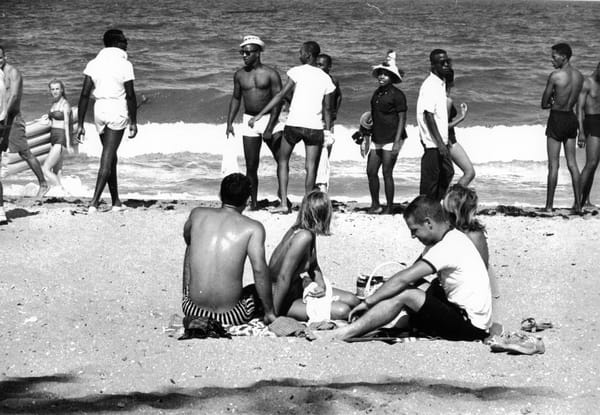
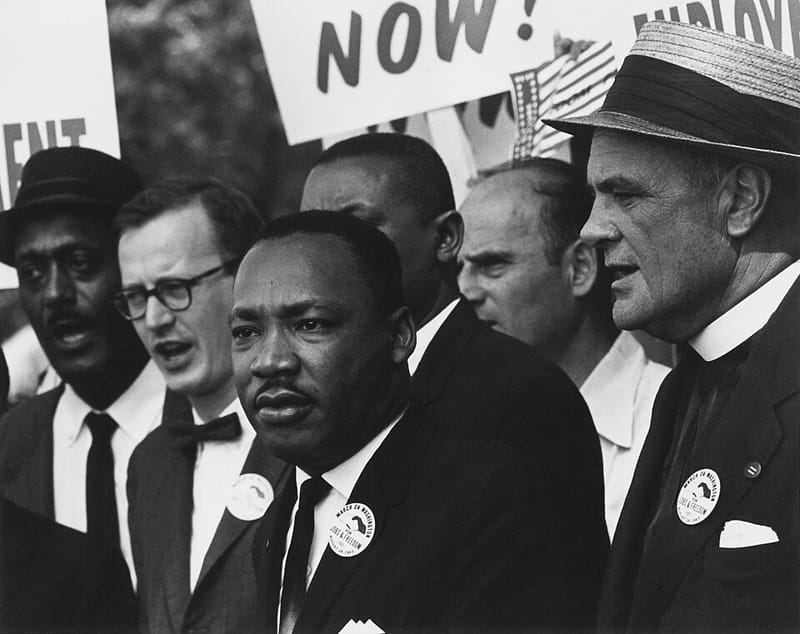
The civil rights movement was a mass campaign by Black Americans and their allies to end legal segregation and secure voting rights in the South. Building on decades of NAACP legal work, it won the Supreme Court’s Brown v. Board of Education decision in 1954, then turned to nonviolent direct action: the Montgomery bus boycott, sit-ins, Freedom Rides, the Birmingham campaign, the March on Washington, and the Selma marches. Its victories — the Civil Rights Act of 1964 and the Voting Rights Act of 1965 — dismantled Jim Crow in law and transformed American democracy.
Key facts
- Date
- 1954–1968
- Dating note
- Often dated from Brown v. Board of Education (1954) to the death of Martin Luther King Jr. (1968); its roots reach back to the NAACP’s legal campaigns and wartime activism.
- Landmark ruling
- Brown v. Board of Education, May 17, 1954
- Key organizations
- NAACP, SCLC (1957), SNCC (1960), CORE, local groups such as the Women’s Political Council
- Key laws
- Civil Rights Act of 1964; Voting Rights Act of 1965
- Leaders
- Martin Luther King Jr., Rosa Parks, Ella Baker, John Lewis, Fannie Lou Hamer, Bayard Rustin, Thurgood Marshall, and many local organizers
- Method
- Nonviolent direct action, litigation, voter registration
Why it matters
The civil rights movement ended legal segregation in the United States and showed how nonviolent mass action could change the law of a nation.
Goals
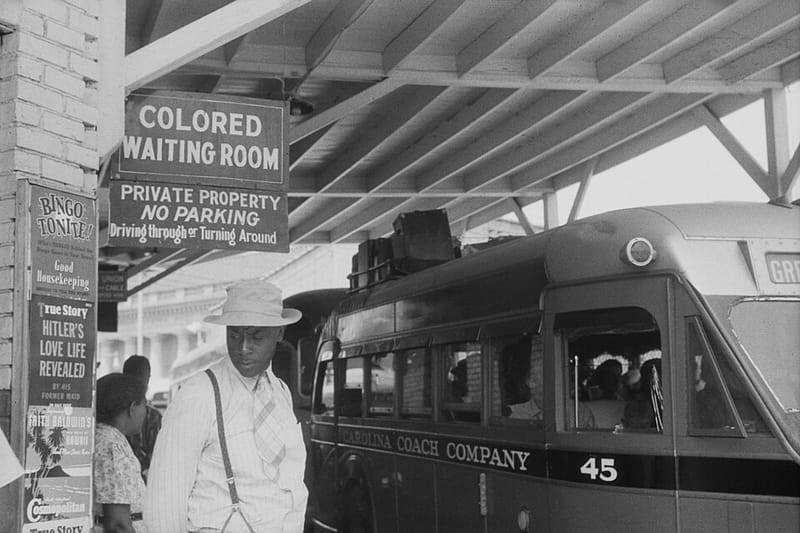
The movement sought to end Jim Crow segregation in schools, transportation, and public accommodations; to secure the right to vote promised by the Fifteenth Amendment; to win equal access to jobs; and, in King’s phrase, to build a “beloved community.”
Strategies
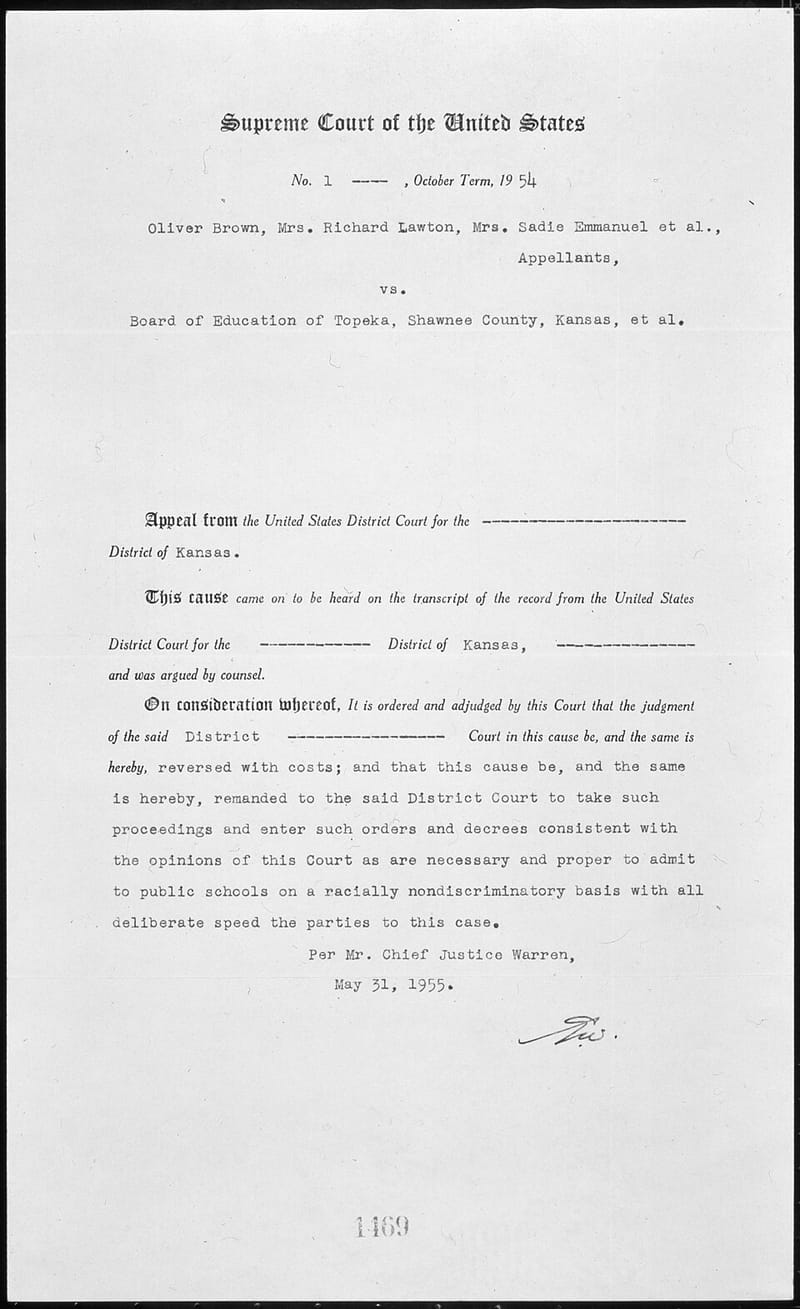
Litigation. NAACP lawyers led by Thurgood Marshall chipped away at segregation in court, culminating in Brown in 1954.
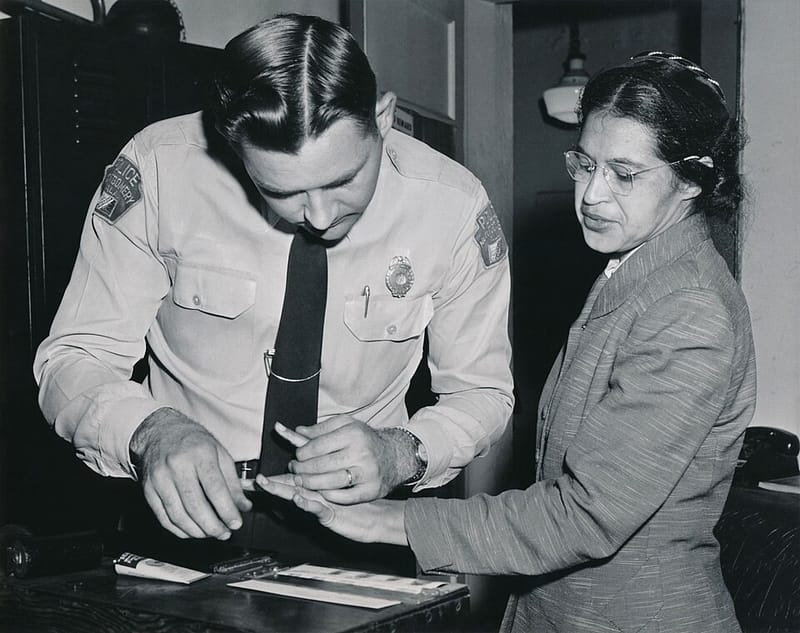
Mass protest. The thirteen-month Montgomery bus boycott (1955–1956), sparked by Rosa Parks’s arrest, showed the power of nonviolent mass action and made King a national leader; ministers then founded the Southern Christian Leadership Conference in 1957. In 1960 four Black students sat in at a whites-only lunch counter in Greensboro, North Carolina, setting off sit-ins across the South; that April, students organized SNCC with Ella Baker’s encouragement. In 1961 CORE’s interracial Freedom Riders tested a Supreme Court ruling against segregated interstate travel and were attacked by mobs in Alabama.
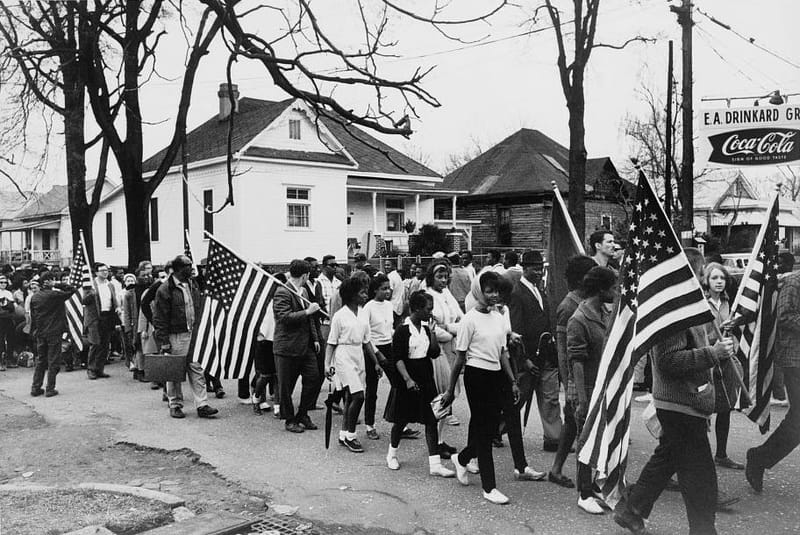
Confrontation and voting. In Birmingham in 1963, police turned fire hoses and dogs on child marchers, and televised images caused international outrage. In 1964 Freedom Summer volunteers registered voters and ran schools in Mississippi. The 1965 campaign in Selma, and the beating of marchers on “Bloody Sunday,” led directly to the Voting Rights Act.
Opposition
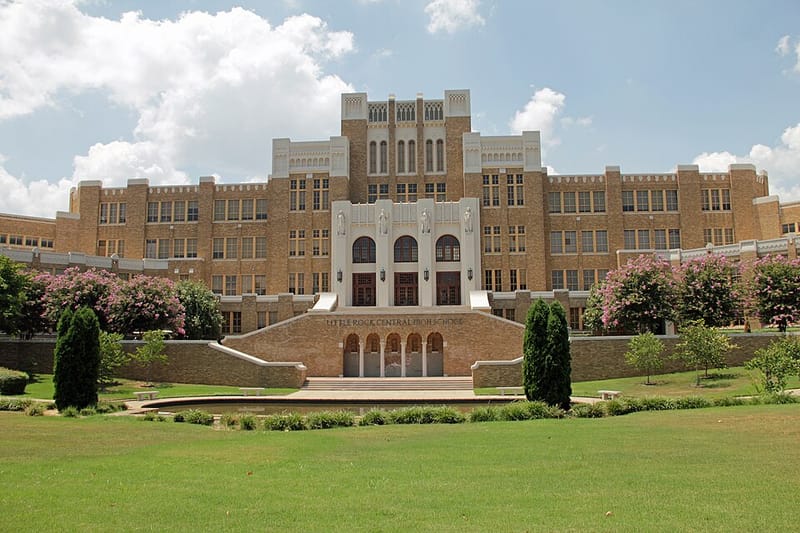
White Southerners resisted with defiance of school desegregation, mass arrests, and terror. Fourteen-year-old Emmett Till was murdered in Mississippi in 1955, and an all-white jury acquitted his killers. Governors Orval Faubus of Arkansas and George Wallace of Alabama defied federal authority. Civil rights leader Medgar Evers was assassinated in 1963, and three CORE workers — James Chaney, Michael Schwerner, and Andrew Goodman — were murdered in Mississippi in 1964.
Achievements
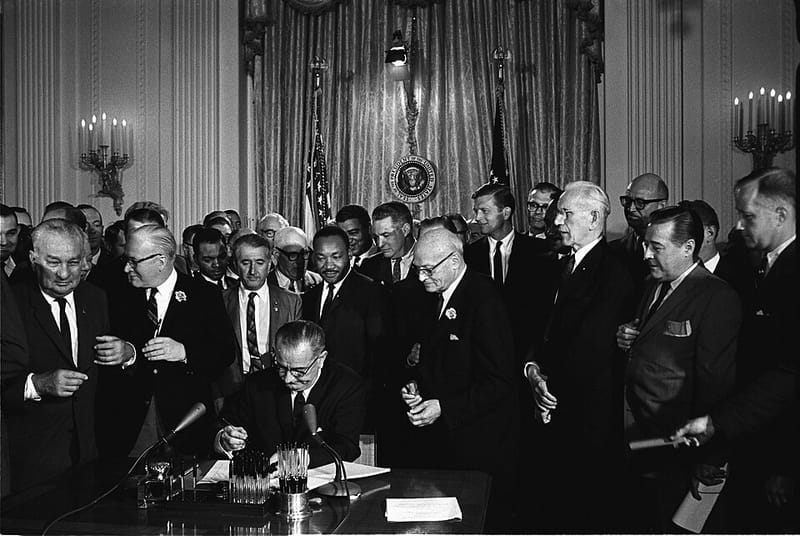
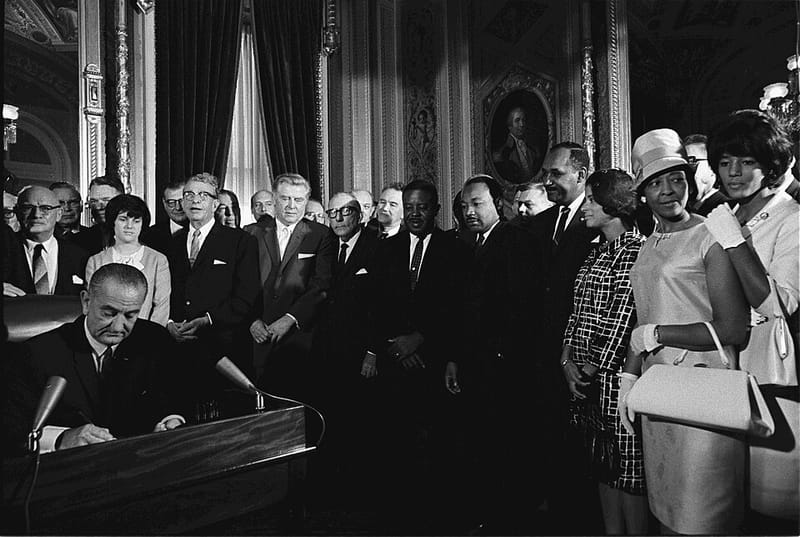
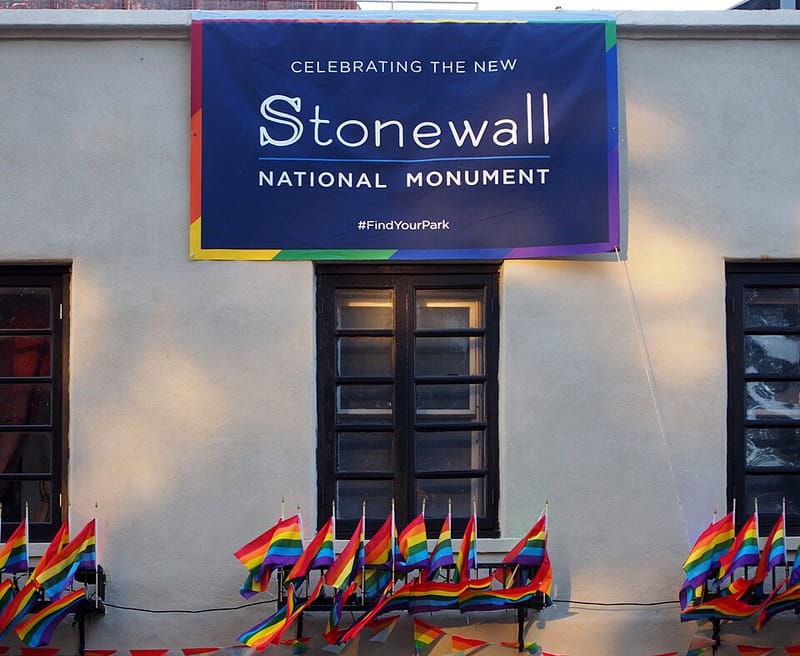
The Civil Rights Act of 1964 outlawed segregation in public accommodations and discrimination in employment. The Voting Rights Act of 1965 banned literacy tests and sent federal examiners to the South; by the end of 1965 a quarter of a million new Black voters were registered. The movement also inspired other campaigns for equality — by Chicanos, Native Americans, women, and gay Americans.
Unresolved questions
Legal victories did not end economic inequality, housing segregation, or police brutality. Days after the Voting Rights Act, rioting broke out in the Watts neighborhood of Los Angeles, and riots followed in many cities, including Newark and Detroit in 1967. Many activists embraced the more militant Black Power movement. King turned to poverty and opposition to the Vietnam War before he was assassinated in Memphis in April 1968.
Study this entry
Check your understanding
Try answering in your own words, then open the answer.
1.What did the movement want?Show answerHide
The movement sought to end Jim Crow segregation in schools, transportation, and public accommodations; to secure the right to vote promised by the Fifteenth Amendment; to win equal access to jobs; and, in King’s phrase, to build a “beloved community.”From “Goals” above.
2.How did it pursue its goals?Show answerHide
Litigation. NAACP lawyers led by Thurgood Marshall chipped away at segregation in court, culminating in Brown in 1954.From “Strategies” above.
3.Who opposed it, and how?Show answerHide
White Southerners resisted with defiance of school desegregation, mass arrests, and terror. Fourteen-year-old Emmett Till was murdered in Mississippi in 1955, and an all-white jury acquitted his killers.From “Opposition” above.
4.What did it achieve?Show answerHide
The Civil Rights Act of 1964 outlawed segregation in public accommodations and discrimination in employment. The Voting Rights Act of 1965 banned literacy tests and sent federal examiners to the South; by the end of 1965 a quarter of a million new Black voters were registered.From “Achievements” above.
Turn this entry into 11 flashcards (key facts, dates, and why it matters) and review them in Learn.
Related History
How this connects to the rest of the atlas.
Events
People
Documents
Court cases
Movements
Concepts
Places

Sources
- 1.The American Yawp, “The Affluent Society”
The American Yawp (eds. Joseph Locke and Ben Wright; Stanford University Press) · Scholarly · cited for postwar civil rights, Brown, Till, Montgomery, Little Rock
- 2.The American Yawp, “The Sixties”
The American Yawp (eds. Joseph Locke and Ben Wright; Stanford University Press) · Scholarly · cited for civil rights, Great Society, Vietnam, social movements
- 3.Montgomery Bus Boycott
The Martin Luther King, Jr. Research and Education Institute, Stanford University · Scholarly · cited for boycott dates, organizers, carpools, Browder v. Gayle
- 4.Student Nonviolent Coordinating Committee (SNCC)
The Martin Luther King, Jr. Research and Education Institute, Stanford University · Scholarly · cited for SNCC founding
- 5.Southern Christian Leadership Conference (SCLC)
The Martin Luther King, Jr. Research and Education Institute, Stanford University · Scholarly · cited for SCLC founding
- 6.Birmingham Campaign
The Martin Luther King, Jr. Research and Education Institute, Stanford University · Scholarly · cited for Birmingham 1963
- 7.Selma to Montgomery March
The Martin Luther King, Jr. Research and Education Institute, Stanford University · Scholarly · cited for Bloody Sunday, march, Voting Rights Act
- 8.Civil Rights Act (1964) — Milestone Documents
National Archives · Primary source · cited for provisions, passage, Senate vote
- 9.Voting Rights Act (1965) — Milestone Documents
National Archives · Primary source · cited for provisions, impact, later decisions
- 10.Brown v. Board of Education (1954) — Milestone Documents
National Archives · Primary source · cited for ruling, Brown II, reaction
- 11.Poor People’s Campaign
The Martin Luther King, Jr. Research and Education Institute, Stanford University · Scholarly · cited for Poor People’s Campaign
Image credits
- Civil rights demonstration at Fort Lauderdale's segregated public beach, 1961, photographer unidentified, 1961-07-24. Via Wikimedia Commons · Public domain · Source
Written for American History Atlas from the sources above. See how entries are researched.
Atlas by Alexander. More on Telegram.