PersonWorld War II and the Early Cold War
Jackie Robinson
The ballplayer who broke baseball’s color barrier in 1947, and a civil rights advocate
1919–1972
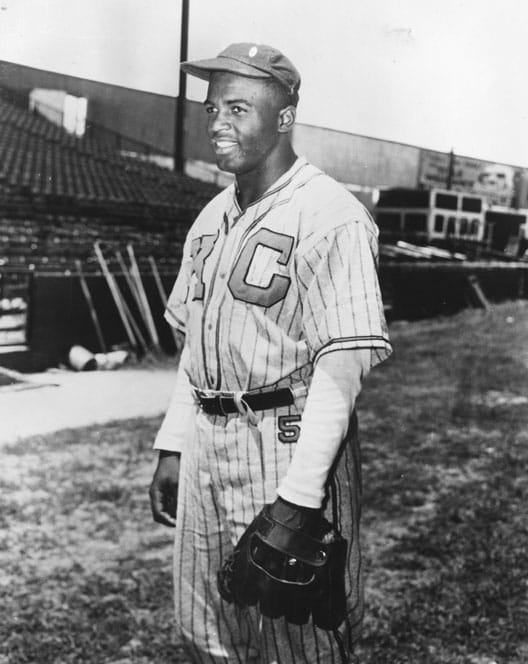
On April 15, 1947, Jackie Robinson took the field for the Brooklyn Dodgers and became the first African American player in the twentieth century in the American or National League. Chosen by Dodgers executive Branch Rickey, he endured hostile crowds, opposed teammates, and threats while starring on the field: Rookie of the Year in 1947, Most Valuable Player in 1949, and six pennants in ten seasons. After retiring he became an outspoken advocate for civil rights.
Key facts
- Born
- January 31, 1919, Cairo, Georgia
- Died
- October 24, 1972, Stamford, Connecticut
- Roles
- Kansas City Monarchs, Negro Leagues (1945); Brooklyn Dodgers (1947–1956); Civil rights advocate
- Major league debut
- April 15, 1947, Brooklyn Dodgers
- Honors
- Rookie of the Year (1947); National League MVP (1949); Hall of Fame (1962)
- Career
- .313 batting average, 1,563 hits, 200 stolen bases
- Dodgers success
- Six pennants in his ten seasons and the 1955 World Series title
- Remembered
- Every major league team celebrates Jackie Robinson Day on April 15
Why it matters
Robinson integrated the national pastime in 1947, showing millions of Americans what equal opportunity could look like — and then used his fame to press for civil rights.
Early life and context
Jack Roosevelt Robinson was born on January 31, 1919, in Cairo, Georgia, the youngest of five children of sharecroppers Jerry and Mallie Robinson. His father left the family when Jackie was an infant, and in 1920 his mother moved the children by train to Pasadena, California, where she worked as a domestic. The Robinsons bought a house in a mostly white neighborhood; neighbors petitioned to get rid of them and harassed the family for years. Athletic talent ran in the family — his older brother Mack finished second to Jesse Owens in the 200 at the 1936 Olympics, then could find work only as a city janitor.
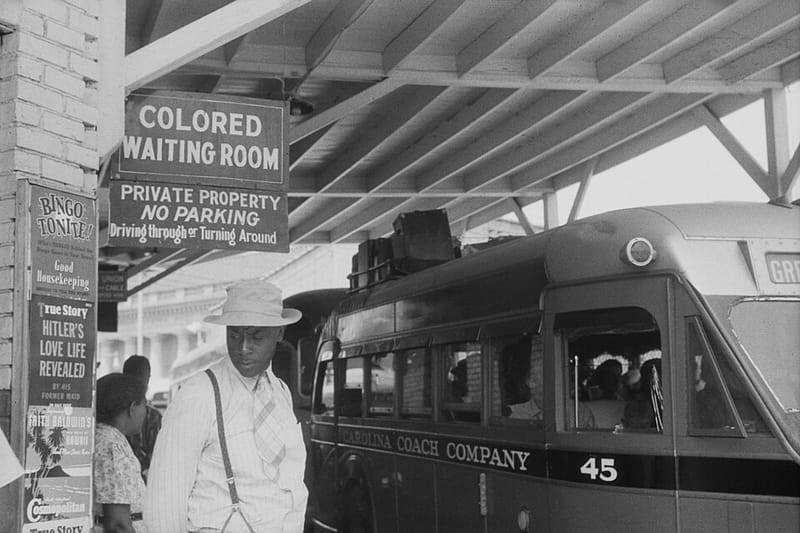
At UCLA Robinson became the school’s first four-sport letterman, in baseball, basketball, football, and track, and won the NCAA long-jump title; there he met Rachel Isum, whom he married in 1946. Money troubles forced him to leave college in 1941. Drafted in 1942, he became an Army officer. In July 1944, at Camp Hood, Texas, he refused a bus driver’s order to move to the back of an Army bus — the War Department had already banned segregation on military buses. He was court-martialed, acquitted of all charges, and honorably discharged. In 1945 he played shortstop for the Kansas City Monarchs of the Negro Leagues.
Major actions and achievements
Brooklyn Dodgers president Branch Rickey chose Robinson to break baseball’s unwritten color line — for his talent, but also because he was college-educated, had competed with and against white athletes, and could stand the spotlight. In their now-legendary meeting, Rickey extracted a promise that Robinson would hold his temper and not fight back. The signing was announced on October 23, 1945. In 1946, with the Montreal Royals, the Dodgers’ top farm club, Robinson led the International League with a .349 average and carried the Royals to the pennant; more than a million fans came to watch them.
On April 15, 1947, he started at first base for Brooklyn. He hit .297, led the league in stolen bases, helped the Dodgers win the pennant, and won the first Rookie of the Year award. Two years later he was the National League’s Most Valuable Player, leading the league with a .342 average and 37 steals. His real weapon was the base paths: taking huge leads, faking steals, and rattling pitchers into mistakes, he stole home 19 times in his career — including a famous steal in Game 1 of the 1955 World Series, the year Brooklyn won its first championship. The Dodgers won six pennants in his ten seasons. After the 1956 season the club traded him to the rival New York Giants; Robinson, who had already decided to quit, announced his retirement in Look magazine instead.
After baseball he became a vice president of the Chock Full o’Nuts coffee company, chaired Freedom National Bank, which lent to Black customers ignored by established banks, wrote a newspaper column, and campaigned for civil rights. In 1962 he was elected to the Hall of Fame on the first ballot — its first African American member.
Beliefs and ideas
“A life is not important except in the impact it has on other lives,” Robinson said. He kept his promise to Rickey through his early seasons, but he was by nature proud and aggressive, and in later years he spoke out sharply against discrimination in baseball and beyond. He supported Martin Luther King Jr. and the NAACP and wrote to Presidents Eisenhower, Kennedy, and Johnson about civil rights. In 1960 he endorsed Richard Nixon over John F. Kennedy, saying Kennedy had not made it “his business to know colored people” — a choice he reportedly came to regret. His wife, Rachel, later stressed his role as “an informal civil rights leader.”
Controversies, limits, and criticism
Robinson’s arrival was fiercely resisted. Before the 1947 season some Dodgers circulated a petition against playing with him, which Rickey and manager Leo Durocher shut down. Pitchers threw at his head, a Cardinals star appeared to try to injure him with his spikes, he received death threats, and the Philadelphia Phillies, led by manager Ben Chapman, taunted him so viciously that Robinson later said it brought him “nearer to cracking up than I had ever been.” The abuse backfired: public anger at Chapman ran so high that he had to ask Robinson to pose for a photograph with him. His last years in Brooklyn were unhappy: he disliked owner Walter O’Malley, who had forced Rickey out, and as he grew more outspoken the club hoped he would quietly step aside.
Legacy
Robinson suffered from diabetes in his later years and died of a heart attack on October 24, 1972, at fifty-three. Thousands lined the streets of Harlem and Brooklyn for his funeral procession. In 1987 the Rookie of the Year award was renamed for him, and on April 15, 1997, the fiftieth anniversary of his debut, his number 42 was retired by every major league team. Martin Luther King Jr. said, “Jackie Robinson made my success possible. Without him, I would never have been able to do what I did.”
Study this entry
Check your understanding
Try answering in your own words, then open the answer.
1.What shaped Jackie Robinson early in life?Show answerHide
Jack Roosevelt Robinson was born on January 31, 1919, in Cairo, Georgia, the youngest of five children of sharecroppers Jerry and Mallie Robinson. His father left the family when Jackie was an infant, and in 1920 his mother moved the children by train to Pasadena, California, where she worked as a domestic.From “Early life and context” above.
2.What were Jackie Robinson’s major achievements?Show answerHide
Brooklyn Dodgers president Branch Rickey chose Robinson to break baseball’s unwritten color line — for his talent, but also because he was college-educated, had competed with and against white athletes, and could stand the spotlight.From “Major actions and achievements” above.
3.What criticism or controversy surrounds Jackie Robinson?Show answerHide
Robinson’s arrival was fiercely resisted. Before the 1947 season some Dodgers circulated a petition against playing with him, which Rickey and manager Leo Durocher shut down.From “Controversies, limits, and criticism” above.
4.How is Jackie Robinson remembered?Show answerHide
Robinson suffered from diabetes in his later years and died of a heart attack on October 24, 1972, at fifty-three. Thousands lined the streets of Harlem and Brooklyn for his funeral procession.From “Legacy” above.
Turn this entry into 11 flashcards (key facts, dates, and why it matters) and review them in Learn.
Related History
How this connects to the rest of the atlas.
People
Court cases

Sources
- 1.Jackie Robinson
National Baseball Hall of Fame and Museum · Institutional · cited for career, firsts, statistics, Jackie Robinson Day, life dates
- 2.Jackie Robinson, Civil Rights Advocate
National Archives · Institutional · cited for civil rights advocacy and correspondence with presidents
- 3.Jackie Robinson
National Park Service · Institutional · cited for family, UCLA, Army service and court-martial, death, number 42
- 4.Jackie Robinson
Society for American Baseball Research (SABR BioProject) · Scholarly · cited for childhood in Pasadena, Rickey’s choice, Montreal, 1947 season, playing style, later life
Image credits
- Jackie Robinson Kansas City Monarchs, Kansas City Call newspaper (first publication), 1945. Via Wikimedia Commons · Public domain · Source
Written for American History Atlas from the sources above. See how entries are researched.
Atlas by Alexander. More on Telegram.