PersonCivil Rights and Social Transformation
Rosa Parks
Activist whose arrest sparked the Montgomery bus boycott
1913–2005
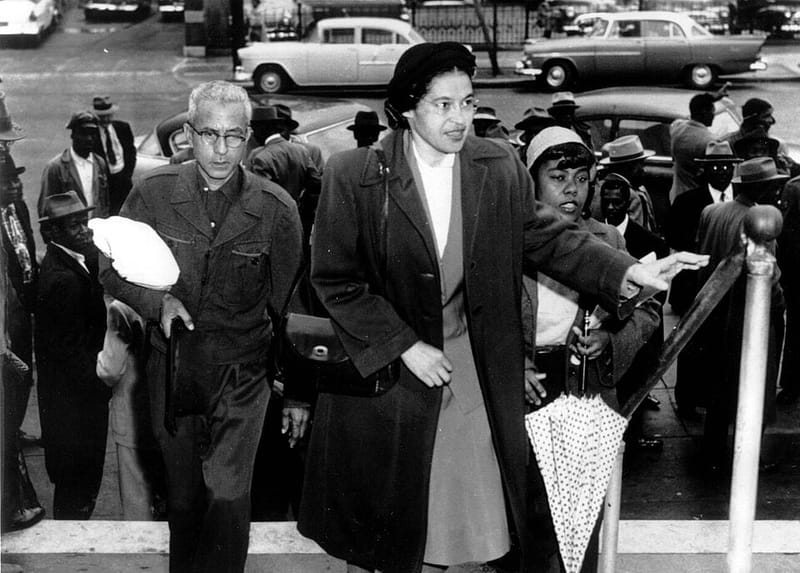
Rosa Parks was the seamstress and veteran NAACP activist whose arrest on December 1, 1955, for refusing to give up her seat to a white passenger on a Montgomery, Alabama, bus sparked the Montgomery bus boycott. The thirteen-month protest ended with bus segregation struck down and made Martin Luther King Jr. a national leader. Long remembered as a tired woman who simply wanted to sit down, Parks was in fact a seasoned organizer who had spent more than a decade fighting Jim Crow. “The only tired I was,” she wrote, “was tired of giving in.”
Key facts
- Born
- February 4, 1913, Tuskegee, Alabama
- Died
- October 24, 2005
- Roles
- Secretary of the Montgomery NAACP; Adviser to the NAACP Youth Council; Office assistant to Rep. John Conyers (until 1988)
- Born
- February 4, 1913, Tuskegee, Alabama
- Arrest
- December 1, 1955, Montgomery
- NAACP
- Joined 1943; chapter secretary
- Later life
- Moved to Detroit in 1957; worked for Rep. John Conyers until 1988
- Died
- October 24, 2005, age 92
Why it matters
Rosa Parks’s refusal to move became the defining image of everyday courage in the civil rights movement.
Early life and context
Rosa Louise McCauley was born on February 4, 1913, in Tuskegee, Alabama, and spent her first years on a small farm with her mother, grandparents, and brother, where she saw the Ku Klux Klan ride at night and listened in fear as lynchings happened nearby. The family moved to Montgomery, where she attended the laboratory school of Alabama State College and became a seamstress. In 1932 she married Raymond Parks, a barber and NAACP member then working on behalf of the Scottsboro defendants.
In 1943 she joined the Montgomery branch of the NAACP and was elected its secretary, a post she held for twelve years; she also led its Youth Council, whose members challenged Jim Crow by checking books out of whites-only libraries. As secretary of the Alabama State Conference of the NAACP, she traveled the state interviewing victims of discrimination and witnesses to lynchings. She registered to vote in 1945 only after being turned away twice. She had defied bus segregation rules for years and had once been put off a bus for it. In the summer of 1955 she attended a workshop on implementing the Supreme Court’s desegregation decision at the Highlander Folk School in Tennessee.
Major actions and achievements
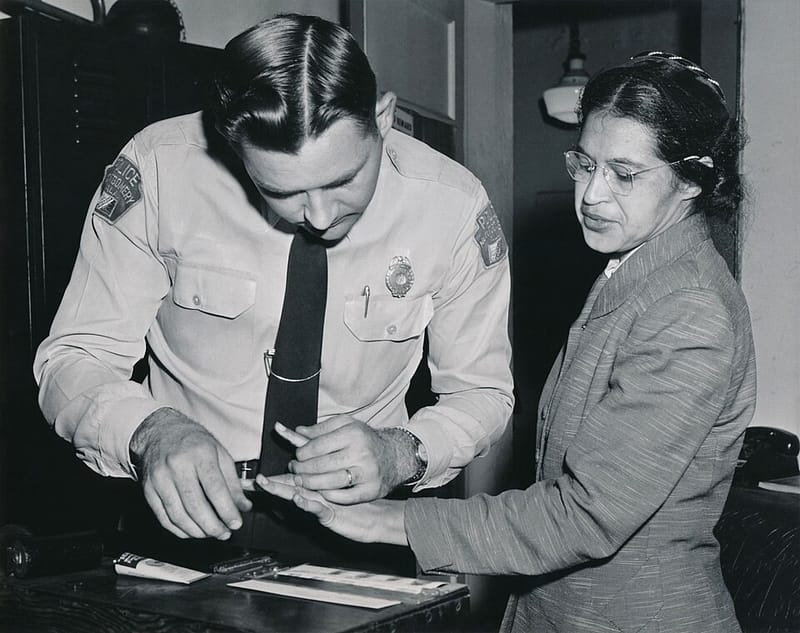
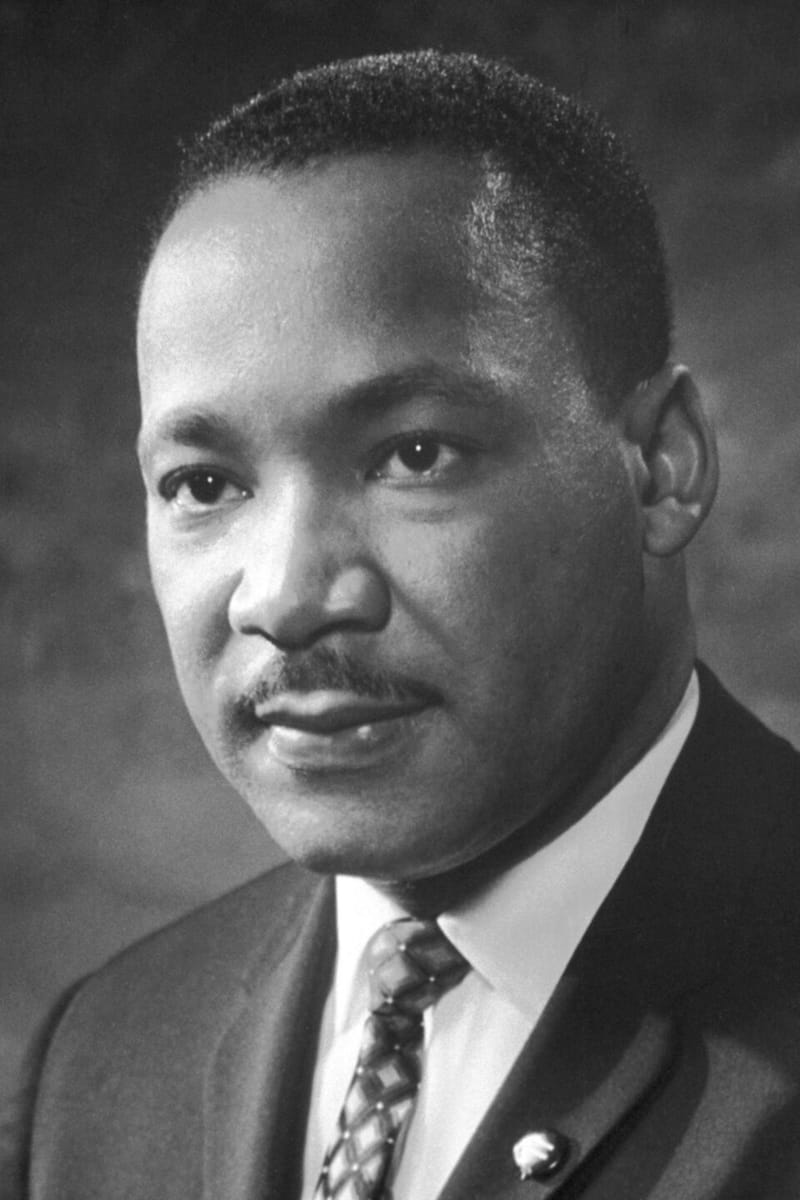
On December 1, 1955, Parks refused to give up her seat to a white passenger and was arrested. She was not the first: fifteen-year-old Claudette Colvin and eighteen-year-old Mary Louise Smith had been arrested that year for the same defiance. But Parks, in King’s words, “was ideal for the role assigned to her by history” — her character and dedication made her one of the most respected people in Black Montgomery. Jo Ann Robinson and the Women’s Political Council called a one-day boycott for December 5, and 90 percent of the city’s Black residents stayed off the buses. That day the Montgomery Improvement Association was formed, with King as president, and the boycott went on for thirteen months.
During the boycott Parks worked as a dispatcher for the carpools that replaced the buses, was indicted along with King and more than eighty others under a 1921 anti-conspiracy law, and spoke in churches and other groups, including some in the North, to raise money. In November 1956 the U.S. Supreme Court affirmed that bus segregation was unconstitutional, and Montgomery’s buses were desegregated.
Beliefs and ideas
Parks rejected the myth that she had acted from physical fatigue: “I was not tired physically,” she wrote. “I was not old, although some people have an image of me as being old then. I was forty-two. No, the only tired I was, was tired of giving in.” Her lifelong commitment was to dignity and equal rights through organized, nonviolent resistance — and she stressed that she had not foreseen the consequences: “I had no idea when I refused to give up my seat on that Montgomery bus that my small action would help put an end to the segregation laws in the South.”
Controversies, limits, and criticism
Parks paid a heavy personal price. She lost her tailoring job and received death threats, and harassment continued after the boycott ended; in 1957 she and her family moved to Detroit to find work. For decades, popular accounts reduced her to a tired seamstress, obscuring the years of activism behind her protest and the role of the women organizers who sustained the boycott.
Legacy
In Detroit Parks worked from 1965 to 1988 in the office of Congressman John Conyers, helping homeless people find housing, and in 1987 she founded the Rosa and Raymond Parks Institute for Self-Development to train young people. In 1999 she received the Congressional Gold Medal. She died in October 2005 at the age of ninety-two. Her story is a reminder that the movement’s most famous moments grew out of years of patient organizing.
Study this entry
Check your understanding
Try answering in your own words, then open the answer.
1.What shaped Rosa Parks early in life?Show answerHide
Rosa Louise McCauley was born on February 4, 1913, in Tuskegee, Alabama, and spent her first years on a small farm with her mother, grandparents, and brother, where she saw the Ku Klux Klan ride at night and listened in fear as lynchings happened nearby.From “Early life and context” above.
2.What were Rosa Parks’s major achievements?Show answerHide
On December 1, 1955, Parks refused to give up her seat to a white passenger and was arrested. She was not the first: fifteen-year-old Claudette Colvin and eighteen-year-old Mary Louise Smith had been arrested that year for the same defiance.From “Major actions and achievements” above.
3.What criticism or controversy surrounds Rosa Parks?Show answerHide
Parks paid a heavy personal price. She lost her tailoring job and received death threats, and harassment continued after the boycott ended; in 1957 she and her family moved to Detroit to find work.From “Controversies, limits, and criticism” above.
4.How is Rosa Parks remembered?Show answerHide
In Detroit Parks worked from 1965 to 1988 in the office of Congressman John Conyers, helping homeless people find housing, and in 1987 she founded the Rosa and Raymond Parks Institute for Self-Development to train young people. In 1999 she received the Congressional Gold Medal.From “Legacy” above.
Turn this entry into 10 flashcards (key facts, dates, and why it matters) and review them in Learn.
Related History
How this connects to the rest of the atlas.
People

Sources
- 1.Parks, Rosa
The Martin Luther King, Jr. Research and Education Institute, Stanford University · Scholarly · cited for life, arrest, role in the boycott
- 2.Montgomery Bus Boycott
The Martin Luther King, Jr. Research and Education Institute, Stanford University · Scholarly · cited for boycott dates, organizers, carpools, Browder v. Gayle
- 3.Rosa Parks
National Park Service · Institutional · cited for childhood, NAACP work, earlier defiance, later life and honors
Image credits
- Rosa Parks, Associated Press, 1956-02-24. Via Wikimedia Commons · Public domain · Source
Written for American History Atlas from the sources above. See how entries are researched.
Atlas by Alexander. More on Telegram.