PlaceCivil Rights and Social Transformation
Little Rock Central High School
Site of the 1957 desegregation crisis, now a National Historic Site
Little Rock, Arkansas
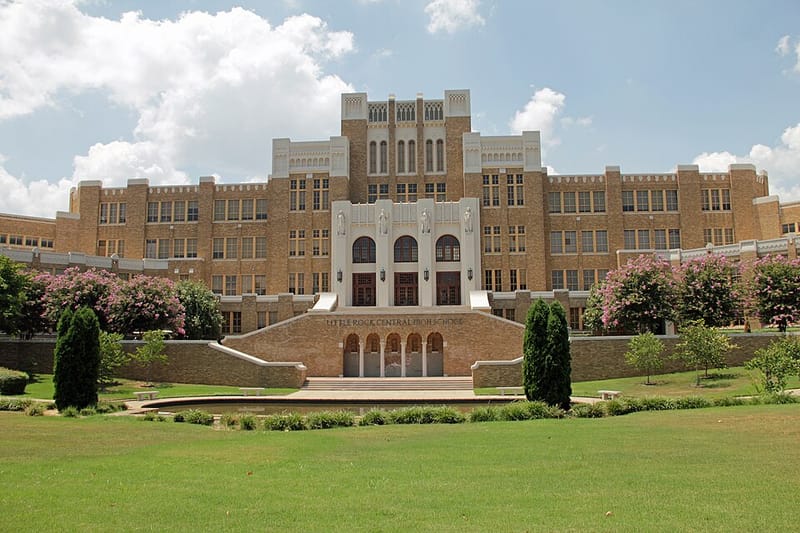
Little Rock Central High School became a battleground in 1957, when nine Black students — the Little Rock Nine — needed federal troops to attend classes there. Built beginning in 1926, the school is still an operating public high school and is also a National Historic Site managed by the National Park Service, which offers guided tours of the grounds.
Key facts
- Location
- Little Rock, Arkansas
- Built
- Construction began 1926, as Little Rock Senior High School
- 1957–58 enrollment
- About 1,800 students in grades 10–12
- Today
- An operating four-year public high school of about 2,500 students
- Protected site
- Little Rock Central High School National Historic Site (National Park Service)
- Address of the visitor center
- 2120 W. Daisy L. Gatson Bates Drive
Why it matters
Central High is a landmark of the civil rights movement — a place where the federal government enforced the Constitution against a state’s resistance.
About the place
Central High is an active school, so public access inside the building is limited; National Park Service rangers lead guided tours of the grounds. The street in front of the visitor center is named for Daisy Bates, the NAACP leader who guided the nine students.
History
Construction of Little Rock Senior High School, later renamed Central High, began in 1926. In September 1957 the school became the focus of national and international attention when Governor Orval Faubus used the Arkansas National Guard to block nine Black students from enrolling, and President Eisenhower sent the 101st Airborne Division to protect them. About 1,800 students attended Central during that first year of desegregation.
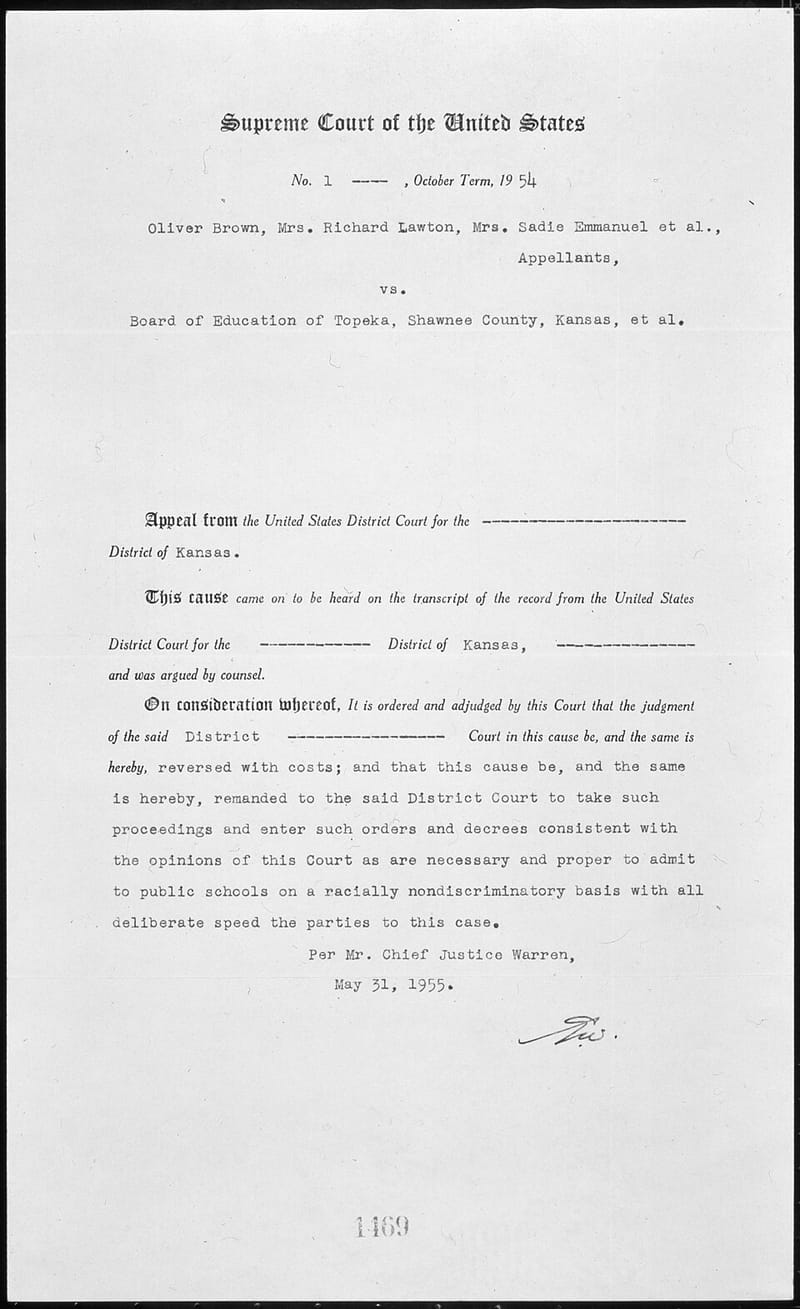
Central High was not the first Arkansas school to desegregate: schools in Charleston and Fayetteville did so in the fall of 1954, Hoxie in 1955, and Bentonville in 1956. But the confrontation at Central made it the symbol of the struggle over Brown v. Board of Education.
Study this entry
Check your understanding
Try answering in your own words, then open the answer.
1.What is this place?Show answerHide
Central High is an active school, so public access inside the building is limited; National Park Service rangers lead guided tours of the grounds. The street in front of the visitor center is named for Daisy Bates, the NAACP leader who guided the nine students.From “About the place” above.
2.What happened here?Show answerHide
Construction of Little Rock Senior High School, later renamed Central High, began in 1926.From “History” above.
Turn this entry into 11 flashcards (key facts, dates, and why it matters) and review them in Learn.
Related History
How this connects to the rest of the atlas.
People
Court cases

Sources
- 1.Frequently Asked Questions — Little Rock Central High School National Historic Site
National Park Service · Institutional · cited for school facts, enrollment, Arkansas desegregation
- 2.Little Rock Central High School National Historic Site
National Park Service · Institutional · cited for site overview
- 3.Little Rock School Desegregation
The Martin Luther King, Jr. Research and Education Institute, Stanford University · Scholarly · cited for Little Rock Nine, Faubus, Eisenhower
Image credits
- Little Rock Central High School, Ks0stm, 2011-07-27. Via Wikimedia Commons · CC BY-SA 3.0 · Source
Written for American History Atlas from the sources above. See how entries are researched.
Atlas by Alexander. More on Telegram.