PersonWorld War II and the Early Cold War
Dwight D. Eisenhower
Commander of the D-Day invasion and thirty-fourth president, who presided over the prosperous, anxious 1950s
1890–1969
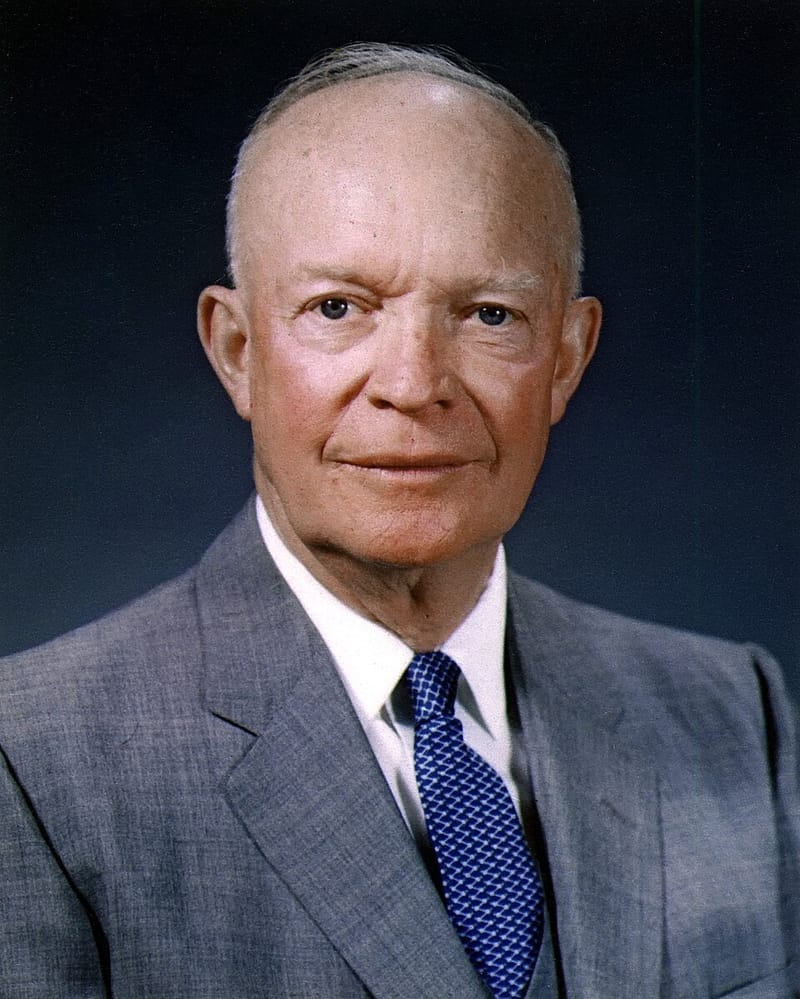
Dwight D. Eisenhower rose in five years from an obscure lieutenant colonel to Supreme Commander of the Allied invasion of Nazi-occupied Europe on D-Day. Elected president in 1952 and 1956, “Ike” ended the Korean War, built the Interstate Highway System, and kept the country out of new wars while waging the Cold War with nuclear deterrence and CIA covert action. He sent troops to enforce school desegregation in Little Rock but never endorsed the Brown decision, and on leaving office he warned Americans against the “military-industrial complex.”
Key facts
- Born
- October 14, 1890, Denison, Texas
- Died
- March 28, 1969
- Roles
- Supreme Allied Commander, D-Day invasion (1944); Army chief of staff (1945–1948); President of Columbia University; First Supreme Commander of NATO forces in Europe; Thirty-fourth president (1953–1961)
- Presidency
- January 20, 1953 – January 20, 1961; Republican
- D-Day
- Gave the order — “Okay, let’s go” — for the Normandy invasion of June 6, 1944
- Interstate highways
- Launched in 1956: a 41,000-mile network, the largest public works program in U.S. history
- Little Rock
- 1957: the first president since Reconstruction to send troops into the South to enforce federal law
- Farewell warning
- Beware the “military-industrial complex” (January 1961)
- Reputation
- Ranked 22nd by historians in 1962; 8th by 1994
Why it matters
Eisenhower led the largest invasion in history and then, as president, accepted the New Deal, built the interstates, and kept the Cold War from turning hot. His caution on civil rights and his reliance on covert action left problems his successors had to face.
Early life and context
Eisenhower was born on October 14, 1890, in a house by the railroad tracks in Denison, Texas, and grew up in the small farm town of Abilene, Kansas. His father worked as a mechanic in a creamery; his mother, Ida, a Mennonite, was a religious pacifist — though she did not try to stop her son from becoming a soldier. Inspired by a friend headed for the Naval Academy, he won an appointment to West Point in 1911, where a knee injury ended his football career and his pranks, card playing, and smoking left his teachers expecting a good officer but not a great one. He graduated 61st of 164 and in 1916 married Mamie Doud.
World War I ended a week before he was to sail for Europe, and his career stalled. When he and his friend George S. Patton argued in print for using tanks to break the deadlock of trench warfare, the Army threatened him with a court-martial. His luck turned under General Fox Conner, who got him into the Command and General Staff College; Eisenhower graduated first of 245 officers. He served as an aide to General John J. Pershing and then for seven stormy years to Douglas MacArthur, including in the Philippines.
Major actions and achievements
Huge army maneuvers in Louisiana, with more than 400,000 troops, revealed his gift for strategic planning, and days after Pearl Harbor he was called to Washington to work on war plans. He so impressed the Army chief of staff, George C. Marshall, that promotions came quickly. He commanded the Allied invasion of North Africa in November 1942, then the landings in Sicily and Italy, and in 1944 became Supreme Commander of Operation Overlord. By working patiently with Allied leaders, he held together the coalition that launched the invasion of Normandy; despite the risk of bad weather he gave the go-ahead for June 6, 1944, with a terse “Okay, let’s go.” After the war he was Army chief of staff, president of Columbia University, and the first Supreme Commander of NATO forces in Europe. Truman privately offered to run as his vice president on the Democratic ticket in 1948; Eisenhower declined, and in 1952 he declared himself a Republican and won the presidency with Richard Nixon as his running mate.
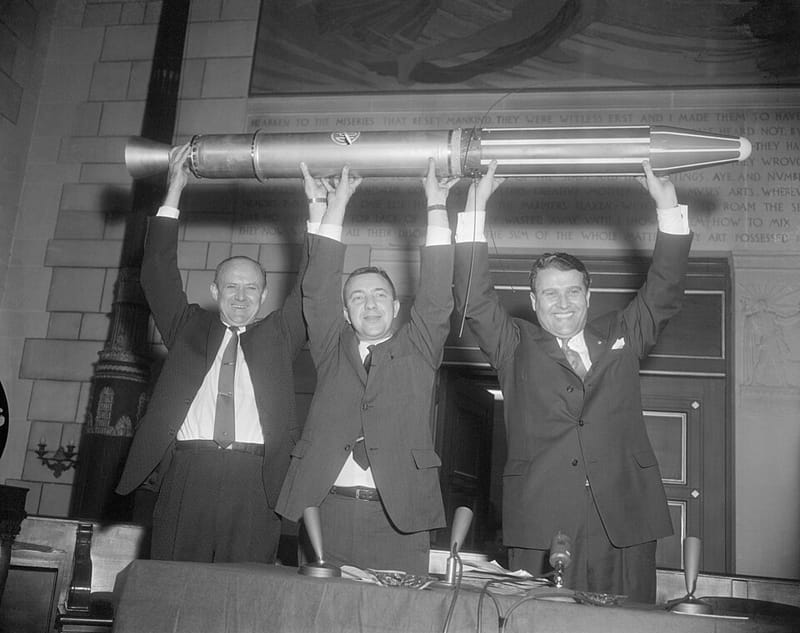
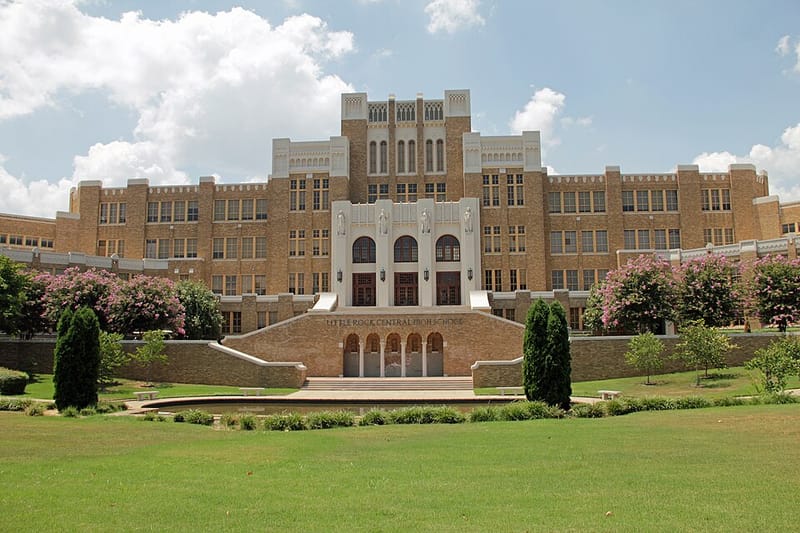
Six months after taking office he agreed to an armistice in Korea, and he sent combat troops into action only once more, to Lebanon in 1958. His “Modern Republicanism” steered “down the middle of the road”: he expanded Social Security, raised the minimum wage, created the Department of Health, Education, and Welfare, built the St. Lawrence Seaway with Canada, and in 1956 launched the Interstate Highway System — enough concrete, he said, to build “six sidewalks to the moon.” Growth was strong and inflation low, and personal income rose 45 percent during his presidency. In 1957 he signed the first civil rights law since Reconstruction, and when a mob blocked the integration of Central High School in Little Rock, he sent federal troops. He also kept defense spending in check, refusing panicked demands for huge increases after the Soviets launched Sputnik in 1957.
Beliefs and ideas
Eisenhower believed national security depended on a healthy economy as well as military strength: his “New Look” relied on nuclear weapons and air power for “more bang for the buck” instead of costly conventional forces. He insisted on spending not one penny less than security required, nor one penny more, and he warned that every gun and warship was “a theft from those who hunger and are not fed.” On race he was a gradualist who believed changes in hearts and minds mattered more than laws. In his Farewell Address he cautioned that “an immense military establishment and a large arms industry” could endanger American liberties.
Controversies, limits, and criticism
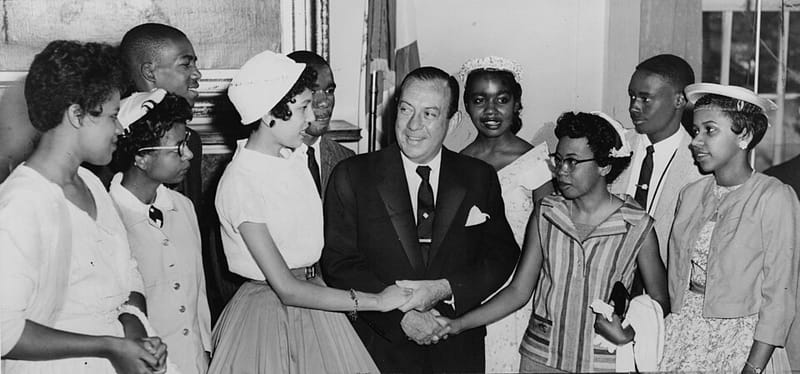
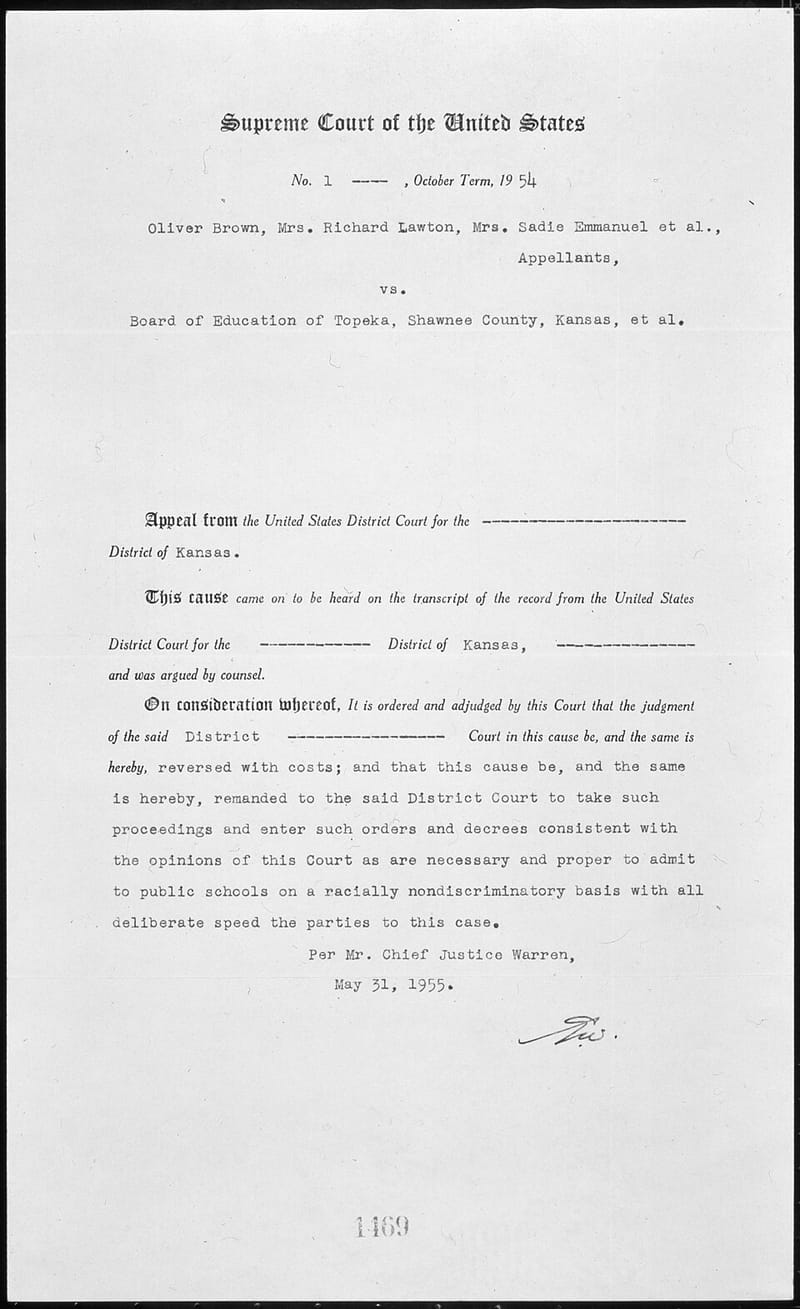
Eisenhower never publicly endorsed Brown v. Board of Education, and his silence may have encouraged Southern resistance; he sent troops to Little Rock to uphold the law, not because he backed integration, and when Arkansas closed its schools in 1958 he took no further action. When he left office, only 6 percent of Black students attended integrated schools. He privately despised Senator Joseph McCarthy but refused to confront him publicly — “I just won’t get into a pissing contest with that skunk” — which prolonged McCarthy’s power (see McCarthyism). He authorized CIA operations that helped topple the governments of Iran in 1953 and Guatemala in 1954, with lasting consequences, and committed American prestige to a non-Communist South Vietnam. In 1960 a U-2 spy plane was shot down over the Soviet Union, and the administration’s cover stories were exposed as lies, wrecking a planned summit.
Legacy
Eisenhower retired to a farm beside the Civil War battlefield at Gettysburg, where he raised Angus cattle and painted, and he advised his successors on Vietnam. He died at Walter Reed Army Hospital on March 28, 1969; his last words were “I want to go; God take me.” He was buried in Abilene. Contemporaries noted his frequent golf games and garbled press conferences, and in 1962 historians ranked him only 22nd among presidents. But when his papers opened, they revealed a leader firmly in charge who used a “hidden hand” behind the scenes, and by 1994 historians ranked him 8th. He now gets credit for preserving peace and prosperity — while historians still note the limits of his record on civil rights and covert action.
Study this entry
Check your understanding
Try answering in your own words, then open the answer.
1.What shaped Dwight D. Eisenhower early in life?Show answerHide
Eisenhower was born on October 14, 1890, in a house by the railroad tracks in Denison, Texas, and grew up in the small farm town of Abilene, Kansas. His father worked as a mechanic in a creamery; his mother, Ida, a Mennonite, was a religious pacifist — though she did not try to stop her son from becoming a soldier.From “Early life and context” above.
2.What were Dwight D. Eisenhower’s major achievements?Show answerHide
Huge army maneuvers in Louisiana, with more than 400,000 troops, revealed his gift for strategic planning, and days after Pearl Harbor he was called to Washington to work on war plans. He so impressed the Army chief of staff, George C. Marshall, that promotions came quickly.From “Major actions and achievements” above.
3.What criticism or controversy surrounds Dwight D. Eisenhower?Show answerHide
Eisenhower never publicly endorsed Brown v. Board of Education, and his silence may have encouraged Southern resistance; he sent troops to Little Rock to uphold the law, not because he backed integration, and when Arkansas closed its schools in 1958 he took no further action.From “Controversies, limits, and criticism” above.
4.How is Dwight D. Eisenhower remembered?Show answerHide
Eisenhower retired to a farm beside the Civil War battlefield at Gettysburg, where he raised Angus cattle and painted, and he advised his successors on Vietnam. He died at Walter Reed Army Hospital on March 28, 1969; his last words were “I want to go; God take me.”From “Legacy” above.
Turn this entry into 12 flashcards (key facts, dates, and why it matters) and review them in Learn.
Related History
How this connects to the rest of the atlas.
Events
Wars
People
Court cases

Sources
- 1.Dwight D. Eisenhower (overview and fast facts)
Miller Center, University of Virginia · Scholarly · cited for dates, family, offices
- 2.Dwight D. Eisenhower: Life in Brief
Miller Center, University of Virginia (Chester J. Pach Jr.) · Scholarly · cited for career overview, presidency, reputation
- 3.Dwight D. Eisenhower: Life Before the Presidency
Miller Center, University of Virginia (Chester J. Pach Jr.) · Scholarly · cited for childhood, West Point, interwar career, World War II, postwar posts
- 4.Dwight D. Eisenhower: Domestic Affairs
Miller Center, University of Virginia (Chester J. Pach Jr.) · Scholarly · cited for Modern Republicanism, highways, economy, McCarthy, civil rights
- 5.Dwight D. Eisenhower: Foreign Affairs
Miller Center, University of Virginia (Chester J. Pach Jr.) · Scholarly · cited for New Look, Korea, U-2, covert action, Farewell Address
- 6.Dwight D. Eisenhower: Life After the Presidency
Miller Center, University of Virginia (Chester J. Pach Jr.) · Scholarly · cited for retirement, death
- 7.Dwight D. Eisenhower: Impact and Legacy
Miller Center, University of Virginia (Chester J. Pach Jr.) · Scholarly · cited for historians’ rankings, Sputnik, assessment
Image credits
- President Dwight D. Eisenhower, White House, 1959-05-29. Via Wikimedia Commons · Public domain · Source
Written for American History Atlas from the sources above. See how entries are researched.
Atlas by Alexander. More on Telegram.