EventIndustrialization and the Gilded Age
The Overthrow and Annexation of Hawaiʻi
How American sugar planters toppled Queen Liliʻuokalani and the United States took the islands in 1898
January 17, 1893 – July 7, 1898Honolulu, Kingdom of Hawaiʻi
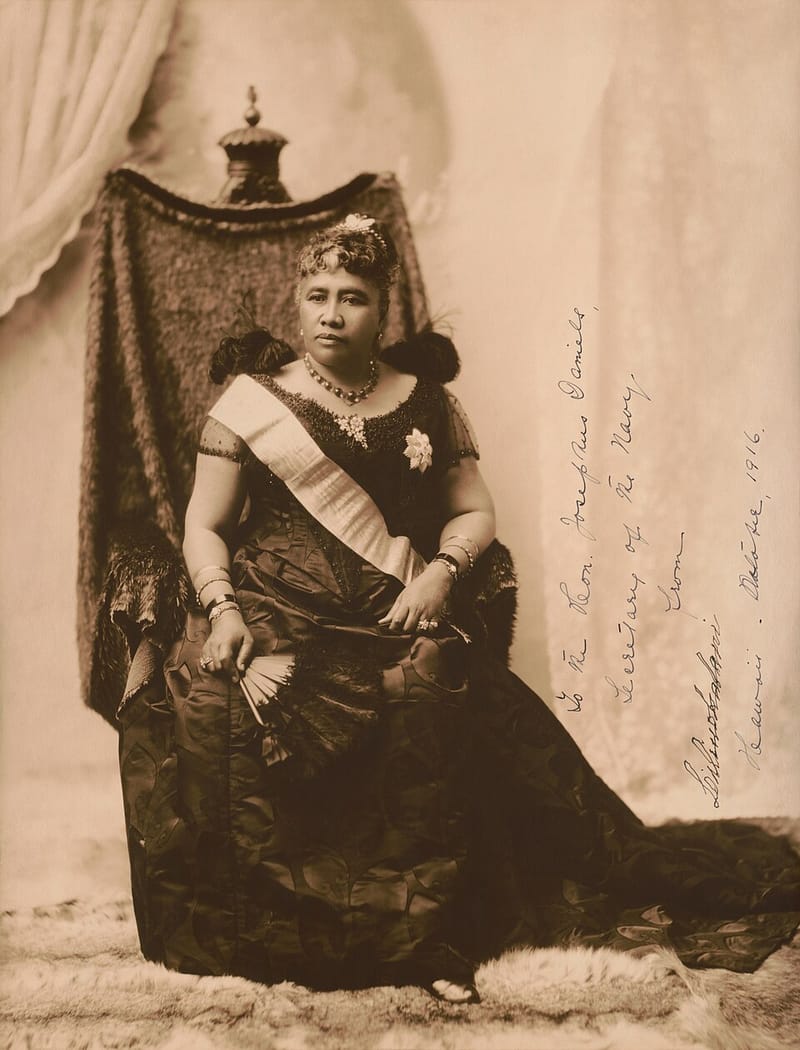
In the nineteenth century the Kingdom of Hawaiʻi came to be dominated by American missionaries, businessmen, and sugar planters. In 1887 armed businessmen forced King Kalākaua to accept the “Bayonet Constitution,” and on January 17, 1893, with the support of the U.S. minister and Marines from the USS Boston, they overthrew his sister, Queen Liliʻuokalani. A U.S. investigation found the overthrow illegal, and more than half of Native Hawaiians signed a petition against annexation. But during the Spanish-American War, Congress annexed the islands by joint resolution, signed on July 7, 1898. Hawaiʻi became the fiftieth state in 1959.
Key facts
- Date
- January 17, 1893 – July 7, 1898
- Location
- Honolulu, Kingdom of Hawaiʻi
- Overthrow
- January 17, 1893: a “Committee of Safety” of American businessmen, backed by U.S. Marines, deposed Queen Liliʻuokalani
- Investigation
- President Cleveland’s Blount Commission found the overthrow illegal
- Petition
- 21,269 Native Hawaiians — more than half — signed a petition against annexation in 1897
- Annexation
- Newlands Resolution, signed by President McKinley on July 7, 1898
- Statehood
- August 21, 1959: Hawaiʻi became the fiftieth state
Why it matters
The annexation of Hawaiʻi marked the United States’ turn toward overseas empire in the Pacific. It was carried out against the will of most Native Hawaiians — after a coup that a U.S. investigation called illegal, and by a joint resolution that bypassed the treaty process.
Historical background
King Kamehameha united the Hawaiian Islands into one kingdom in 1810. American missionaries arrived in 1820 and, working alongside business interests, acquired large tracts of land and started lucrative sugar plantations; over the century an oligarchy of sugar companies, the “Big Five,” gained enormous power. A reciprocity treaty let Hawaiian sugar enter the U.S. market tax-free, and as planters came to dominate the islands, traditional culture suffered: teaching the Hawaiian language and performing the hula were among the practices prohibited.
Causes and contributing factors
The planters wanted to protect their profits. They feared that the United States would impose a tariff on Hawaiian sugar and wanted to protect the islands’ free-trade status with the United States, their main customer. Expansionists in Washington, among them Theodore Roosevelt, also valued the islands for an excellent harbor at Pearl Harbor, a fueling station on the way to Asian markets, and a barrier against Japanese expansion.
What happened
On July 6, 1887, a militia tied to the Hawaiian League, a party of mostly American businessmen led by Lorrin Thurston, forced King Kalākaua to sign a constitution that stripped him of power and many Native Hawaiians of their rights — the “Bayonet Constitution.” When Kalākaua died in 1891, his sister Liliʻuokalani succeeded him and moved to restore royal power and Hawaiian rights with a new constitution. A Committee of Safety led by Sanford Dole struck back. Supported by the American minister, John Stevens, and Marines from the warship USS Boston, it overthrew the queen in a bloodless coup on January 17, 1893, and declared itself the Provisional Government; Stevens, without State Department approval, proclaimed Hawaiʻi a U.S. protectorate.
President Benjamin Harrison signed an annexation treaty, but his successor, Grover Cleveland, withdrew it and sent an investigator, James Blount, who concluded that the queen had been overthrown illegally. Dole refused to give up power and in 1894 proclaimed the Republic of Hawaiʻi. An armed Native Hawaiian revolt in January 1895 was crushed, and the queen was imprisoned. When President William McKinley signed a new annexation treaty in 1897, Native Hawaiians organized a mass petition against it; 21,269 people signed, and a delegation carried it to Washington. The treaty failed in the Senate. Then the Spanish-American War made the islands look strategically vital, and annexationists turned to a joint resolution, which needed only a simple majority in each house rather than two-thirds of the Senate. McKinley signed the Newlands Resolution on July 7, 1898.
Immediate consequences
Sanford Dole became the first governor of the Territory of Hawaiʻi. In a last attempt to regain her homeland for its people, Liliʻuokalani sent a protest to the House of Representatives, declaring that her throne had been taken illegally. As a territory, Hawaiʻi had only a non-voting delegate in Congress and appointed governors and judges, an arrangement that let wealthy white planters import cheap labor and keep their markets.
Long-term significance
Native Hawaiians and other non-white residents pushed for statehood for more than half a century. A 1937 congressional committee found Hawaiʻi qualified, but the attack on Pearl Harbor and suspicion of Japanese Hawaiians stalled the effort. Congress finally paired Hawaiʻi with Alaska; after Alaska’s admission in early 1959, a Hawaiʻi statehood bill passed in March, voters approved it, and on August 21, 1959, President Eisenhower proclaimed Hawaiʻi the fiftieth state.
Study this entry
Check your understanding
Try answering in your own words, then open the answer.
1.What led to the Overthrow and Annexation of Hawaiʻi?Show answerHide
The planters wanted to protect their profits. They feared that the United States would impose a tariff on Hawaiian sugar and wanted to protect the islands’ free-trade status with the United States, their main customer.From “Causes and contributing factors” above.
2.What happened?Show answerHide
On July 6, 1887, a militia tied to the Hawaiian League, a party of mostly American businessmen led by Lorrin Thurston, forced King Kalākaua to sign a constitution that stripped him of power and many Native Hawaiians of their rights — the “Bayonet Constitution.”From “What happened” above.
3.What were the immediate consequences?Show answerHide
Sanford Dole became the first governor of the Territory of Hawaiʻi. In a last attempt to regain her homeland for its people, Liliʻuokalani sent a protest to the House of Representatives, declaring that her throne had been taken illegally.From “Immediate consequences” above.
4.Why does it still matter?Show answerHide
Native Hawaiians and other non-white residents pushed for statehood for more than half a century. A 1937 congressional committee found Hawaiʻi qualified, but the attack on Pearl Harbor and suspicion of Japanese Hawaiians stalled the effort.From “Long-term significance” above.
Turn this entry into 11 flashcards (key facts, dates, and why it matters) and review them in Learn.
Related History
How this connects to the rest of the atlas.
Events
People

Sources
- 1.Joint Resolution to Provide for Annexing the Hawaiian Islands to the United States (1898)
National Archives, Milestone Documents · Institutional · cited for kingdom, Bayonet Constitution, overthrow, Blount, petition, joint resolution, territory, statehood
- 2.19. American Empire
The American Yawp (Stanford University Press) · Scholarly · cited for missionaries, sugar oligarchy, annexation debate, Roosevelt’s reasons
- 3.The Spanish-American War, 1898
Office of the Historian, U.S. Department of State · Institutional · cited for war context
Image credits
- Queen Liliʻuokalani, James J. Williams, circa 1891. Via Wikimedia Commons · Public domain · Source
Written for American History Atlas from the sources above. See how entries are researched.
Atlas by Alexander. More on Telegram.