ConceptExpansion and Sectional Conflict
Manifest Destiny
The belief that the United States was destined to spread across the continent
1845
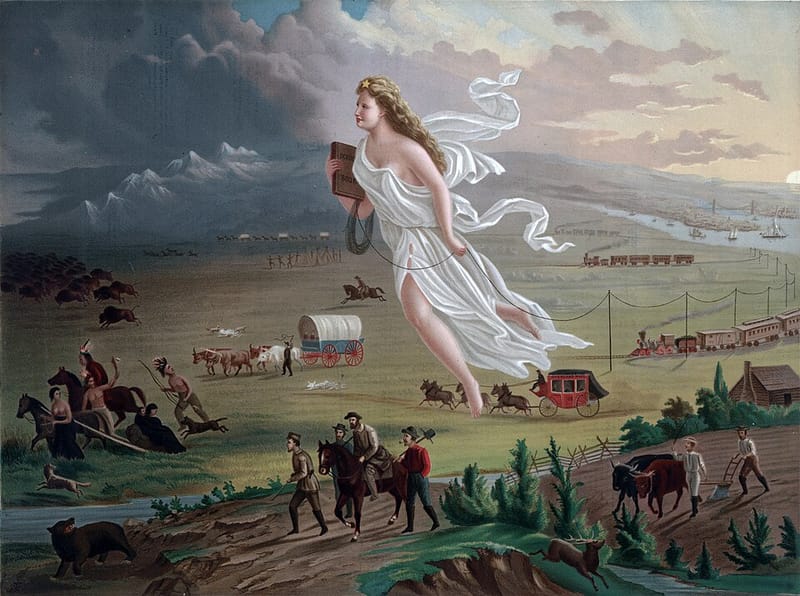
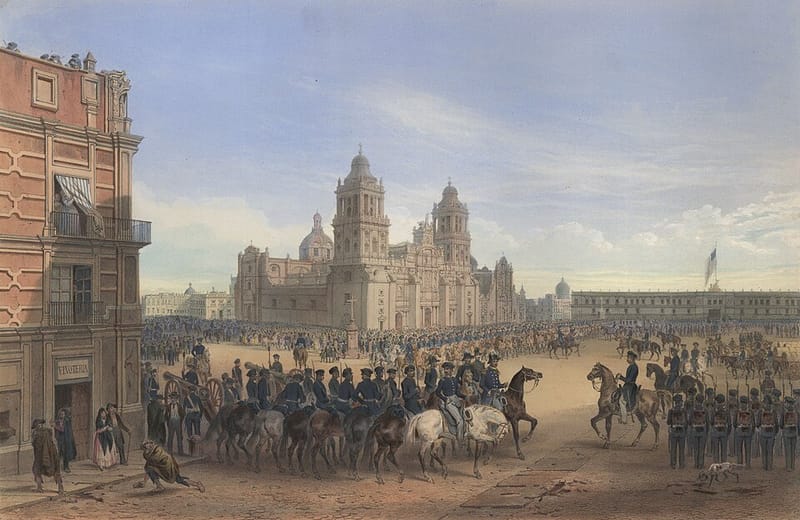
“Manifest Destiny” was the phrase, first used by the editor John O’Sullivan in 1845, for the belief that the United States had a God-given right and duty to expand across North America. It gave a name to an outlook that justified the annexation of Texas, the acquisition of Oregon, and the war with Mexico — and that treated Native nations and Mexicans as obstacles to American progress.
Key facts
- Date
- 1845
- Coined
- 1845, by John O’Sullivan, in “Annexation,” The United States Magazine and Democratic Review
- Core claim
- A destiny “to overspread the continent allotted by Providence”
- Associated with
- President James K. Polk and the Democratic Party
Why it matters
Manifest Destiny gave a confident, providential name to the conquest of the continent. Historians today use it to examine how ideals of freedom and expansion were joined to dispossession and racial hierarchy.
Definition
Manifest Destiny combined three beliefs: that the United States had a special mission to spread democracy and freedom; that this mission was ordained by God (“Providence”); and that it was obvious — “manifest” — and therefore inevitable. In O’Sullivan’s words, other nations were trying to check “the fulfillment of our manifest destiny to overspread the continent allotted by Providence for the free development of our yearly multiplying millions.”
Historical context
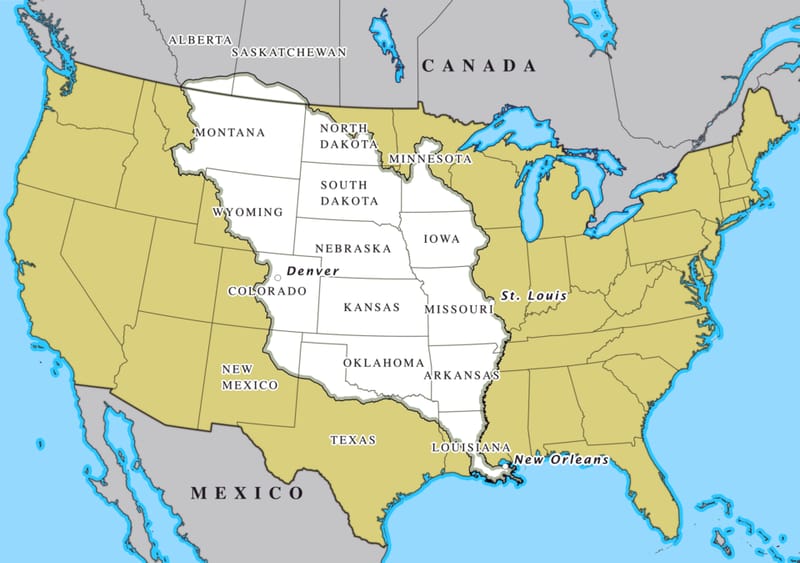
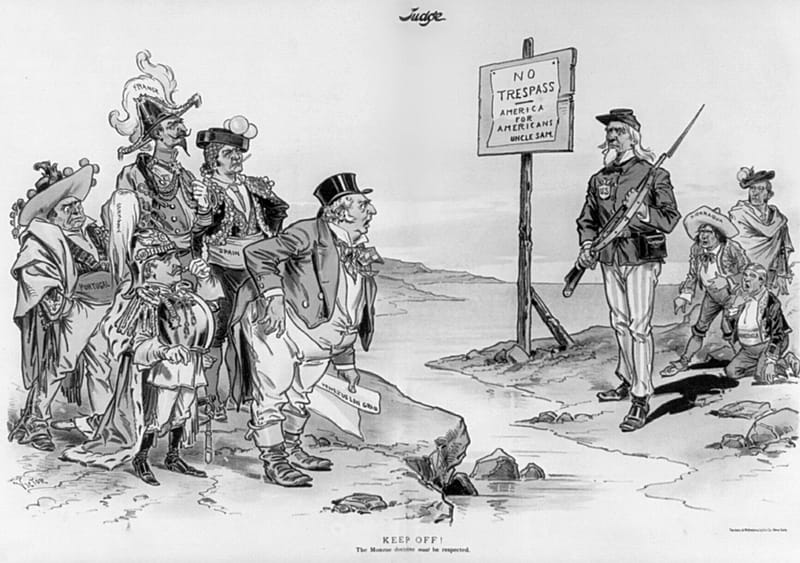
O’Sullivan wrote in 1845 to urge the annexation of Texas, which he argued Britain and France were trying to block. The idea drew on older assumptions dating back to the Louisiana Purchase and the Monroe Doctrine, which the State Department’s historians describe as providing, together with Manifest Destiny, precedent and support for U.S. expansion on the continent by the mid-1800s. It was also bound up with ideas of racial and cultural superiority: expansionists often described Native peoples and Mexicans as unfit to govern the land.
Not all Americans agreed. Whigs and many Northerners opposed the war with Mexico, and antislavery critics saw Manifest Destiny as a cover for extending slavery.
Examples
- The annexation of Texas (1845) and the Mexican-American War (1846–48).
- The division of the Oregon Country with Britain (1846).
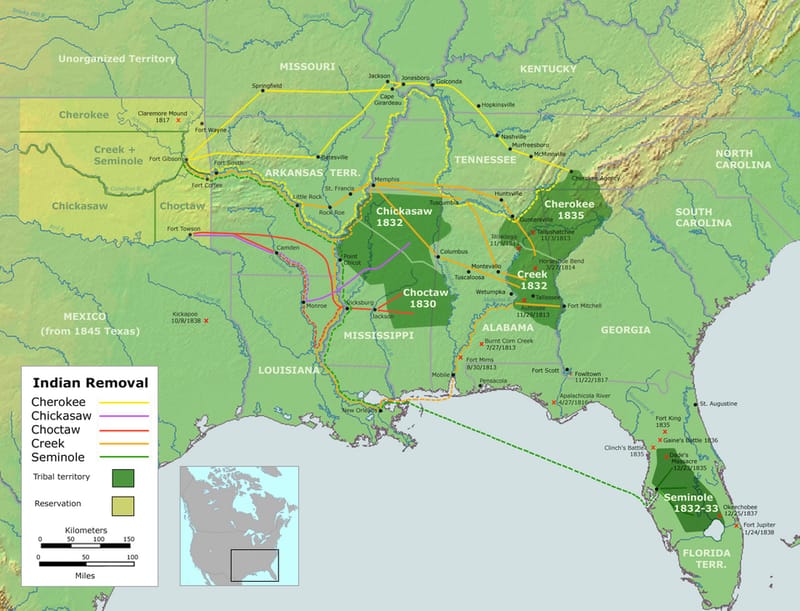
- The removal of Native nations and later wars on the Plains, justified as making way for American settlement.
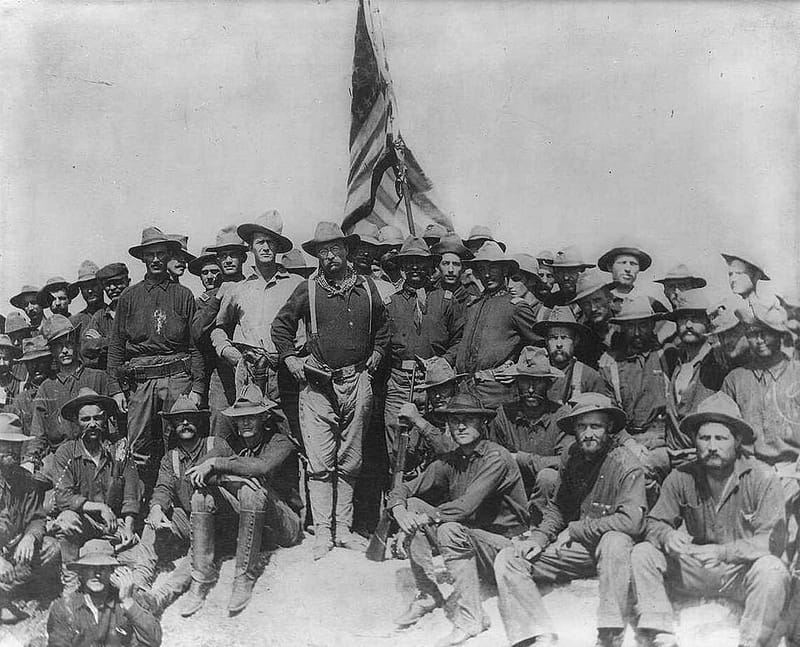
- Late-nineteenth-century overseas expansion, including the Spanish-American War, which some saw as Manifest Destiny carried beyond the continent.
Study this entry
Check your understanding
Try answering in your own words, then open the answer.
1.What does “Manifest Destiny” mean?Show answerHide
Manifest Destiny combined three beliefs: that the United States had a special mission to spread democracy and freedom; that this mission was ordained by God (“Providence”); and that it was obvious — “manifest” — and therefore inevitable.From “Definition” above.
2.Where did the idea come from?Show answerHide
O’Sullivan wrote in 1845 to urge the annexation of Texas, which he argued Britain and France were trying to block.From “Historical context” above.
3.What are some examples?Show answerHide
- The annexation of Texas (1845) and the Mexican-American War (1846–48). - The division of the Oregon Country with Britain (1846). - The removal of Native nations and later wars on the Plains, justified as making way for American settlement. - Late-nineteenth-century overseas expansion, including the Spanish-American War, which some saw as Manifest Destiny carried beyond the continent.From “Examples” above.
Turn this entry into 9 flashcards (key facts, dates, and why it matters) and review them in Learn.
Related History
How this connects to the rest of the atlas.
Events
Wars

.jpg)
Sources
- 1.John O’Sullivan Declares America’s Manifest Destiny, 1845
The American Yawp Reader (Stanford University Press) · Primary source · cited for O’Sullivan’s text
- 2.Monroe Doctrine, 1823
U.S. Department of State, Office of the Historian · Institutional · cited for Monroe Doctrine and Manifest Destiny supporting expansion
- 3.The Annexation of Texas, the Mexican-American War, and the Treaty of Guadalupe-Hidalgo, 1845–1848
U.S. Department of State, Office of the Historian · Institutional · cited for annexation, border dispute, Slidell mission, declaration of war, territory gained
Image credits
- American Progress, John Gast, 1872. Via Wikimedia Commons · Public domain · Source
Written for American History Atlas from the sources above. See how entries are researched.
Atlas by Alexander. More on Telegram.