EventExpansion and Sectional Conflict
The California Gold Rush
The 1848 discovery at Sutter’s Mill that sent fortune seekers flooding west
January 24, 1848Coloma and the Sierra Nevada foothills, California
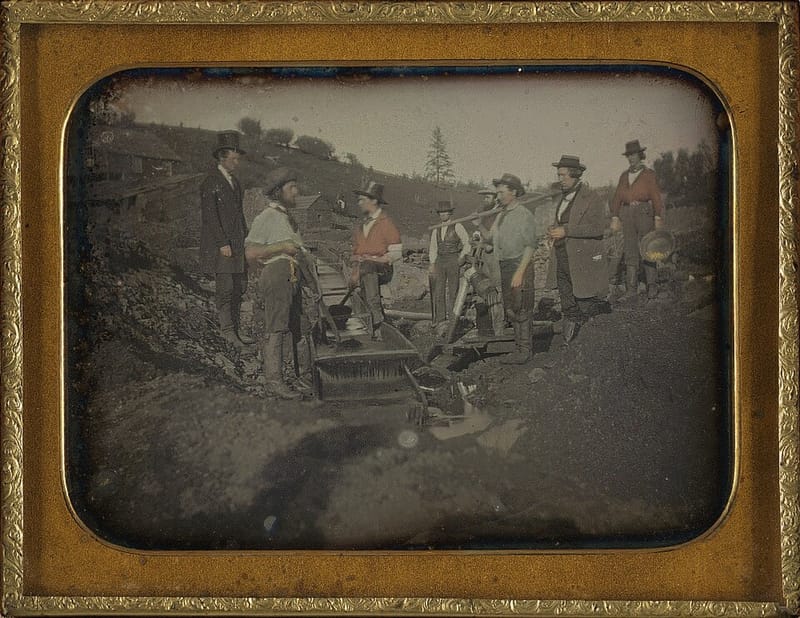
On January 24, 1848, James W. Marshall, building a sawmill for John Sutter on the South Fork of the American River, found gold. Fortune seekers — mostly young men — poured in from the eastern states and from around the world, and San Francisco grew from about five hundred people to almost fifty thousand in five years. Few miners got rich, but within two years California had applied to join the Union as a free state; the rush brought violence against Native Americans and long-established Mexican communities, and drew immigrants from China.
Key facts
- Date
- January 24, 1848
- Location
- Coloma and the Sierra Nevada foothills, California
- Discovery
- January 24, 1848, at Sutter’s sawmill in Coloma, by James W. Marshall
- San Francisco
- About 500 people in 1848; almost 50,000 by 1853
- Who came
- Mostly young single men, plus some women; by the late 1850s Chinese and Mexican immigrants were a fifth of California’s miners
- Statehood
- California asked to join the Union as a free state in 1849 and was admitted in 1850
- Today
- Marshall Gold Discovery State Historic Park, Coloma
Why it matters
The gold rush transformed California within a few years, intensified the national crisis over slavery when the new state sought admission, set a pattern of mining rushes across the West, and brought violence and dispossession to Native peoples.
Historical background
California had belonged to Mexico until the Mexican-American War. It was at least three hard months’ travel from the nearest American settlements, and before 1848 it drew far fewer settlers than the farmland of Oregon. In the Sacramento Valley area, John Sutter hired a contractor, James W. Marshall, to build a sawmill at Coloma.
Causes and contributing factors
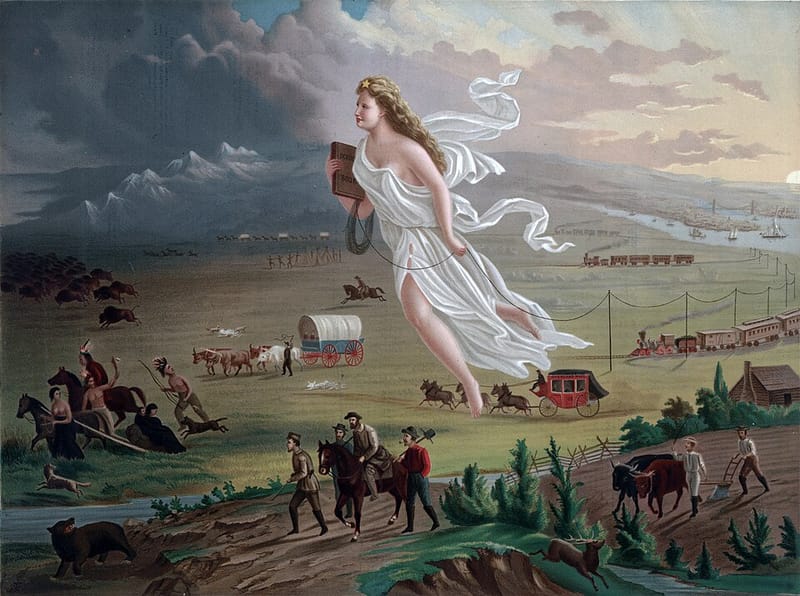
In the historian’s phrase in The American Yawp, if the pull of the West was manifest destiny’s kindling, “the discovery of gold in California was the spark that set the fire ablaze.” Most western migrants wanted land to farm, but the lure of getting rich quick drew a different crowd: young, mostly single men willing to gamble everything on a strike.
What happened
Marshall found gold on January 24, 1848, and word soon spread. In 1848 and 1849 fortune seekers poured in from the eastern states and abroad; immigrants from China’s Guangdong Province, driven by famine, rebellion, and economic collapse, came as laborers. Gold towns sprang up across the foothills, and merchants, saloon keepers, and boardinghouse owners followed the miners. San Francisco exploded from about five hundred residents in 1848 to almost fifty thousand by 1853. Most prospectors failed: as later rushes also showed, the business of the rush often generated more wealth than the mines. Even Frederick Douglass, listing the ordinary work of free Black Americans in 1852, mentioned men “digging gold in California.”
Immediate consequences
With its population soaring, California asked in 1849 to enter the Union as a free state. That request threatened the balance between slave and free states in the Senate and led to the Compromise of 1850, which admitted California as a free state. In the mining districts, lawlessness and racial conflict were common; whites dominated as landowners and managers while poorer whites and ethnic minorities did the hardest labor, and competition for land and gold brought violence and abuse, especially against Native Americans and long-established Mexican communities.
Long-term significance
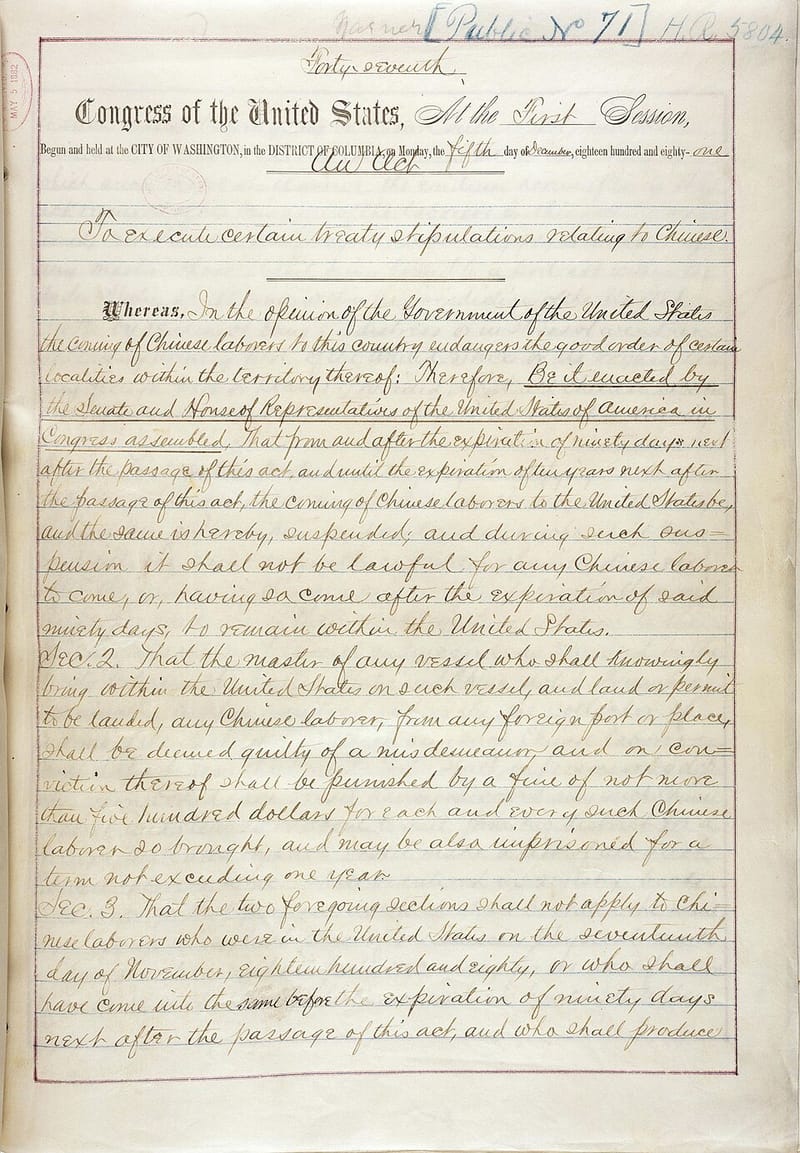
California’s rush became the model for a generation of strikes — Colorado in 1858, Nevada in 1859, Idaho, Montana, and the Black Hills in 1874 — that pulled settlers into the interior West and repeatedly overran Native lands and treaty rights. Californians soon demanded a transcontinental railroad to link them to the East. Chinese immigrants, at first welcomed as workers during the gold rush and railroad boom, later became scapegoats, culminating in the Chinese Exclusion Act of 1882. The discovery site at Coloma is preserved as Marshall Gold Discovery State Historic Park.
Study this entry
Check your understanding
Try answering in your own words, then open the answer.
1.What led to the California Gold Rush?Show answerHide
In the historian’s phrase in The American Yawp, if the pull of the West was manifest destiny’s kindling, “the discovery of gold in California was the spark that set the fire ablaze.”From “Causes and contributing factors” above.
2.What happened?Show answerHide
Marshall found gold on January 24, 1848, and word soon spread. In 1848 and 1849 fortune seekers poured in from the eastern states and abroad; immigrants from China’s Guangdong Province, driven by famine, rebellion, and economic collapse, came as laborers.From “What happened” above.
3.What were the immediate consequences?Show answerHide
With its population soaring, California asked in 1849 to enter the Union as a free state. That request threatened the balance between slave and free states in the Senate and led to the Compromise of 1850, which admitted California as a free state.From “Immediate consequences” above.
4.Why does it still matter?Show answerHide
California’s rush became the model for a generation of strikes — Colorado in 1858, Nevada in 1859, Idaho, Montana, and the Black Hills in 1874 — that pulled settlers into the interior West and repeatedly overran Native lands and treaty rights.From “Long-term significance” above.
Turn this entry into 11 flashcards (key facts, dates, and why it matters) and review them in Learn.
Related History
How this connects to the rest of the atlas.
Events

Sources
- 1.12. Manifest Destiny
The American Yawp (Stanford University Press) · Scholarly · cited for discovery, migrants, San Francisco growth, conflict, Chinese and Mexican miners
- 2.17. Conquering the West
The American Yawp (Stanford University Press) · Scholarly · cited for later mining rushes and their effects
- 3.Marshall Gold Discovery State Historic Park
California Department of Parks and Recreation · Institutional · cited for discovery site at Coloma on the South Fork of the American River
- 4.Compromise of 1850
National Archives · Institutional · cited for California’s 1849 request and admission as a free state
- 5.History
Angel Island Immigration Station Foundation · Institutional · cited for Chinese immigrants during the Gold Rush and after
- 6.What to the Slave Is the 4th of July?
Teaching American History (Ashbrook Center) · Primary source · cited for Douglass on Black Americans “digging gold in California”
Image credits
- California gold miners with long tom, George H. Johnson, between circa 1850 and circa 1852. Via Wikimedia Commons · Public domain · Source
Written for American History Atlas from the sources above. See how entries are researched.
Atlas by Alexander. More on Telegram.