EventCivil War and Reconstruction
The Transcontinental Railroad
Rails across the continent, 1863–1869
1863 – May 10, 1869Omaha, Nebraska, to Sacramento, California; joined at Promontory Summit, Utah
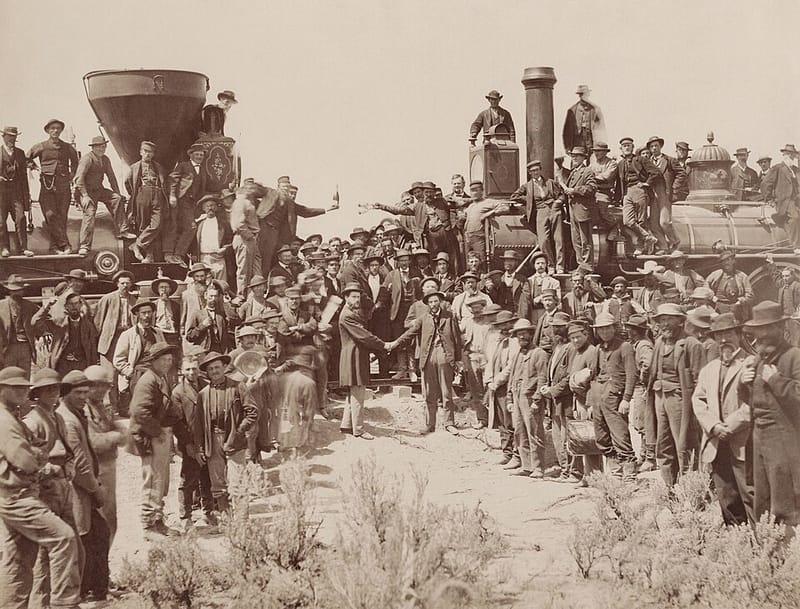
The first transcontinental railroad linked the existing rail network of the East with the Pacific coast in 1869, cutting a journey of several months to about a week. Built with massive federal land grants and loans authorized by the Pacific Railway Act of 1862, it was the work of two companies and tens of thousands of laborers — Irish, German, and Italian immigrants building west from Omaha, and more than 10,000 Chinese workers building east from Sacramento. It transformed the national economy and accelerated the conquest of the West and its Native peoples.
Key facts
- Date
- 1863 – May 10, 1869
- Location
- Omaha, Nebraska, to Sacramento, California; joined at Promontory Summit, Utah
- Dating note
- Authorized by the Pacific Railway Act of July 1, 1862; construction began in 1863; the last spike was driven at Promontory, Utah, on May 10, 1869.
- Authorized
- Pacific Railway Act, July 1, 1862
- Companies
- Union Pacific (from Omaha) and Central Pacific (from Sacramento)
- Workforce
- More than 8,000 European immigrants on the Union Pacific; more than 10,000 Chinese laborers on the Central Pacific
- Completed
- May 10, 1869, at Promontory, Utah
- Federal land granted
- Eventually 174 million acres for four transcontinental lines
Why it matters
The transcontinental railroad bound the nation together economically and made the conquest of the West possible — built by immigrant labor and federal largesse, and at great cost to the Native peoples whose lands it crossed.
Historical background
Throughout the nineteenth century Congress debated whether the federal government should fund “internal improvements” such as canals and railroads. In the 1850s it commissioned surveys of possible routes to the Pacific, but private companies would not undertake the project without federal help, and sectional rivalry over the route stalled action.
Causes and contributing factors
In 1862, during the Civil War, Congress passed the Pacific Railway Act. It provided government bonds and large grants of public land to the Union Pacific and Central Pacific to build a railroad and telegraph line from the Missouri River to the Pacific, and secured the line’s use to the government.
What happened
Beginning in 1863, the Union Pacific built west from Omaha with crews made up largely of Irish, German, and Italian immigrants, while the Central Pacific built east from Sacramento across the Sierra Nevada with a workforce that included more than 10,000 Chinese laborers. Both companies faced severe weather, punishing terrain, and conflict with Native nations whose lands the tracks crossed. On May 10, 1869, the last rails were laid and a ceremonial last spike driven at Promontory, Utah.
Immediate consequences
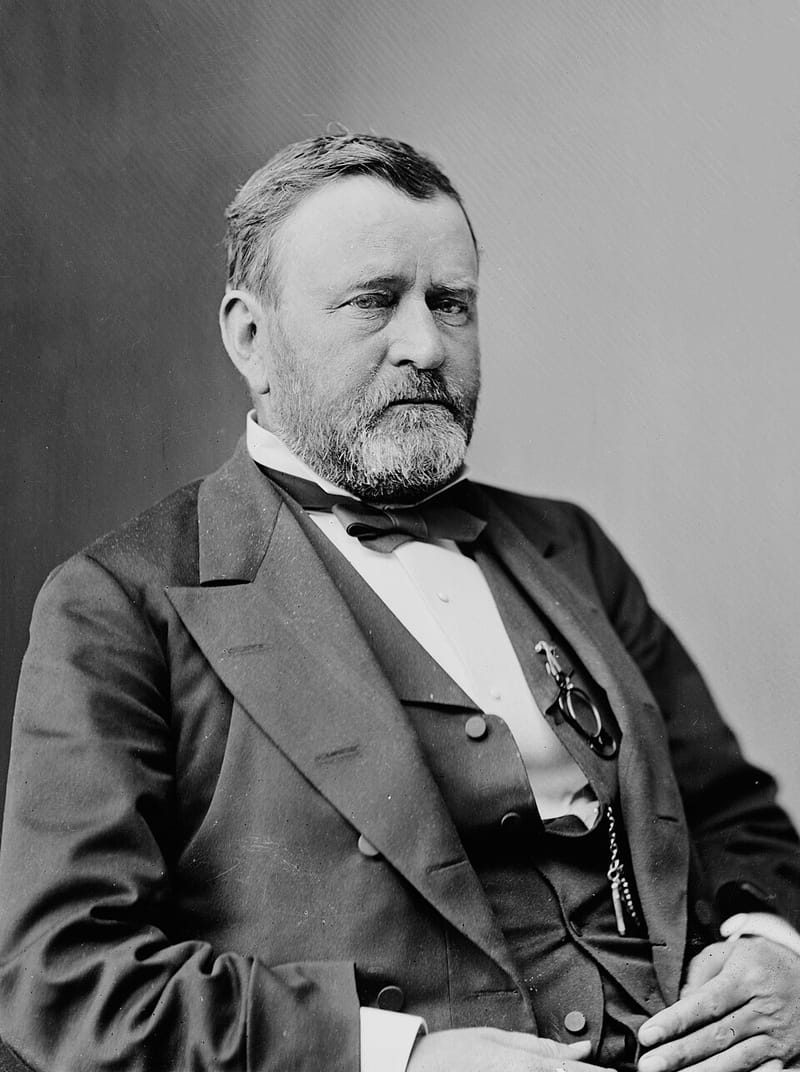
Travel time across the country fell from months to about a week. Goods, people, and mail moved quickly between coasts, and the railroad opened Western lands to farming, ranching, and mining. President Grant, a strong supporter, oversaw its completion in his first year in office.
Long-term significance
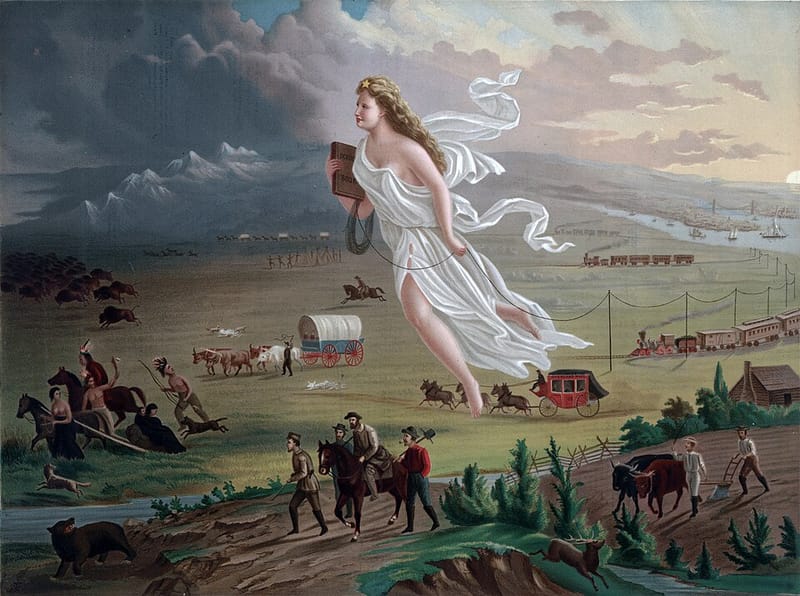
Railroads became the nation’s first big businesses; by 1900 the country had some 190,000 miles of track, including several transcontinental lines, and railroad finance, labor conflict, and political influence defined the Gilded Age. The rails also carried settlers, soldiers, and hide hunters onto the Plains. The bison herds on which Plains nations depended collapsed — from over ten million at midcentury to a few hundred by the early 1880s — and Native nations were confined to reservations. Chinese workers who helped build the line soon faced exclusion.
Study this entry
Check your understanding
Try answering in your own words, then open the answer.
1.What led to the Transcontinental Railroad?Show answerHide
In 1862, during the Civil War, Congress passed the Pacific Railway Act. It provided government bonds and large grants of public land to the Union Pacific and Central Pacific to build a railroad and telegraph line from the Missouri River to the Pacific, and secured the line’s use to the government.From “Causes and contributing factors” above.
2.What happened?Show answerHide
Beginning in 1863, the Union Pacific built west from Omaha with crews made up largely of Irish, German, and Italian immigrants, while the Central Pacific built east from Sacramento across the Sierra Nevada with a workforce that included more than 10,000 Chinese laborers.From “What happened” above.
3.What were the immediate consequences?Show answerHide
Travel time across the country fell from months to about a week. Goods, people, and mail moved quickly between coasts, and the railroad opened Western lands to farming, ranching, and mining.From “Immediate consequences” above.
4.Why does it still matter?Show answerHide
Railroads became the nation’s first big businesses; by 1900 the country had some 190,000 miles of track, including several transcontinental lines, and railroad finance, labor conflict, and political influence defined the Gilded Age. The rails also carried settlers, soldiers, and hide hunters onto the Plains.From “Long-term significance” above.
Turn this entry into 11 flashcards (key facts, dates, and why it matters) and review them in Learn.
Related History
How this connects to the rest of the atlas.
Events
People

Sources
- 1.Pacific Railway Act (1862) — Milestone Documents
National Archives · Primary source · cited for subsidies, companies, workforce, completion
- 2.The American Yawp, “Conquering the West”
The American Yawp (eds. Joseph Locke and Ben Wright; Stanford University Press) · Scholarly · cited for Plains wars, Dawes Act, Ghost Dance, Wounded Knee, railroads
- 3.Ulysses S. Grant: Life in Brief
Miller Center, University of Virginia · Scholarly · cited for Grant and the railroad’s completion
- 4.Golden Spike — History & Culture
National Park Service, Golden Spike National Historical Park · Institutional · cited for the Promontory site
Image credits
- "East and West Shaking Hands at Laying Last Rail", Andrew J. Russell / Adam Cuerden, 10 May 1869. Via Wikimedia Commons · Public domain · Source
Written for American History Atlas from the sources above. See how entries are researched.
Atlas by Alexander. More on Telegram.