The Lewis and Clark Expedition
The Corps of Discovery crosses the continent, 1804–1806
May 14, 1804 – September 23, 1806From St. Louis up the Missouri River, across the Rockies, to the Pacific coast and back
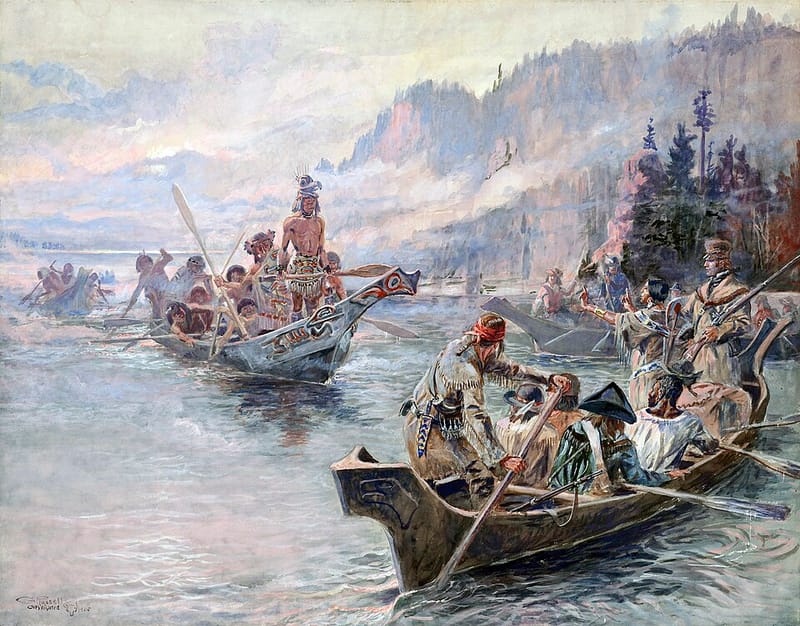
In 1804, at Thomas Jefferson’s direction, Meriwether Lewis and William Clark led a small army unit, the Corps of Discovery, up the Missouri River and across the Rocky Mountains to the Pacific Ocean, returning to St. Louis in 1806. They mapped the West, recorded its plants and animals, and met dozens of Native nations. Their success depended on Native guides and hosts — above all on Sacagawea, a Lemhi Shoshone woman — and on the labor of York, a man enslaved by Clark.
Key facts
- Date
- May 14, 1804 – September 23, 1806
- Location
- From St. Louis up the Missouri River, across the Rockies, to the Pacific coast and back
- Funding
- $2,500, requested by Jefferson in a confidential message to Congress, January 18, 1803
- Departed
- May 14, 1804, near St. Louis
- Returned
- September 23, 1806, to St. Louis
- Distance
- About 8,000 miles
- Reached the Pacific
- November 1805, at the mouth of the Columbia River
Why it matters
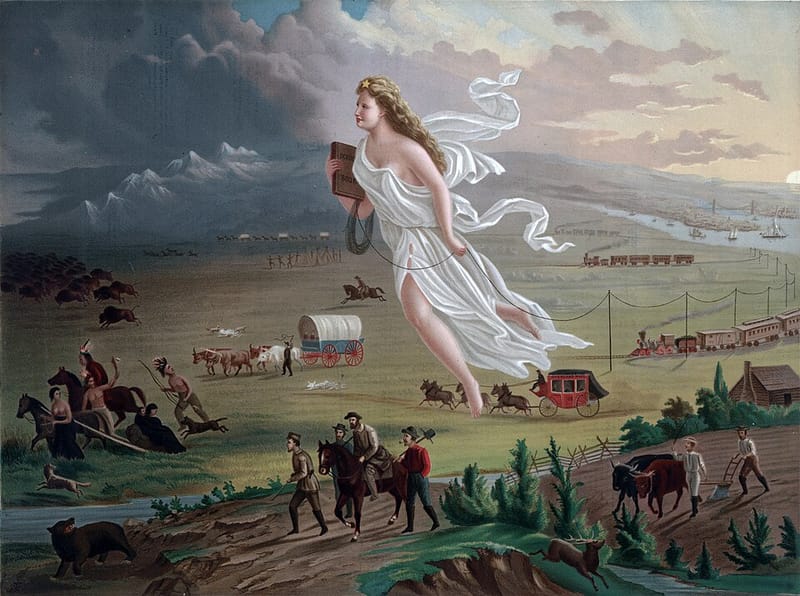
The Lewis and Clark Expedition turned the Louisiana Purchase from lines on a treaty into a known landscape, and laid the groundwork for American expansion to the Pacific.
Historical background
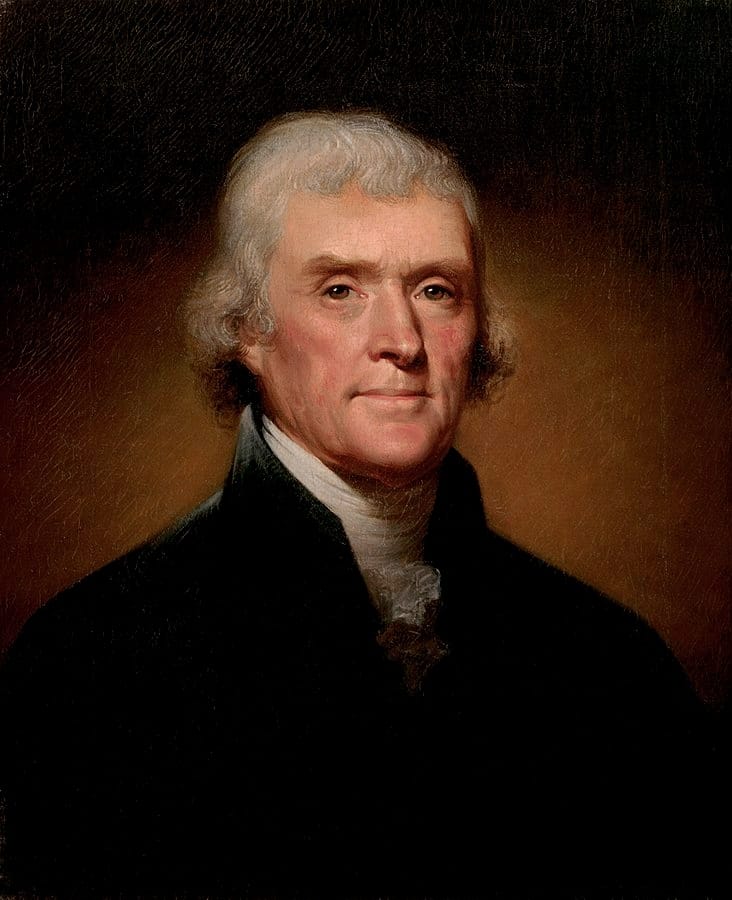
Even before the Louisiana Purchase, Jefferson believed the United States should stretch across the continent. In a secret message of January 18, 1803 — when the territory still belonged to France — he asked Congress for $2,500 to explore the West to the Pacific, explaining the request mainly in terms of promoting commerce.
Causes and contributing factors
Jefferson instructed Lewis, his former private secretary, to seek a practical water route across the continent, to establish relations and trade with western Native nations, and to report on the geography, geology, astronomy, plants, animals, and climate of the West. Lewis chose William Clark as co-commander. Jefferson helped plan supplies: arms, food, medicine, scientific instruments, and gifts for Native leaders.
What happened
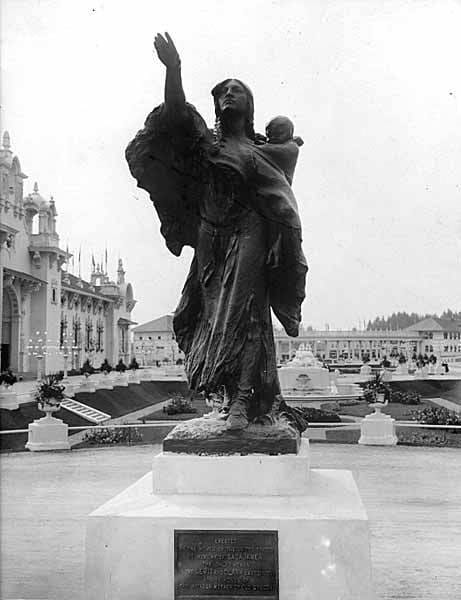
The Corps left the St. Louis area in May 1804 and worked up the Missouri. After five months they built Fort Mandan near the Mandan villages in present-day North Dakota, 1,600 miles upriver, and wintered there. They hired the French-Canadian trader Toussaint Charbonneau and his young wife, Sacagawea, a Lemhi Shoshone who had been captured by the Hidatsa as a girl. With their two-month-old son, Jean Baptiste, she set out with the Corps in April 1805. Along the Lemhi River in present-day Idaho, her people provided horses and a guide for the crossing of the Continental Divide. York, enslaved by Clark, hunted and labored alongside the others; the National Park Service credits him as the first African American known to have crossed North America.
The Corps crossed the mountains and descended the Columbia River, reaching its estuary in November 1805 — Clark wrote of the “joy” of seeing the ocean on November 7 — and wintered on the Pacific coast. On the way home in July 1806 the expedition split into groups to explore more of the Missouri and Yellowstone drainages; Sacagawea guided Clark’s party over Bozeman Pass into the Yellowstone Valley. The Corps reached St. Louis on September 23, 1806.
Immediate consequences
The expedition did not find an all-water route to the Pacific, because none existed. But it brought back maps, journals, and specimens that gave the U.S. government its first detailed view of the lands west of the Mississippi, and it strengthened American claims to the Oregon Country.
Long-term significance
Lewis and Clark became national heroes, and their journey a symbol of American exploration. The route crossed the territories of more than sixty Native nations, for whom the expedition was a harbinger of traders, settlers, soldiers, and treaties that would take most of their lands. After the expedition returned, York was denied his payment and his freedom. Sacagawea returned to the Mandan and Hidatsa villages in 1806; her role, little recognized at the time, was celebrated only much later.
Key peopleThomas Jefferson
Study this entry
Check your understanding
Try answering in your own words, then open the answer.
1.What led to the Lewis and Clark Expedition?Show answerHide
Jefferson instructed Lewis, his former private secretary, to seek a practical water route across the continent, to establish relations and trade with western Native nations, and to report on the geography, geology, astronomy, plants, animals, and climate of the West. Lewis chose William Clark as co-commander.From “Causes and contributing factors” above.
2.What happened?Show answerHide
The Corps left the St. Louis area in May 1804 and worked up the Missouri. After five months they built Fort Mandan near the Mandan villages in present-day North Dakota, 1,600 miles upriver, and wintered there.From “What happened” above.
3.What were the immediate consequences?Show answerHide
The expedition did not find an all-water route to the Pacific, because none existed. But it brought back maps, journals, and specimens that gave the U.S. government its first detailed view of the lands west of the Mississippi, and it strengthened American claims to the Oregon Country.From “Immediate consequences” above.
4.Why does it still matter?Show answerHide
Lewis and Clark became national heroes, and their journey a symbol of American exploration. The route crossed the territories of more than sixty Native nations, for whom the expedition was a harbinger of traders, settlers, soldiers, and treaties that would take most of their lands.From “Long-term significance” above.
Turn this entry into 11 flashcards (key facts, dates, and why it matters) and review them in Learn.
Related History
How this connects to the rest of the atlas.
Events
People

Sources
- 1.Jefferson’s Secret Message to Congress Regarding the Lewis and Clark Expedition (1803)
National Archives · Primary source · cited for funding request, goals, supplies, 8,000-mile journey
- 2.Lewis and Clark National Historic Trail
Bureau of Land Management · Institutional · cited for route and the return journey
- 3.Lewis & Clark National Historic Trail — History & Culture
National Park Service · Institutional · cited for the expedition and the trail
- 4.Sacagawea
National Park Service · Institutional · cited for Sacagawea’s background and role
- 5.York
National Park Service, Lewis & Clark National Historic Trail · Institutional · cited for York’s enslavement and denied freedom
- 6.Lewis and Clark National Historical Park — History & Culture
National Park Service · Institutional · cited for Fort Mandan, Charbonneau, Lemhi horses, Columbia estuary
Image credits
- Lewis and clark-expedition, Charles Marion Russell, 1905. Via Wikimedia Commons · Public domain · Source
Written for American History Atlas from the sources above. See how entries are researched.
Atlas by Alexander. More on Telegram.