EventWorld War II and the Early Cold War
McCarthyism and the Second Red Scare
Anticommunist investigations and accusations, late 1940s–1954
February 9, 1950 – December 2, 1954Washington, D.C., Hollywood, universities, unions, and communities nationwide
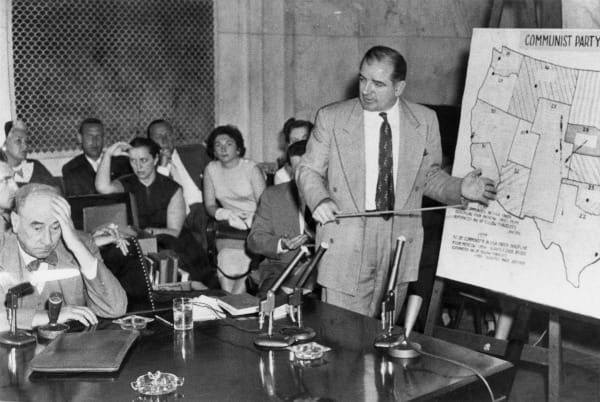
In the early Cold War, fear of communist subversion swept the United States. Congressional committees, the FBI, loyalty boards, and private employers investigated thousands of Americans; many lost their jobs or were blacklisted for past political associations. The era takes its name from Senator Joseph McCarthy of Wisconsin, who from 1950 made sensational, unsupported charges that communists had infiltrated the government — until televised hearings in 1954 exposed his tactics and the Senate condemned him.
Key facts
- Date
- February 9, 1950 – December 2, 1954
- Location
- Washington, D.C., Hollywood, universities, unions, and communities nationwide
- Dating note
- From Senator Joseph McCarthy’s Wheeling speech to his condemnation by the Senate; the broader Red Scare began with Truman’s 1947 loyalty program.
- Loyalty program
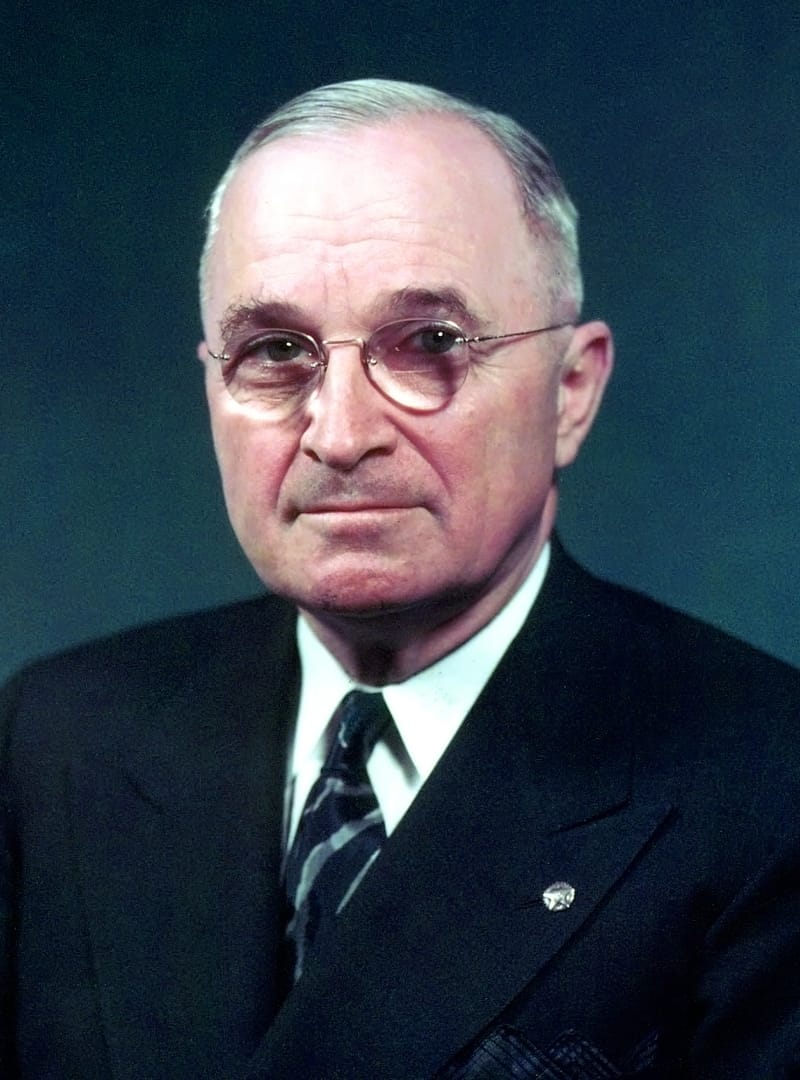
- Truman’s Executive Order 9835, March 1947
- Wheeling speech
- February 9, 1950: McCarthy claimed a list of 205 communists in the State Department
- Hollywood
- HUAC hearings from 1947; the “Hollywood Ten” and an industry blacklist
- Army-McCarthy hearings
- 1954, watched by some 20 million people
- Senate condemnation
- December 2, 1954, by a vote of 67–22
Why it matters
McCarthyism showed how fear of an external enemy could be turned against Americans’ own civil liberties.
Historical background
A small Communist Party had existed in the United States since the aftermath of the 1917 Russian Revolution; even at its peak it had only about 80,000 members. Real Soviet espionage occurred: Julius and Ethel Rosenberg were convicted of passing atomic secrets and executed in 1953, and former State Department official Alger Hiss, accused of spying, was convicted of perjury after a second trial. Combined with the Soviet atomic bomb, the communist victory in China, and the Korean War, these cases fed fears of a vast conspiracy.
Causes and contributing factors
In March 1947, facing anticommunist pressure, President Truman created loyalty reviews for federal employees. The House Un-American Activities Committee (HUAC) investigated Hollywood beginning in 1947; between 1949 and 1954, congressional committees conducted more than one hundred investigations into subversion. The Internal Security Act of 1950 required “communist organizations” to register with the government.
What happened
On February 9, 1950, in Wheeling, West Virginia, McCarthy declared he had a list of 205 State Department employees who were members of the Communist Party. He had no such list; the number changed to 57, then 81. A Senate committee called his charges “a fraud and a hoax,” but McCarthy’s accusations made him famous, and he attacked the Truman administration as “soft on communism.”
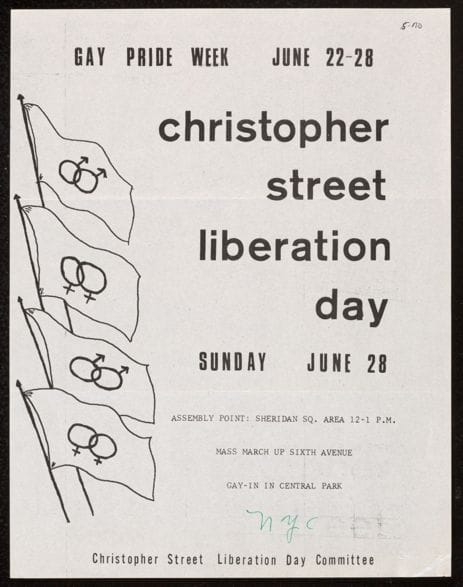
The Red Scare reached far beyond McCarthy. HUAC asked witnesses, “Are you now, or have you ever been, a member of the Communist Party?” and pressed them to name others; hundreds of film artists were blacklisted. Thirty-one University of California professors were dismissed in 1950 for refusing to sign a loyalty oath. The singer and activist Paul Robeson had his passport revoked. In a parallel “Lavender Scare,” gay Americans were targeted as supposed security risks vulnerable to blackmail.
Immediate consequences
In 1954 McCarthy took on the U.S. Army. Twenty million people watched the televised Army-McCarthy hearings, in which Army counsel Joseph Welch rebuked him: “Have you no sense of decency, sir? At long last, have you left no sense of decency?” On December 2, 1954, the Senate voted 67–22 to condemn McCarthy. He died in 1957, and by the late 1950s the worst of the Red Scare was over.
Long-term significance
The Red Scare cost many Americans their jobs and reputations and pressed the country toward conformity. Playwright Arthur Miller compared it to the Salem witch trials in The Crucible (1953). As early as June 1950, the editor Freda Kirchwey described “McCarthyism” as the means by which “a handful of men, disguised as hunters of subversion, cynically subvert the instruments of justice” for political gain.
Study this entry
Check your understanding
Try answering in your own words, then open the answer.
1.What led to McCarthyism and the Second Red Scare?Show answerHide
In March 1947, facing anticommunist pressure, President Truman created loyalty reviews for federal employees.From “Causes and contributing factors” above.
2.What happened?Show answerHide
On February 9, 1950, in Wheeling, West Virginia, McCarthy declared he had a list of 205 State Department employees who were members of the Communist Party. He had no such list; the number changed to 57, then 81.From “What happened” above.
3.What were the immediate consequences?Show answerHide
In 1954 McCarthy took on the U.S. Army. Twenty million people watched the televised Army-McCarthy hearings, in which Army counsel Joseph Welch rebuked him: “Have you no sense of decency, sir?From “Immediate consequences” above.
4.Why does it still matter?Show answerHide
The Red Scare cost many Americans their jobs and reputations and pressed the country toward conformity. Playwright Arthur Miller compared it to the Salem witch trials in The Crucible (1953).From “Long-term significance” above.
Turn this entry into 11 flashcards (key facts, dates, and why it matters) and review them in Learn.
Related History
How this connects to the rest of the atlas.
Wars
People

Sources
- 1.The American Yawp, “The Cold War”
The American Yawp (eds. Joseph Locke and Ben Wright; Stanford University Press) · Scholarly · cited for containment, Marshall Plan, Berlin, NATO, NSC-68, Korea, McCarthyism, arms race
- 2.Harry S. Truman: Life in Brief
Miller Center, University of Virginia (Alonzo L. Hamby) · Scholarly · cited for life and presidency
- 3.Harry S. Truman: Impact and Legacy
Miller Center, University of Virginia · Scholarly · cited for legacy and criticism
Image credits
- Welch-McCarthy-Hearings, United States Senate, August 22, 2013 08:56:32. Via Wikimedia Commons · Public domain · Source
Written for American History Atlas from the sources above. See how entries are researched.
Atlas by Alexander. More on Telegram.