MovementCivil Rights and Social Transformation
Second-Wave Feminism
The women’s liberation movement of the 1960s and 1970s
1961–1982
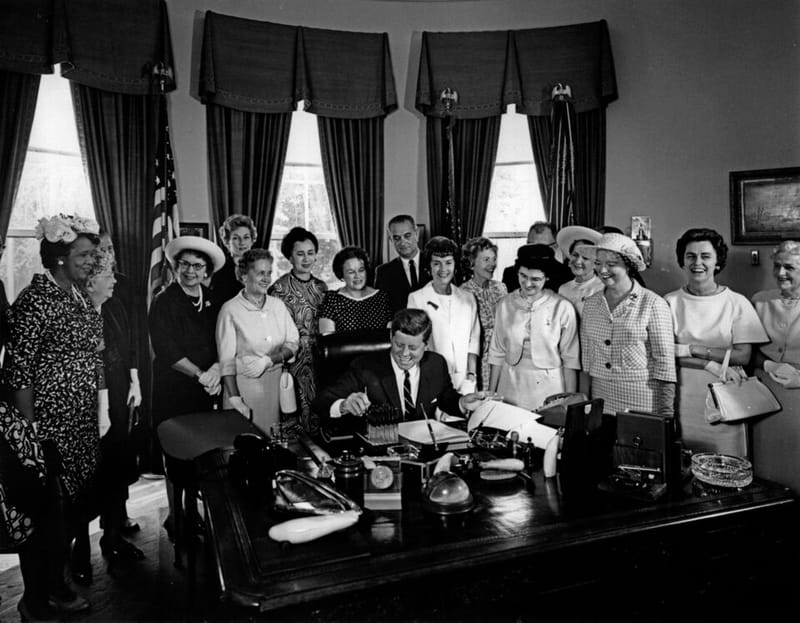
In the 1960s and 1970s, a new wave of feminism challenged discrimination against women in work, law, education, and family life. Inspired by the civil rights movement, and galvanized by Betty Friedan’s The Feminine Mystique (1963), activists founded the National Organization for Women, formed consciousness-raising groups, and fought for equal pay, reproductive rights, and an Equal Rights Amendment. They won major legal changes, including Roe v. Wade (1973), but the ERA was defeated by a conservative countermovement.
Key facts
- Date
- 1961–1982
- Dating note
- From the President’s Commission on the Status of Women (1961) to the expiration of the Equal Rights Amendment (1982).
- Commission on the Status of Women
- 1961–1963, chaired by Eleanor Roosevelt
- The Feminine Mystique
- Betty Friedan, 1963
- NOW
- Founded 1966 by Friedan, Pauli Murray, Aileen Hernandez, and others
- Women’s Strike for Equality
- August 26, 1970
- ERA
- Passed by Congress March 1972; ratified by 35 states; expired 1982
Why it matters
Second-wave feminism transformed women’s legal status and opportunities and changed American expectations about work, family, and equality.
Goals
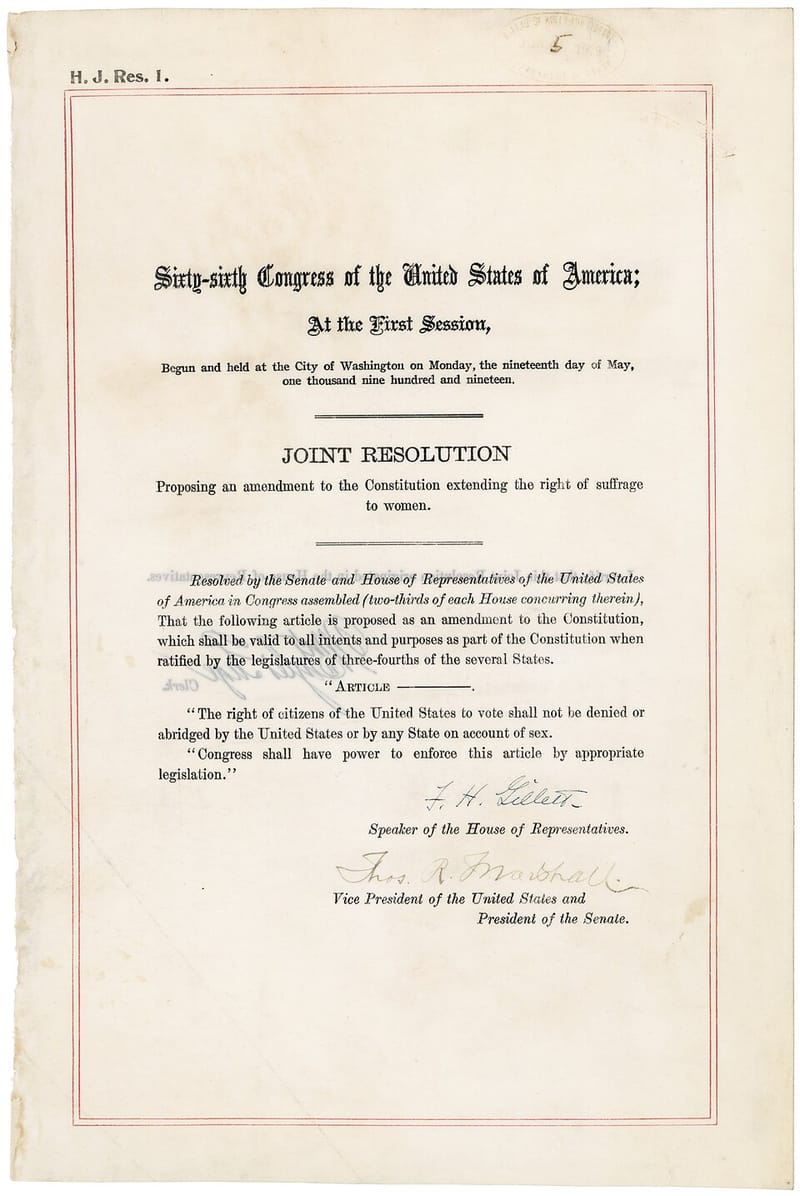
Feminists sought equal treatment in employment and pay, an end to sex discrimination in law, access to contraception and abortion, child care, equality in marriage, and the Equal Rights Amendment, which declared that “equality of rights under the law shall not be denied or abridged … on account of sex.”
Strategies
Some women worked through institutions: President Kennedy’s Commission on the Status of Women, chaired by Eleanor Roosevelt, documented discrimination in a 1963 report. Friedan’s best-selling The Feminine Mystique named “the problem that has no name” — the dissatisfaction of many middle-class housewives. In 1966 Friedan, Pauli Murray, and Aileen Hernandez founded NOW, whose first campaign pressed the Equal Employment Opportunity Commission to enforce Title VII’s ban on sex discrimination and ended sex-segregated help-wanted ads. Consciousness-raising groups declared that “the personal is political.” Mostly African American welfare mothers organized the National Welfare Rights Organization in 1966. NOW’s Women’s Strike for Equality marked the fiftieth anniversary of woman suffrage in 1970.
Opposition
Phyllis Schlafly’s STOP ERA campaign, backed by evangelical Christians and other religious conservatives, celebrated the role of homemaker and turned the tide against the amendment by 1977. The movement also divided internally as women of color challenged white feminists’ racism and lesbians sought a larger role; Friedan herself was criticized for calling lesbians in the movement a “lavender menace.”
Achievements
Feminists won enforcement of anti-discrimination law in employment, changes in divorce law, and, in Roe v. Wade (1973), a constitutional right to abortion. The ERA passed Congress in 1972 and was quickly ratified by thirty states.
Unresolved questions
The ERA stalled three states short of ratification and expired in 1982. Abortion became one of the most divisive issues in American politics, and in 2022 the Supreme Court overruled Roe.
Study this entry
Check your understanding
Try answering in your own words, then open the answer.
1.What did the movement want?Show answerHide
Feminists sought equal treatment in employment and pay, an end to sex discrimination in law, access to contraception and abortion, child care, equality in marriage, and the Equal Rights Amendment, which declared that “equality of rights under the law shall not be denied or abridged … on account of sex.”From “Goals” above.
2.How did it pursue its goals?Show answerHide
Some women worked through institutions: President Kennedy’s Commission on the Status of Women, chaired by Eleanor Roosevelt, documented discrimination in a 1963 report. Friedan’s best-selling The Feminine Mystique named “the problem that has no name” — the dissatisfaction of many middle-class housewives.From “Strategies” above.
3.Who opposed it, and how?Show answerHide
Phyllis Schlafly’s STOP ERA campaign, backed by evangelical Christians and other religious conservatives, celebrated the role of homemaker and turned the tide against the amendment by 1977.From “Opposition” above.
4.What did it achieve?Show answerHide
Feminists won enforcement of anti-discrimination law in employment, changes in divorce law, and, in Roe v. Wade (1973), a constitutional right to abortion. The ERA passed Congress in 1972 and was quickly ratified by thirty states.From “Achievements” above.
Turn this entry into 11 flashcards (key facts, dates, and why it matters) and review them in Learn.
Related History
How this connects to the rest of the atlas.
Events
Documents
Movements

Sources
- 1.The American Yawp, “The Sixties”
The American Yawp (eds. Joseph Locke and Ben Wright; Stanford University Press) · Scholarly · cited for civil rights, Great Society, Vietnam, social movements
- 2.The American Yawp, “The Unraveling”
The American Yawp (eds. Joseph Locke and Ben Wright; Stanford University Press) · Scholarly · cited for 1970s: Vietnam’s end, Watergate, feminism, environmentalism
- 3.Betty Friedan
National Women’s History Museum · Institutional · cited for Feminine Mystique, NOW, NARAL
- 4.Eleanor Roosevelt
National Women’s History Museum · Institutional · cited for biography
- 5.Dobbs v. Jackson Women’s Health Organization
Oyez (Cornell LII, Justia, Chicago-Kent College of Law) · Scholarly · cited for overruling of Roe (2022)
Image credits
- American Association of University Women members with President John F. Kennedy as he signs the Equal Pay Act into law, Abbie Rowe, 1963-06-10. Via Wikimedia Commons · Public domain · Source
Written for American History Atlas from the sources above. See how entries are researched.
Atlas by Alexander. More on Telegram.