DocumentThe Progressive Era and World War I
The Nineteenth Amendment
Women’s right to vote, 1920
August 18, 1920
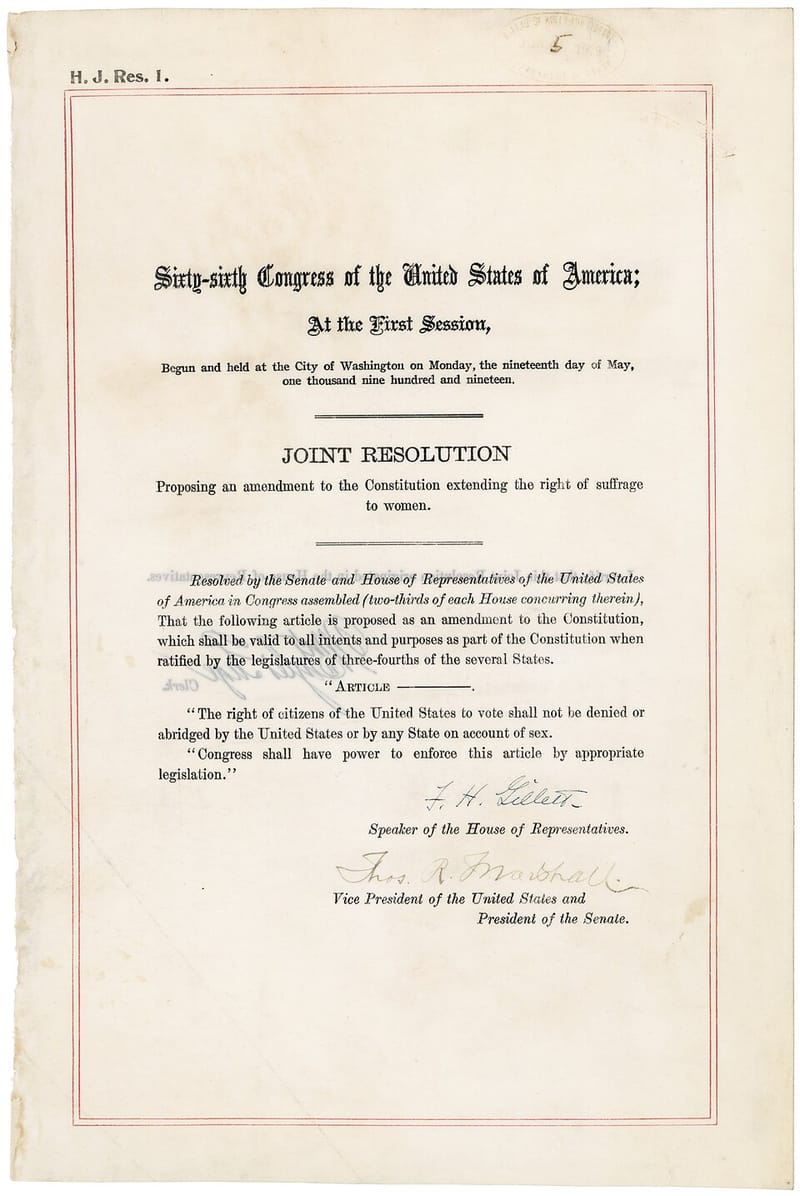
The Nineteenth Amendment provides that “the right of citizens of the United States to vote shall not be denied or abridged by the United States or by any State on account of sex.” First introduced in Congress in 1878, it was passed in 1919 and ratified in August 1920, when Tennessee became the thirty-sixth state to approve it. It was the culmination of the woman suffrage movement — though discriminatory state laws kept many women of color from voting long afterward.
Key facts
- Date
- August 18, 1920
- Author
- Sixty-sixth Congress
- Dating note
- Passed by Congress June 4, 1919; ratified August 18, 1920; certified August 26, 1920.
- First introduced
- 1878
- Passed Congress
- House May 21, 1919; Senate two weeks later (June 4)
- Ratified
- August 18, 1920, when Tennessee became the 36th state
- Certified
- August 26, 1920, by Secretary of State Bainbridge Colby
Read the amendment at the National Archives
Why it matters
The amendment changed the face of the American electorate. But, as the National Archives notes, ratification did not ensure full enfranchisement: decades of struggle remained to include African American and other minority women, many of whom were kept from voting by discriminatory state laws until the Voting Rights Act of 1965.
Historical circumstances
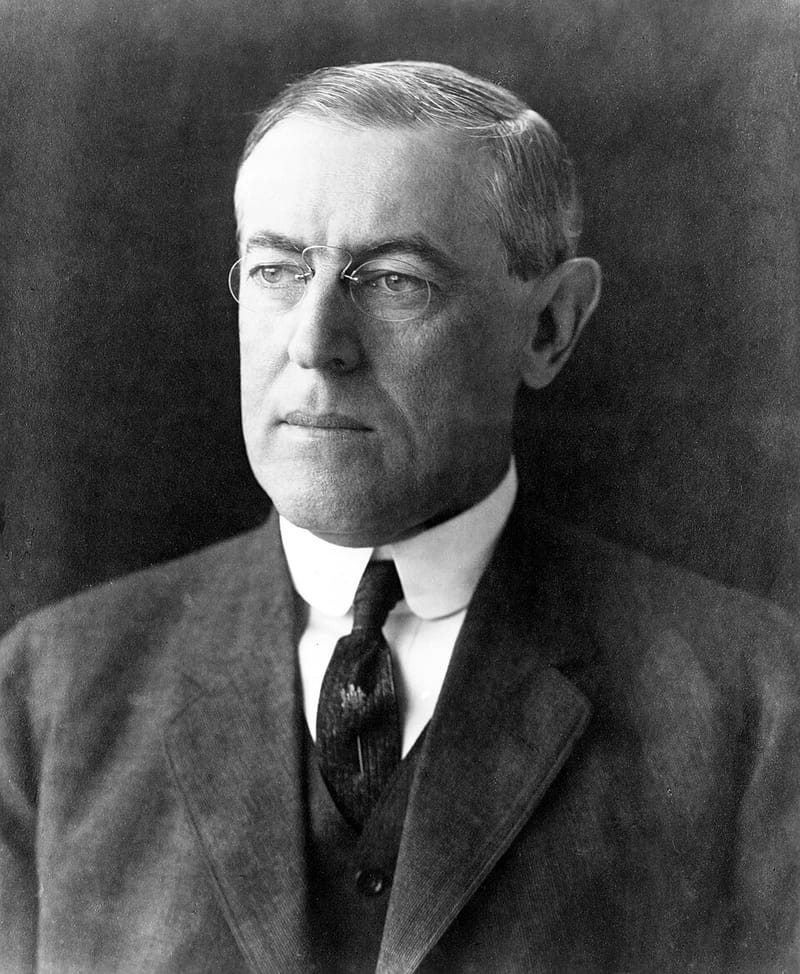
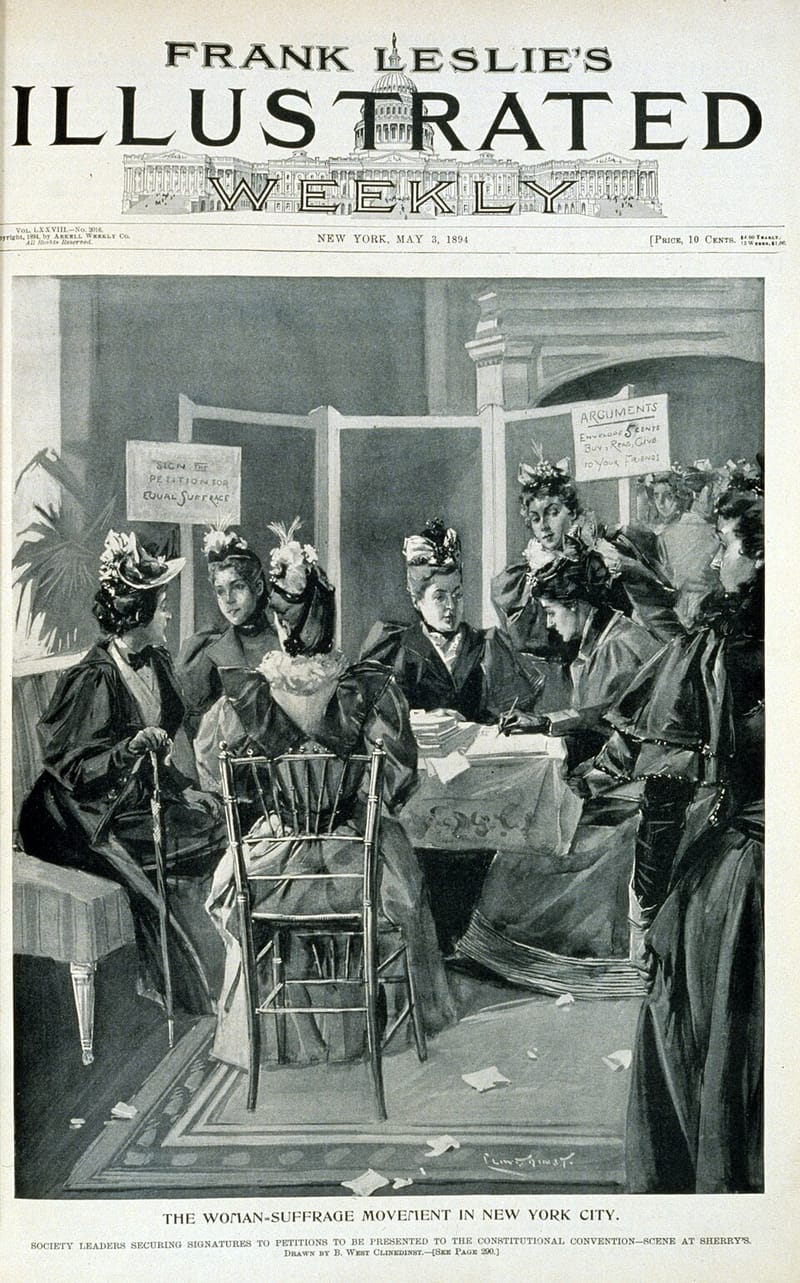
Beginning in the mid-nineteenth century, generations of suffragists lectured, wrote, marched, lobbied, and practiced civil disobedience. An amendment was first introduced in Congress in 1878. Strategies varied: nine Western states adopted woman suffrage by 1912; others challenged voting laws in court; some picketed and went on hunger strikes. By 1916 nearly all major suffrage organizations supported a constitutional amendment. When New York adopted woman suffrage in 1917 and President Wilson endorsed the amendment in 1918, the political balance shifted. The House passed it on May 21, 1919, and the Senate two weeks later.
Principal ideas
- Section 1 forbids the federal government and the states to deny or abridge the right to vote “on account of sex.”
- Section 2 gives Congress power to enforce it.
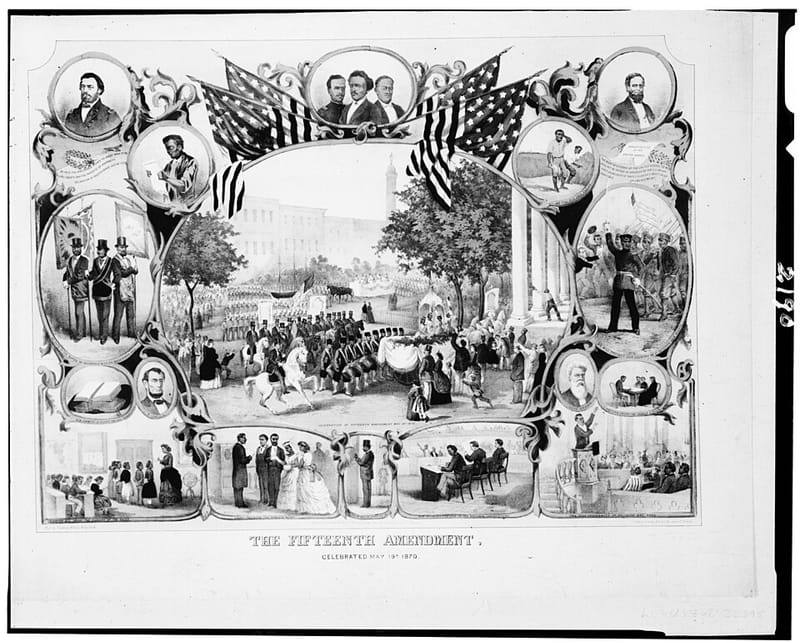
Like the Fifteenth Amendment, it prohibited a particular ground of discrimination rather than guaranteeing the vote outright.
Study this entry
Check your understanding
Try answering in your own words, then open the answer.
1.Why was this document written?Show answerHide
Beginning in the mid-nineteenth century, generations of suffragists lectured, wrote, marched, lobbied, and practiced civil disobedience. An amendment was first introduced in Congress in 1878.From “Historical circumstances” above.
2.What are its principal ideas?Show answerHide
- Section 1 forbids the federal government and the states to deny or abridge the right to vote “on account of sex.” - Section 2 gives Congress power to enforce it.From “Principal ideas” above.
Turn this entry into 11 flashcards (key facts, dates, and why it matters) and review them in Learn.
Related History
How this connects to the rest of the atlas.
Events


People



Sources
- 1.19th Amendment — Milestone Documents
National Archives · Primary source · cited for passage, ratification, strategies, limits
- 2.19th Amendment — Women’s History
National Park Service · Institutional · cited for suffrage movement overview
- 3.The American Yawp, “The Progressive Era”
The American Yawp (eds. Joseph Locke and Ben Wright; Stanford University Press) · Scholarly · cited for Progressivism, muckrakers, Addams, Triangle fire, suffrage
Image credits
- The 19th amendment., U.S. Congress, 1919-05-19. Via Wikimedia Commons · Public domain · Source
Written for American History Atlas from the sources above. See how entries are researched.
Atlas by Alexander. More on Telegram.