Court CaseCivil Rights and Social Transformation
Loving v. Virginia
The Supreme Court strikes down bans on interracial marriage
1967Washington, D.C.
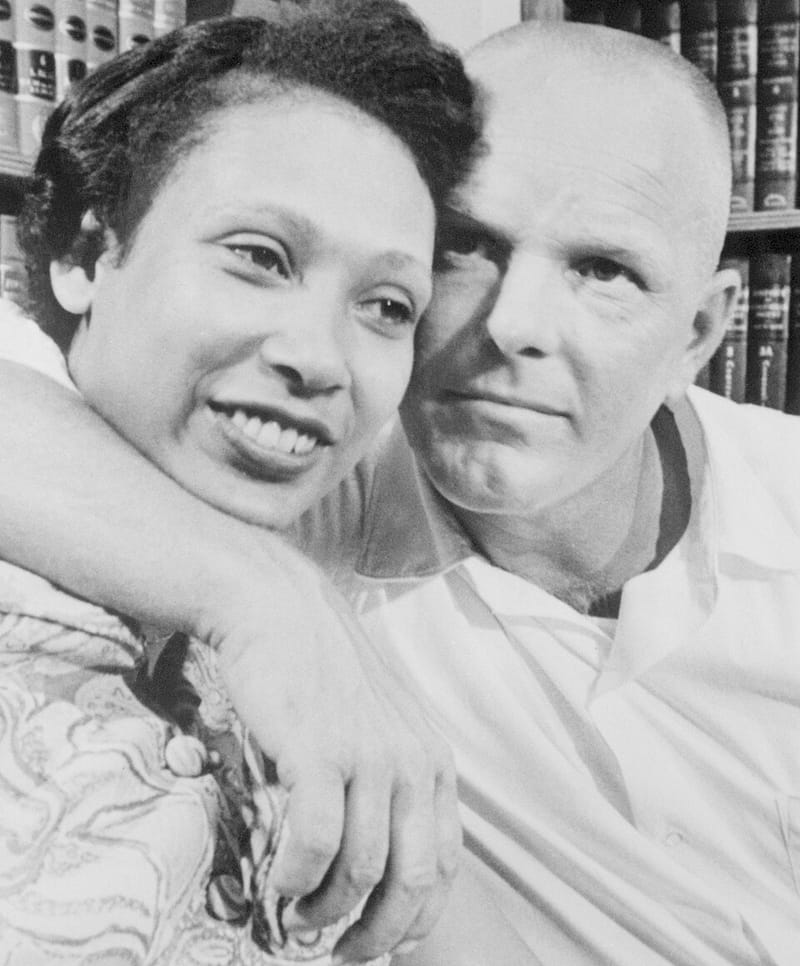
Mildred Jeter, a Black woman, and Richard Loving, a white man, married in Washington, D.C., in 1958 and returned home to Virginia, where they were convicted of violating the state’s ban on interracial marriage. In Loving v. Virginia (1967), a unanimous Supreme Court struck down the law, holding that it violated both the Equal Protection and Due Process Clauses of the Fourteenth Amendment. “The freedom to marry, or not marry, a person of another race resides with the individual,” Chief Justice Earl Warren wrote, “and cannot be infringed by the State.”
Key facts
- Citation
- 388 U.S. 1 (1967)
- Decided
- June 12, 1967
- Vote
- 9–0
- Majority opinion
- Chief Justice Earl Warren
- Location
- Washington, D.C.
- Decided
- June 12, 1967
- Vote
- 9–0
- Opinion
- Chief Justice Earl Warren
- Original sentence
- One year in jail, suspended if the Lovings left Virginia for 25 years
- Constitutional basis
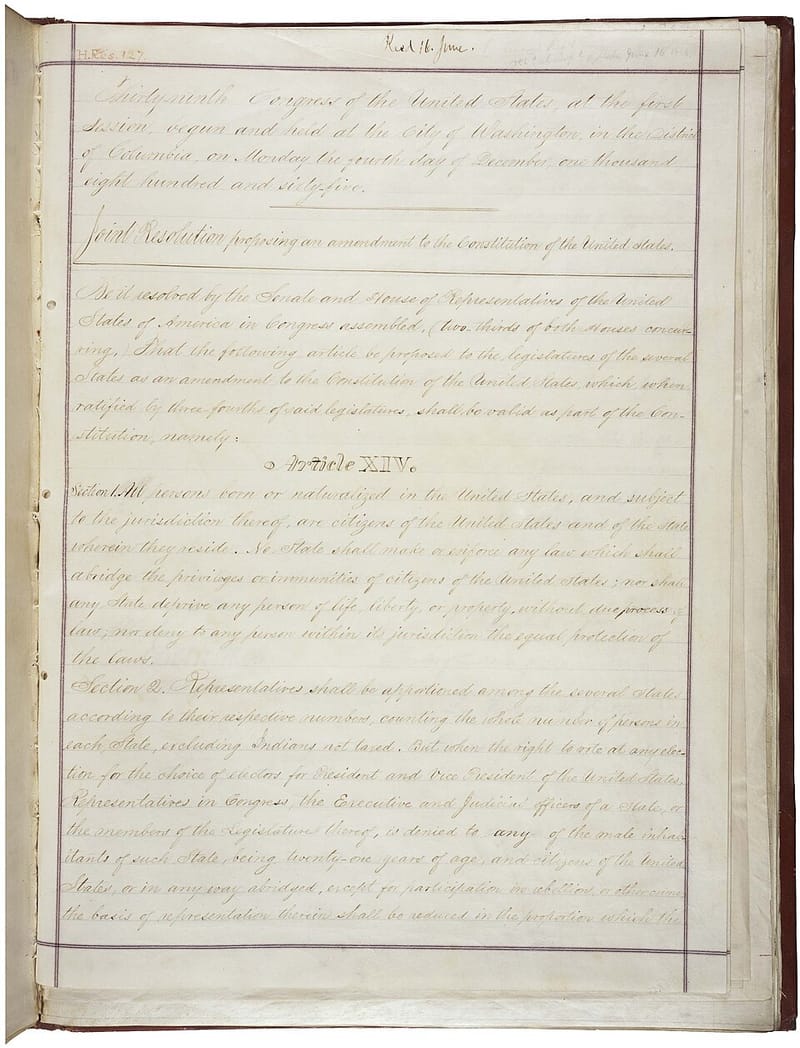
- Fourteenth Amendment: Equal Protection and Due Process
Why it matters
Loving struck down a major legal pillar of racial segregation and affirmed marriage as a basic civil right.
Historical context
After their 1958 wedding in the District of Columbia, the Lovings were charged under Virginia’s antimiscegenation statute, which banned interracial marriage. They were found guilty and sentenced to a year in jail; the trial judge suspended the sentence on condition that they leave Virginia and not return for 25 years.
The legal question
Did Virginia’s law banning interracial marriage violate the Equal Protection Clause of the Fourteenth Amendment?
The ruling
Yes. The Court unanimously struck down the law under both the Equal Protection Clause and the Due Process Clause.
The Court’s reasoning
The Court held that distinctions drawn by race are “odious to a free people” and subject to “the most rigid scrutiny.” Virginia argued that its law was fair because it applied equally to Black and white people; the Court rejected that argument, finding the law had no legitimate purpose “independent of invidious racial discrimination.” It also held that marriage is a fundamental freedom protected by due process.
Consequences
The ruling overturned the Lovings’ convictions and struck down Virginia’s ban on interracial marriage.
Later interpretation
How later courts, scholars, and the public have judged the case — not part of the ruling itself.
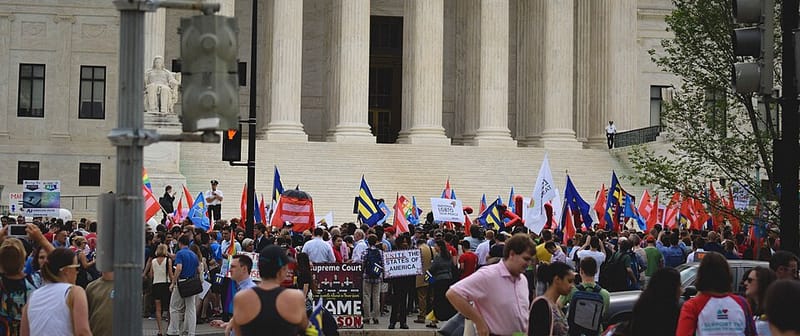
Loving’s holding that marriage is a fundamental freedom protected by due process became an important precedent. When the Court extended the right to marry to same-sex couples in Obergefell v. Hodges (2015), it again relied on the principle that the right to marry is a fundamental liberty.
Study this entry
Check your understanding
Try answering in your own words, then open the answer.
1.What question did the Court have to answer?Show answerHide
Did Virginia’s law banning interracial marriage violate the Equal Protection Clause of the Fourteenth Amendment?From “The legal question” above.
2.What did the Court decide?Show answerHide
Yes. The Court unanimously struck down the law under both the Equal Protection Clause and the Due Process Clause.From “The ruling” above.
3.How did the Court justify its decision?Show answerHide
The Court held that distinctions drawn by race are “odious to a free people” and subject to “the most rigid scrutiny.”From “The Court’s reasoning” above.
4.What were the consequences?Show answerHide
The ruling overturned the Lovings’ convictions and struck down Virginia’s ban on interracial marriage.From “Consequences” above.
Turn this entry into 9 flashcards (key facts, dates, and why it matters) and review them in Learn.
Related History
How this connects to the rest of the atlas.
Documents
Court cases

Sources
- 1.Loving v. Virginia
Oyez (Cornell LII, Justia, Chicago-Kent College of Law) · Scholarly · cited for facts, question, holding, vote
- 2.Obergefell v. Hodges
Oyez (Cornell LII, Justia, Chicago-Kent College of Law) · Scholarly · cited for facts, questions, holding, vote
Image credits
- Mildred and Richard Loving 1967 by UPI, United Press International, June 12, 1967. Via Wikimedia Commons · Public domain · Source
Written for American History Atlas from the sources above. See how entries are researched.
Atlas by Alexander. More on Telegram.