MovementCivil Rights and Social Transformation
Red Power and the American Indian Movement
Native activism for sovereignty and self-determination, 1960s–1970s
1961–1973Nationwide, including Alcatraz Island, Washington, D.C., the Pacific Northwest, and Wounded Knee, South Dakota
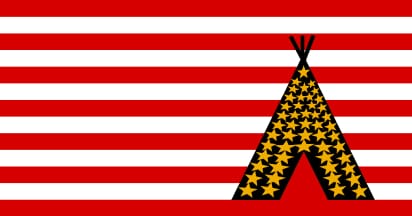
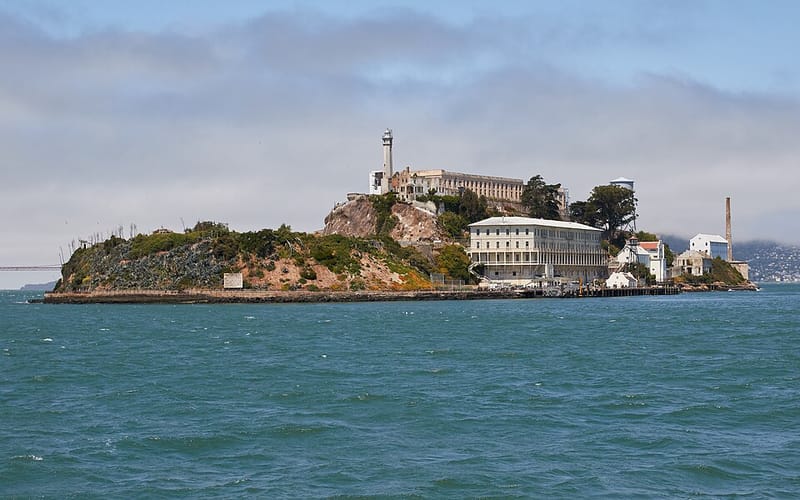
Inspired by the civil rights movement, young Native Americans in the 1960s and 1970s launched an intertribal movement known as Red Power to protest discrimination and assert tribal sovereignty. Activists held “fish-ins” to defend treaty fishing rights, occupied Alcatraz Island for nineteen months in 1969–1971, and, led by the American Indian Movement (AIM), occupied the town of Wounded Knee, South Dakota, for months in 1973. The movement helped end the federal policy of terminating tribes and win a policy of Indian self-determination.
Key facts
- Date
- 1961–1973
- Location
- Nationwide, including Alcatraz Island, Washington, D.C., the Pacific Northwest, and Wounded Knee, South Dakota
- Dating note
- From the founding of the National Indian Youth Council to the occupation of Wounded Knee.
- National Indian Youth Council
- Founded 1961 by Native university students
- Fish-ins
- 1964, Pacific Northwest
- Alcatraz
- Occupied November 20, 1969 – June 11, 1971, by Indians of All Tribes
- Wounded Knee
- Occupied by hundreds of activists for several months in 1973
- Policy change
- Termination ended; self-determination became federal policy
Why it matters
Red Power made Native Americans’ demands for sovereignty visible to the nation and reshaped federal Indian policy.
Goals
Activists demanded respect for treaty rights, tribal sovereignty and self-determination, return of land, and an end to discrimination and to federal efforts to dissolve tribes.
Strategies
In 1961 Native university students founded the National Indian Youth Council, whose militant rhetoric and direct action began the Red Power movement. In 1964 it held “fish-ins” in the Pacific Northwest, casting nets in defiance of state laws to defend tribal fishing rights. On November 20, 1969, Indians of All Tribes, led at first by Mohawk student Richard Oakes, began occupying Alcatraz, demanding the island for an Indian university and cultural center. Activists also occupied Bureau of Indian Affairs offices in Washington. In 1973 the American Indian Movement and hundreds of others occupied Wounded Knee, site of the 1890 massacre.
Opposition
Federal authorities rejected the occupiers’ demands. At Alcatraz the government cut off electricity and water and eventually removed the last occupiers on June 10–11, 1971.
Achievements
According to the National Park Service, the Alcatraz occupation helped bring about the end of the federal termination policy and its replacement with a policy of Indian self-determination. During the occupation, President Nixon returned Blue Lake and 48,000 acres to Taos Pueblo, and the occupation of BIA offices led to more Native Americans being hired in the agency.
Unresolved questions
Poverty, land claims, and conflicts over sovereignty and natural resources on reservations continued long after the 1970s.
Study this entry
Check your understanding
Try answering in your own words, then open the answer.
1.What did the movement want?Show answerHide
Activists demanded respect for treaty rights, tribal sovereignty and self-determination, return of land, and an end to discrimination and to federal efforts to dissolve tribes.From “Goals” above.
2.How did it pursue its goals?Show answerHide
In 1961 Native university students founded the National Indian Youth Council, whose militant rhetoric and direct action began the Red Power movement. In 1964 it held “fish-ins” in the Pacific Northwest, casting nets in defiance of state laws to defend tribal fishing rights.From “Strategies” above.
3.Who opposed it, and how?Show answerHide
Federal authorities rejected the occupiers’ demands. At Alcatraz the government cut off electricity and water and eventually removed the last occupiers on June 10–11, 1971.From “Opposition” above.
4.What did it achieve?Show answerHide
According to the National Park Service, the Alcatraz occupation helped bring about the end of the federal termination policy and its replacement with a policy of Indian self-determination.From “Achievements” above.
Turn this entry into 11 flashcards (key facts, dates, and why it matters) and review them in Learn.
Related History
How this connects to the rest of the atlas.
Events

Sources
- 1.We Hold the Rock: The Alcatraz Indian Occupation (Troy Johnson)
National Park Service, Golden Gate National Recreation Area · Institutional · cited for 1964 and 1969–1971 occupations, results
- 2.The American Yawp, “The Sixties”
The American Yawp (eds. Joseph Locke and Ben Wright; Stanford University Press) · Scholarly · cited for civil rights, Great Society, Vietnam, social movements
Image credits
- Indians of All Tribes flag, United Indians of All Tribes, 1969/1970. Via Wikimedia Commons · Public domain · Source
Written for American History Atlas from the sources above. See how entries are researched.
Atlas by Alexander. More on Telegram.