DocumentIndustrialization and the Gilded Age
The Dawes Act
Breaking up tribal lands through allotment, 1887
February 8, 1887
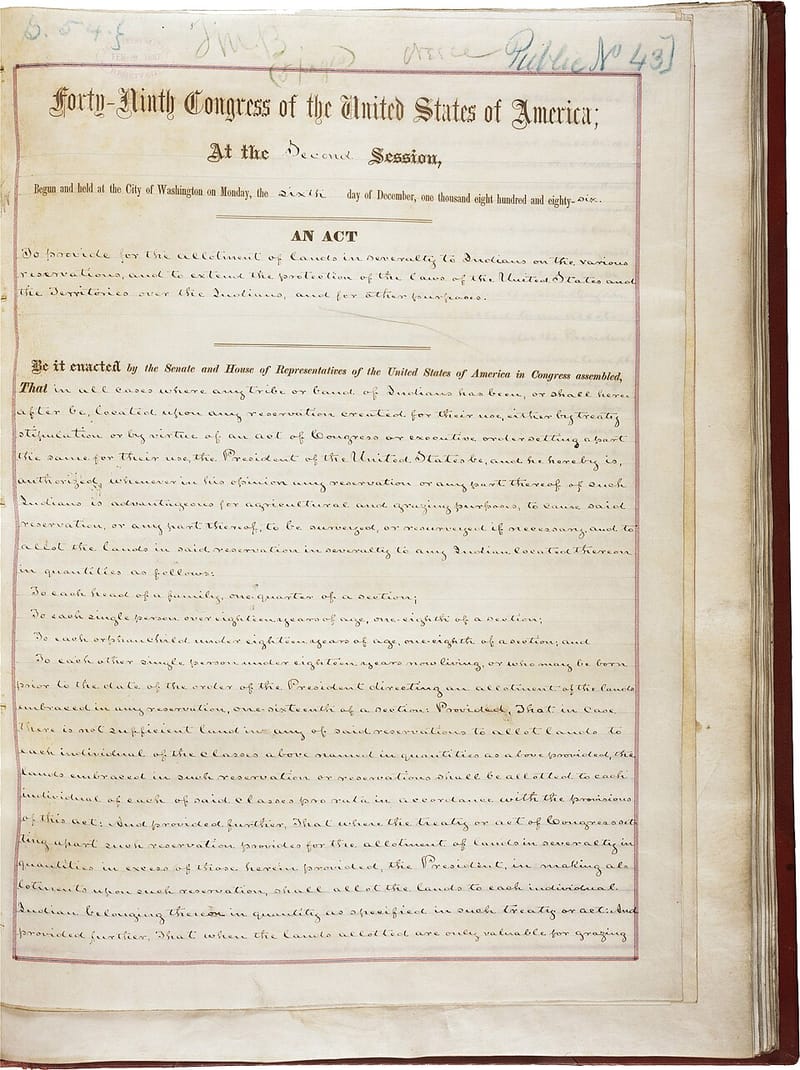
The Dawes Act, or General Allotment Act, authorized the president to break up reservation land held in common by Native nations and divide it into individual allotments — 160 acres to each head of family, smaller parcels to others. Its sponsors presented it as a humanitarian reform that would turn Native people into independent farmers and assimilate them into white American society. In practice it undermined tribal sovereignty, opened “surplus” land to white settlement, and contributed to a massive loss of Native land.
Key facts
- Date
- February 8, 1887
- Authors
- Senator Henry L. Dawes of Massachusetts; Forty-ninth Congress
- Signed
- February 8, 1887
- Sponsor
- Senator Henry Dawes of Massachusetts
- Allotments
- One-quarter section (160 acres) per head of family; one-eighth section to single adults and orphans
- Extended
- To the Five Tribes of Indian Territory after 1893, through the Dawes Commission and the “Dawes Rolls”
Read the act at the National Archives
Why it matters
The act’s stated purpose was to protect Native property rights, but the results were very different. Allotments often included desert or near-desert land unsuitable for farming; many allottees did not want to farm or could not afford tools, animals, and seed; and reservation land left after allotment was opened to non-Native settlers. As The American Yawp summarizes, the Dawes Act upended Native ways of life and left Native nations without sovereignty over their lands.
Historical circumstances
By the 1880s, after the wars on the Plains, most Native nations had been confined to reservations. Federal policy shifted from removal and war to assimilation. Reformers argued that holding land in common kept Native people from adopting American-style agriculture and values; land-hungry settlers and ranchers wanted reservation land opened. Many Americans promoted the act as an uplifting reform.
Principal ideas
- Severalty. Reservation land would be divided among individual tribal members who registered on a tribal roll, rather than held by the nation in common.
- Assimilation. Lawmakers reasoned that people who adopted “White” clothing and ways and farmed their own land would lose their “Indian-ness” and no longer need government supervision.
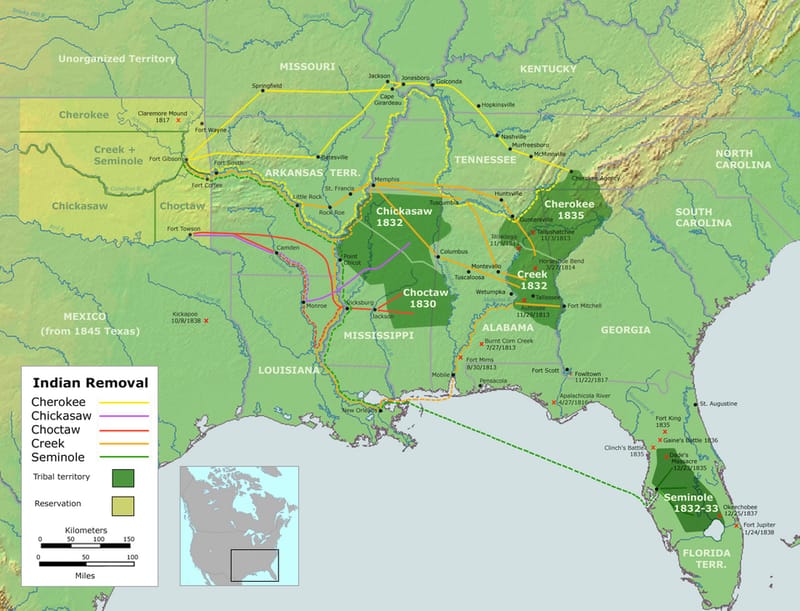
- Exemptions — at first. Section 8 exempted the Cherokee, Creek, Choctaw, Chickasaw, Seminole, and several other nations, but later laws and the Dawes Commission (from 1893) extended allotment to them in exchange for abolishing their tribal governments.
Study this entry
Check your understanding
Try answering in your own words, then open the answer.
1.Why was this document written?Show answerHide
By the 1880s, after the wars on the Plains, most Native nations had been confined to reservations. Federal policy shifted from removal and war to assimilation.From “Historical circumstances” above.
2.What are its principal ideas?Show answerHide
- Severalty. Reservation land would be divided among individual tribal members who registered on a tribal roll, rather than held by the nation in common. - Assimilation. Lawmakers reasoned that people who adopted “White” clothing and ways and farmed their own land would lose their “Indian-ness” and no longer need government supervision. - Exemptions — at first. Section 8 exempted the Cherokee, Creek, Choctaw, Chickasaw, Seminole, and several other nations, but later laws and the Dawes Commission (from 1893) extended allotment to them in exchange for abolishing their tribal governments.From “Principal ideas” above.
Turn this entry into 10 flashcards (key facts, dates, and why it matters) and review them in Learn.
Related History
How this connects to the rest of the atlas.
Events

Sources
- 1.Dawes Act (1887) — Milestone Documents
National Archives · Primary source · cited for provisions, purposes, effects, Dawes Rolls
- 2.The American Yawp, “Conquering the West”
The American Yawp (eds. Joseph Locke and Ben Wright; Stanford University Press) · Scholarly · cited for Plains wars, Dawes Act, Ghost Dance, Wounded Knee, railroads
Image credits
- Dawes Act - First Page, 49th Congress of the U.S., 1887-02-08. Via Wikimedia Commons · Public domain · Source
Written for American History Atlas from the sources above. See how entries are researched.
Atlas by Alexander. More on Telegram.