WarCivil Rights and Social Transformation
Vietnam War
America’s longest war of the Cold War era, 1964–1973
August 7, 1964 – January 1973Vietnam, Laos, and Cambodia
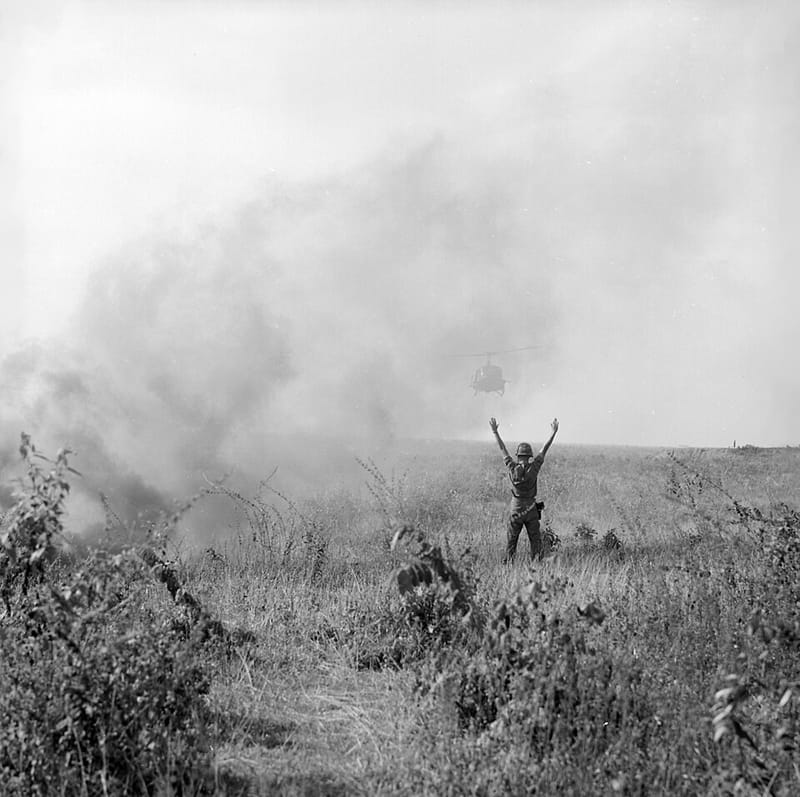
The United States fought in Vietnam to prevent a communist takeover of South Vietnam. Involvement grew from aid and advisers in the 1950s to a full ground war after the 1964 Gulf of Tonkin Resolution; by 1968 more than half a million American troops were there. Despite overwhelming firepower, the United States could not defeat the North Vietnamese army and the Viet Cong insurgency. The war was perhaps the most divisive event in American life since the Civil War; it brought down Lyndon Johnson’s presidency, and ended for the United States with the Paris Peace Accords of 1973. More than 58,000 Americans and millions of Vietnamese, Laotians, and Cambodians died, and in 1975 Vietnam was united under communist rule.
Key facts
- Date
- August 7, 1964 – January 1973
- Location
- Vietnam, Laos, and Cambodia
- Dating note
- U.S. advisers served from the 1950s; the Tonkin Gulf Resolution (August 7, 1964) authorized escalation; U.S. combat forces landed in March 1965; the Paris Peace Accords (January 1973) ended U.S. involvement; Vietnam was unified under communist rule in 1975.
- Tonkin Gulf Resolution
- August 7, 1964; only two senators voted no
- U.S. troops
- Almost 200,000 by the end of 1965; more than 500,000 by 1968
- U.S. deaths
- 58,220 in the official casualty file
- Tet Offensive
- January 1968
- End of U.S. role
- Paris Peace Accords, January 1973; South Vietnam fell in 1975
Why it matters
Vietnam was a defining American trauma of the twentieth century, reshaping politics, foreign policy, and the nation’s sense of its power and purpose.
Who fought
The United States and South Vietnam (the Republic of Vietnam), with smaller allied contingents, fought North Vietnam and the Viet Cong, communist guerrillas in the South. North Vietnam was led by Ho Chi Minh. The war spread into neighboring Laos and Cambodia.
Political background
After World War II, the Viet Minh, led by Ho Chi Minh, fought to end French colonial rule; the United States, fearing that communism would spread from country to country like falling dominoes, helped finance the French war. The French were defeated at Dien Bien Phu in 1954, and the Geneva Conference divided Vietnam temporarily, pending elections. Expecting a communist victory, the United States backed South Vietnam’s leader Ngo Dinh Diem when he refused to hold the elections. A communist insurgency grew; by 1963 President Kennedy had sent some 16,000 military advisers, and that November Diem was overthrown and killed by his own generals.
Major phases
Escalation (1964–1967). In August 1964 Johnson reported that North Vietnamese boats had attacked U.S. destroyers in the Gulf of Tonkin. The first attack, on August 2, occurred; a reported second attack on August 4 later proved not to have happened, and the Maddox had been on an intelligence mission. Congress nonetheless passed the Tonkin Gulf Resolution on August 7, authorizing the president to use force. Marines landed in March 1965, beginning the ground war. Under General William Westmoreland, U.S. forces measured progress by “body counts,” while bombing failed to break the North.
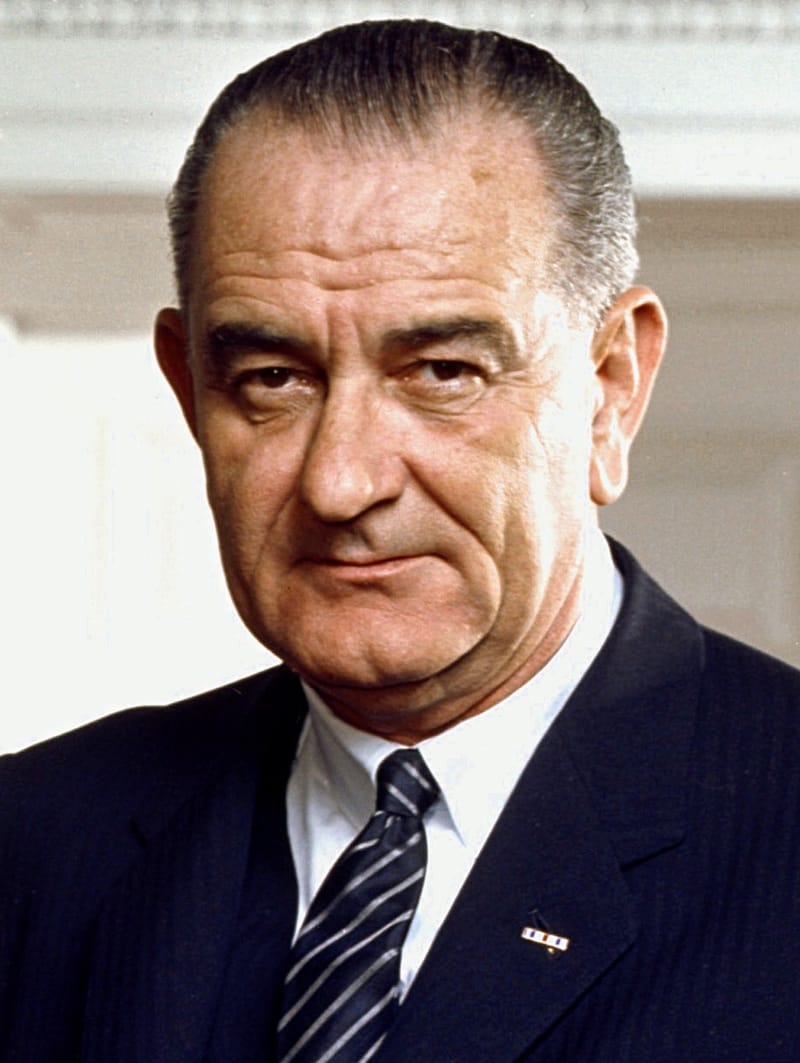
Tet and the turning point (1968). In January 1968 communist forces attacked more than one hundred sites across South Vietnam, including the U.S. embassy in Saigon. They were driven back with heavy losses, but Tet exposed the “credibility gap” between official optimism and reality. On March 31 Johnson announced he would not seek reelection.
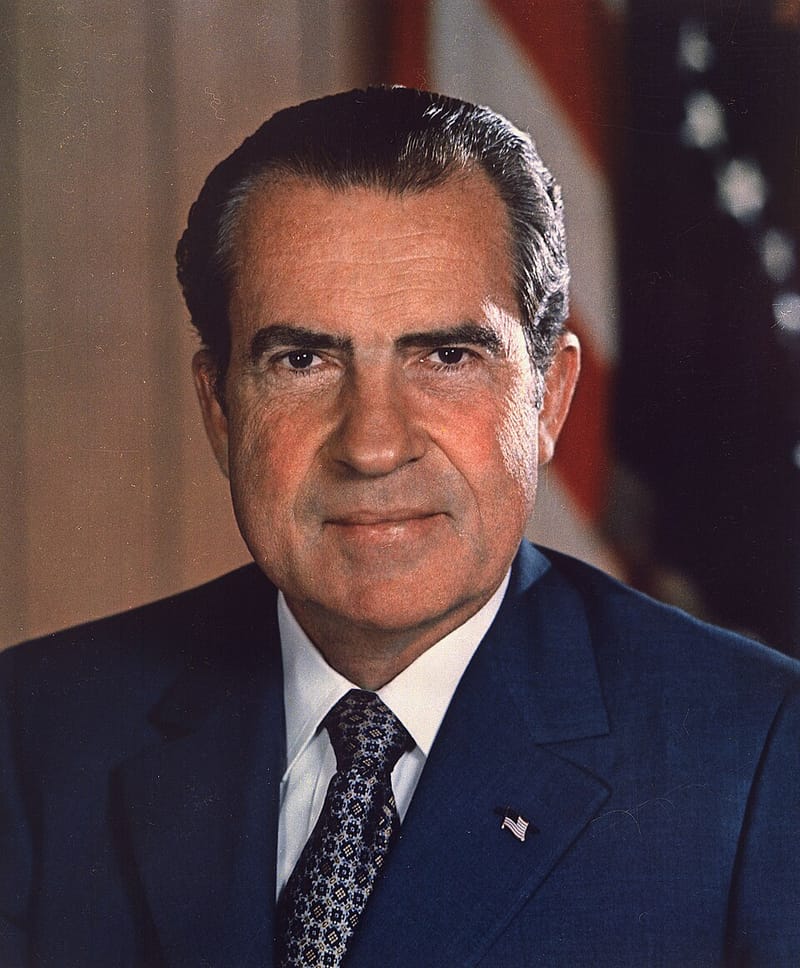
Vietnamization (1969–1973). President Richard Nixon began withdrawing troops while building up South Vietnam’s forces, and secretly bombed North Vietnamese bases in Cambodia. News of attacks on communist supply lines in Laos and Cambodia renewed antiwar demonstrations; in 1970 National Guard troops and police killed six students at Kent State in Ohio and Jackson State in Mississippi. After years of negotiation, the Paris Peace Accords were signed in January 1973.
Collapse of the South (1975). When fighting resumed, North Vietnamese forces quickly overwhelmed the South, and by 1975 Vietnam was united under a communist government.
Turning points
- The Gulf of Tonkin Resolution (1964): gave the president a blank check for war.
- The Tet Offensive (1968): turned American opinion decisively against the war.
- Johnson’s withdrawal from the 1968 race: marked the political cost of the war.
- The Paris Peace Accords (1973): ended direct U.S. military involvement.
Outcome
The United States failed to preserve an independent, noncommunist South Vietnam. More than 58,000 American military personnel died, along with millions of Vietnamese, Laotians, and Cambodians.
Consequences for American society
The war shattered public trust in government. Revelations such as the My Lai massacre of civilians and the Pentagon Papers — a secret Defense Department history showing that presidents had misled the public about the war — deepened disillusionment. Congress repealed the Tonkin Gulf Resolution in 1971 and in 1973 passed the War Powers Resolution to limit the president’s ability to wage war without congressional consent. The antiwar movement shaped a generation, while many other Americans continued to see the war as just.
Study this entry
Check your understanding
Try answering in your own words, then open the answer.
1.Why did the war begin?Show answerHide
After World War II, the Viet Minh, led by Ho Chi Minh, fought to end French colonial rule; the United States, fearing that communism would spread from country to country like falling dominoes, helped finance the French war.From “Political background” above.
2.What were the turning points?Show answerHide
- The Gulf of Tonkin Resolution (1964): gave the president a blank check for war. - The Tet Offensive (1968): turned American opinion decisively against the war. - Johnson’s withdrawal from the 1968 race: marked the political cost of the war. - The Paris Peace Accords (1973): ended direct U.S. military involvement.From “Turning points” above.
3.How did it end?Show answerHide
The United States failed to preserve an independent, noncommunist South Vietnam. More than 58,000 American military personnel died, along with millions of Vietnamese, Laotians, and Cambodians.From “Outcome” above.
4.How did it change American society?Show answerHide
The war shattered public trust in government. Revelations such as the My Lai massacre of civilians and the Pentagon Papers — a secret Defense Department history showing that presidents had misled the public about the war — deepened disillusionment.From “Consequences for American society” above.
Turn this entry into 11 flashcards (key facts, dates, and why it matters) and review them in Learn.
Related History
How this connects to the rest of the atlas.


Sources
- 1.U.S. Involvement in the Vietnam War: the Gulf of Tonkin and Escalation, 1964
U.S. Department of State, Office of the Historian · Institutional · cited for Tonkin Gulf Resolution, origins of the war
- 2.Tonkin Gulf Resolution (1964) — Milestone Documents
National Archives · Primary source · cited for Tonkin Gulf Resolution
- 3.Ending the Vietnam War, 1969–1973
U.S. Department of State, Office of the Historian · Institutional · cited for Nixon, Vietnamization, Paris talks
- 4.Statistical Information about Fatal Casualties of the Vietnam War
National Archives · Institutional · cited for U.S. fatal casualty records
- 5.The American Yawp, “The Sixties”
The American Yawp (eds. Joseph Locke and Ben Wright; Stanford University Press) · Scholarly · cited for civil rights, Great Society, Vietnam, social movements
- 6.The American Yawp, “The Unraveling”
The American Yawp (eds. Joseph Locke and Ben Wright; Stanford University Press) · Scholarly · cited for 1970s: Vietnam’s end, Watergate, feminism, environmentalism
- 7.Lyndon B. Johnson: Life in Brief
Miller Center, University of Virginia · Scholarly · cited for life and presidency
- 8.Lyndon B. Johnson: Impact and Legacy
Miller Center, University of Virginia · Scholarly · cited for legacy
Image credits
- US soldier directs UH-1 to land Vietnam 1966, U.S. Air Force, 1966-10. Via Wikimedia Commons · Public domain · Source
Written for American History Atlas from the sources above. See how entries are researched.
Atlas by Alexander. More on Telegram.