EventConservative Realignment and the End of the Cold War
The End of the Cold War
The fall of communism in Eastern Europe and the collapse of the Soviet Union, 1989–1991
1989 – December 25, 1991Eastern Europe and the Soviet Union
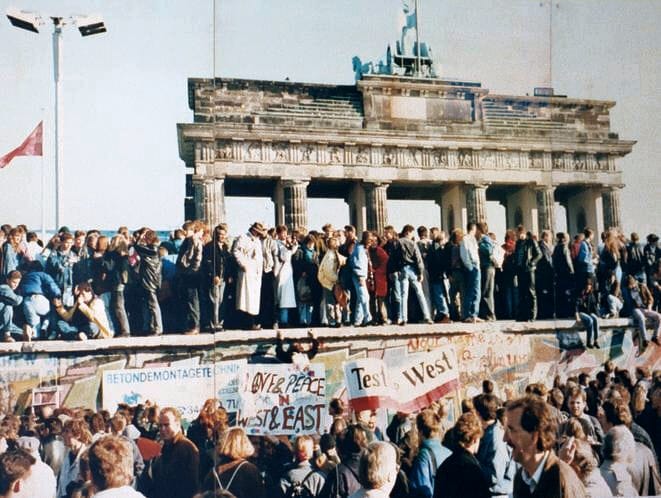
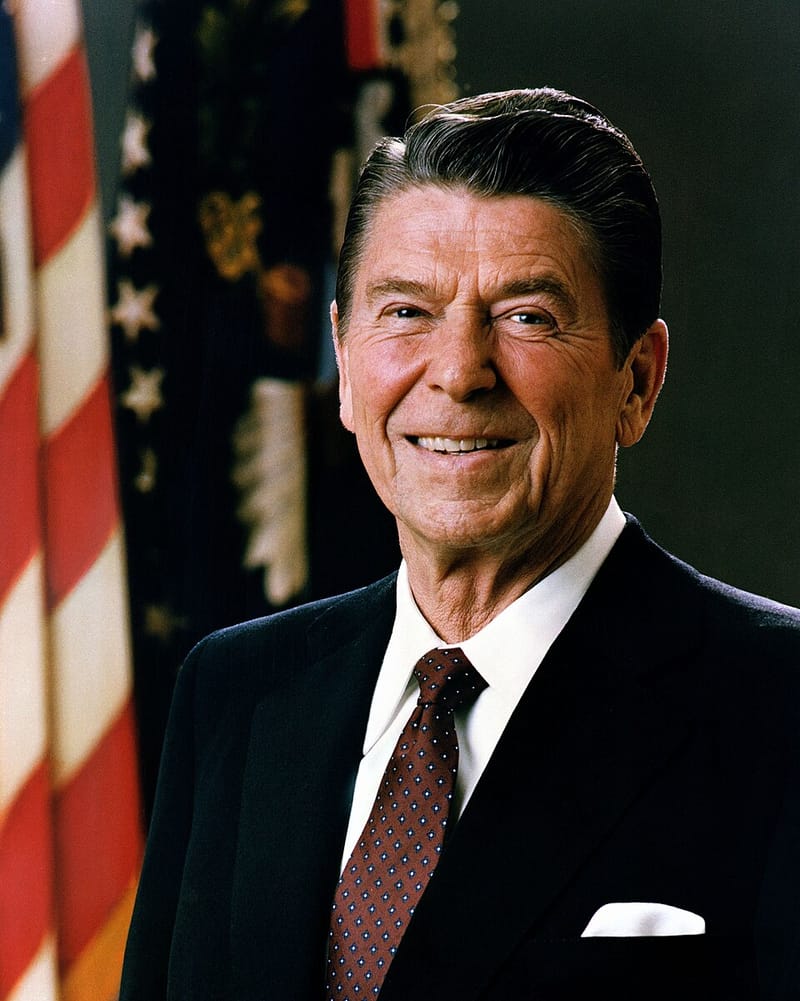
Between 1989 and 1991, the communist regimes of Eastern Europe collapsed one after another, the Berlin Wall fell, and the Soviet Union itself dissolved. Soviet leader Mikhail Gorbachev’s reforms — perestroika (restructuring) and glasnost (openness) — and his decision not to use force to prop up allied regimes made peaceful change possible. Presidents Ronald Reagan and George H. W. Bush combined pressure with negotiation. On December 25, 1991, Gorbachev resigned and the Soviet flag came down over the Kremlin, leaving the United States the world’s only superpower.
Key facts
- Date
- 1989 – December 25, 1991
- Location
- Eastern Europe and the Soviet Union
- INF Treaty
- 1987: Reagan and Gorbachev agree to reduce nuclear arsenals
- Poland
- Solidarity wins elections, June 4, 1989
- Berlin Wall
- Opened November 9, 1989
- Failed coup
- August 1991, against Gorbachev
- Soviet Union ends
- December 25, 1991
Why it matters
The peaceful end of the Cold War closed a four-decade conflict that had shaped American life and lifted the threat of superpower nuclear war.
Historical background
By the 1980s the Soviet economy was stagnating, and a costly war in Afghanistan drained its resources. Reagan built up American forces and denounced the Soviet Union, while backing anticommunist movements worldwide.
Causes and contributing factors
Gorbachev, who came to power in 1985, believed the Soviet system needed reform and sought to end the ruinous arms race. He met Reagan at Geneva in 1985 and Reykjavik in 1986, and the two signed the Intermediate Nuclear Forces Treaty in 1987. Gorbachev also abandoned the policy of using Soviet troops to support communist governments in Eastern Europe. Historians emphasize that the most significant causes of the collapse lay within the Soviet empire itself.
What happened
In Poland, round-table talks with the banned union Solidarity led to elections on June 4, 1989, which Solidarity won overwhelmingly; by August the country had Eastern Europe’s first non-communist prime minister. Hungary, Czechoslovakia, Romania, Bulgaria, and East Germany followed. On November 9, 1989, jubilant crowds brought down the Berlin Wall. Gorbachev accepted German reunification, and a reunited Germany joined NATO. Inside the Soviet Union, reforms unraveled the system. A failed hard-line coup in August 1991 fatally weakened Gorbachev; republics declared independence, and in December the leaders of Russia, Ukraine, and Belarus formed the Commonwealth of Independent States.
Immediate consequences
On December 25, 1991, Gorbachev resigned as president of the Soviet Union, and the Soviet flag was lowered over the Kremlin for the last time, replaced by the Russian tricolor. The Bush administration focused on stability and security in Russia and the other former Soviet states.
Long-term significance
The end of the Cold War left the United States as the sole superpower and seemed to many to signal the global triumph of democracy and capitalism. It reshaped American defense priorities, alliances, and politics for the decades that followed.
Study this entry
Check your understanding
Try answering in your own words, then open the answer.
1.What led to the End of the Cold War?Show answerHide
Gorbachev, who came to power in 1985, believed the Soviet system needed reform and sought to end the ruinous arms race. He met Reagan at Geneva in 1985 and Reykjavik in 1986, and the two signed the Intermediate Nuclear Forces Treaty in 1987.From “Causes and contributing factors” above.
2.What happened?Show answerHide
In Poland, round-table talks with the banned union Solidarity led to elections on June 4, 1989, which Solidarity won overwhelmingly; by August the country had Eastern Europe’s first non-communist prime minister. Hungary, Czechoslovakia, Romania, Bulgaria, and East Germany followed.From “What happened” above.
3.What were the immediate consequences?Show answerHide
On December 25, 1991, Gorbachev resigned as president of the Soviet Union, and the Soviet flag was lowered over the Kremlin for the last time, replaced by the Russian tricolor. The Bush administration focused on stability and security in Russia and the other former Soviet states.From “Immediate consequences” above.
4.Why does it still matter?Show answerHide
The end of the Cold War left the United States as the sole superpower and seemed to many to signal the global triumph of democracy and capitalism. It reshaped American defense priorities, alliances, and politics for the decades that followed.From “Long-term significance” above.
Turn this entry into 10 flashcards (key facts, dates, and why it matters) and review them in Learn.
Related History
How this connects to the rest of the atlas.
Wars

Sources
- 1.Fall of Communism in Eastern Europe, 1989
U.S. Department of State, Office of the Historian · Institutional · cited for 1989 revolutions, Berlin Wall
- 2.The Collapse of the Soviet Union
U.S. Department of State, Office of the Historian · Institutional · cited for end of the Soviet Union, 1991
- 3.The American Yawp, “The Triumph of the Right”
The American Yawp (eds. Joseph Locke and Ben Wright; Stanford University Press) · Scholarly · cited for 1980 election, Reaganomics, Iran-Contra, end of the Cold War
- 4.The American Yawp, “The Recent Past”
The American Yawp (eds. Joseph Locke and Ben Wright; Stanford University Press) · Scholarly · cited for 1990s, 9/11, Afghanistan, Iraq, Great Recession, Obama, pandemic
Image credits
- West and East Germans at the Brandenburg Gate in 1989, Unknown photographer, Reproduction by Lear 21 at English Wikipedia ., 1989. Via Wikimedia Commons · CC BY-SA 3.0 · Source
Written for American History Atlas from the sources above. See how entries are researched.
Atlas by Alexander. More on Telegram.