Slavery in America
The institution that shaped the nation’s economy, politics, and conflicts for nearly 250 years
1619–1865
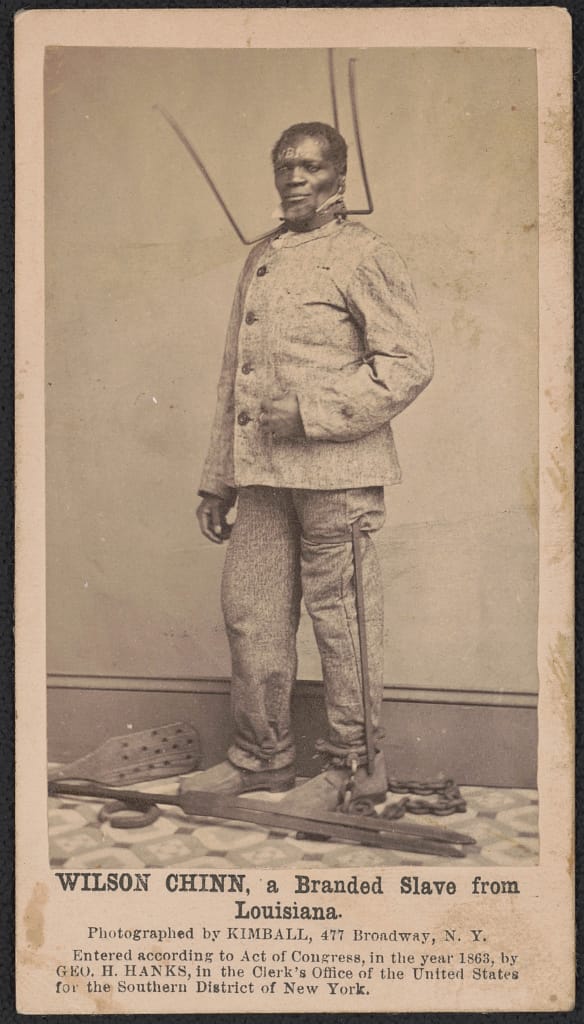
Slavery — the ownership of human beings as property, inherited by their children and enforced by law and violence — existed in every one of the thirteen colonies and lasted in the United States until 1865. Enslaved Africans and their descendants built much of the nation’s wealth, especially in tobacco, rice, and cotton. By 1860 the census counted 3,953,760 enslaved people, about one in eight Americans. The struggle over slavery shaped the Constitution, drove the conflicts of the nineteenth century, and ended only with the Civil War and the Thirteenth Amendment.
Key facts
- Date
- 1619–1865
- Dating note
- From the arrival of the first documented Africans in English Virginia to the ratification of the Thirteenth Amendment.
- Africans forced onto the Middle Passage
- About 12.5 million, 1517–1867, to all of the Americas
- Landed in North America
- About 388,000 — a small share of the total trade
- Enslaved population, 1860
- 3,953,760, about 12.6% of the U.S. population
- Slaveholding families, 1860
- About 1 in 5 families in slave states; 49% in Mississippi and 46% in South Carolina
- Ended
- Thirteenth Amendment, ratified December 1865
Why it matters
Slavery was not a regional exception to American history but one of its central forces: it shaped the Constitution, the economy, westward expansion, and party politics, and its abolition required the nation’s bloodiest war. Its legacy — in segregation, inequality, and the long struggle for civil rights — continued long after 1865.
Definition
Chattel slavery treated enslaved people as movable property that could be bought, sold, mortgaged, and inherited. In the American colonies and the United States, it became tied to race: by law, the children of enslaved mothers were enslaved for life, and Africans and their descendants were presumed to be slaves.
Historical context
Origins. The first documented Africans in English Virginia arrived in 1619, captured from a Portuguese slave ship. Their status was at first unsettled, but over the seventeenth century colonial laws made slavery lifelong, hereditary, and racial. Slavery was legal in all thirteen colonies, North and South. Of the roughly 12.5 million Africans forced onto ships for the Middle Passage between 1517 and 1867, about 388,000 landed in North America; most enslaved Americans in later generations were born in the United States.
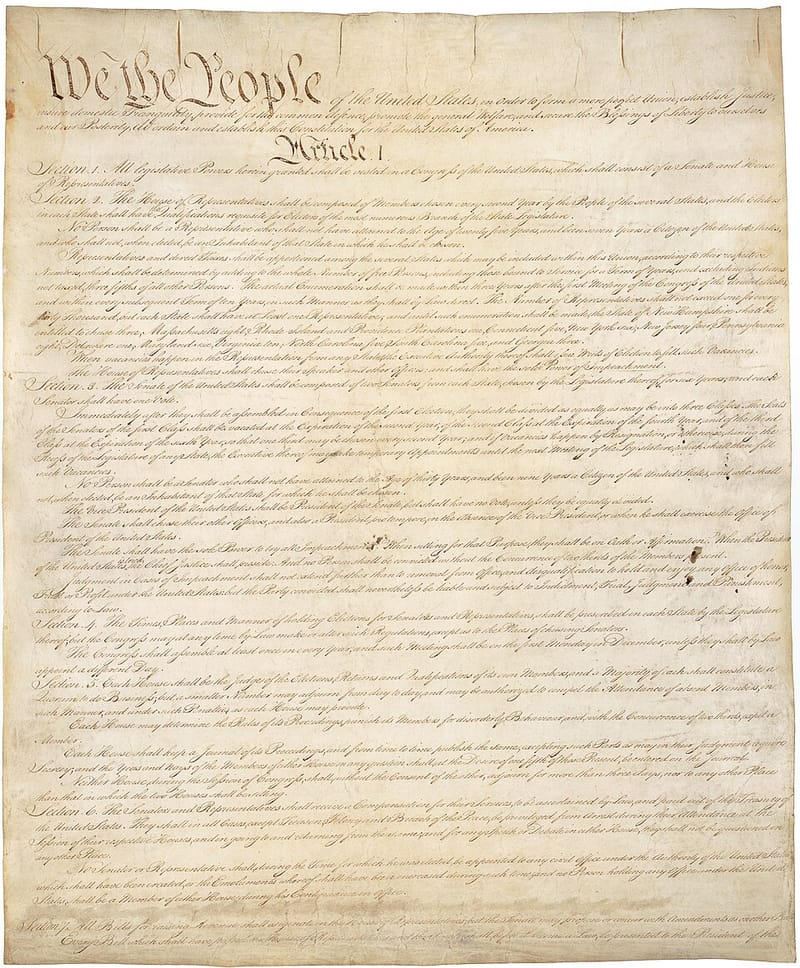
The founding. The Revolution’s language of liberty inspired the Northern states to adopt gradual emancipation laws, but the Constitution protected slavery through the three-fifths clause, a twenty-year guarantee for the slave trade, and the fugitive slave clause. Congress banned the international slave trade in 1808.
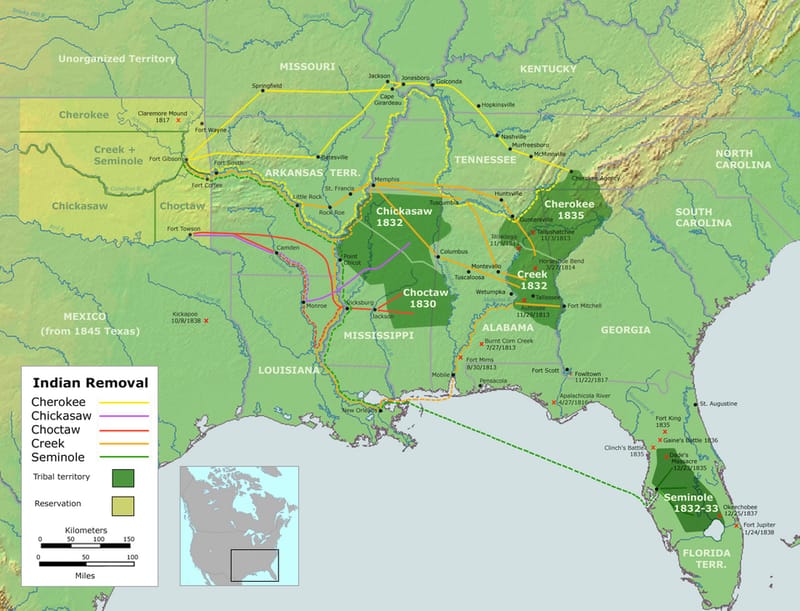
The cotton South. In the nineteenth century slavery spread west with cotton, onto land opened by Indian removal. By 1860, about one in five families in the slave states owned enslaved people — nearly half in Mississippi and South Carolina — and enslaved families were routinely broken apart by sale.
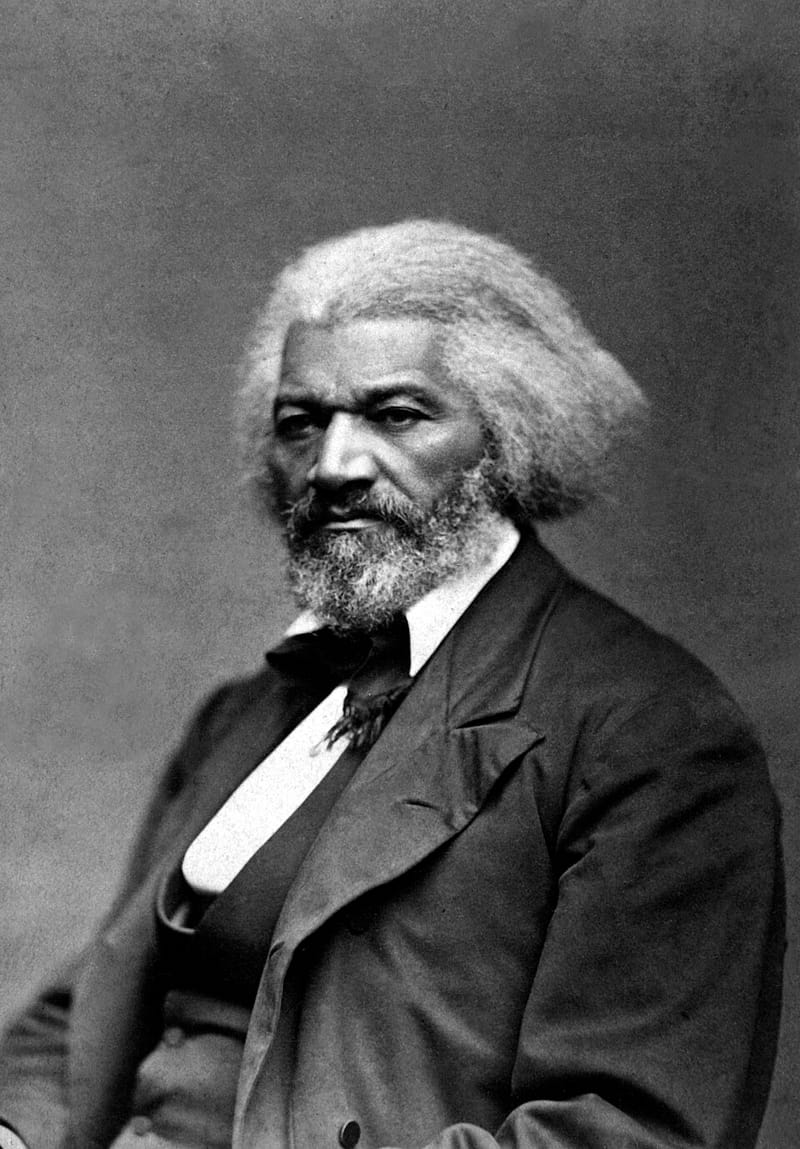
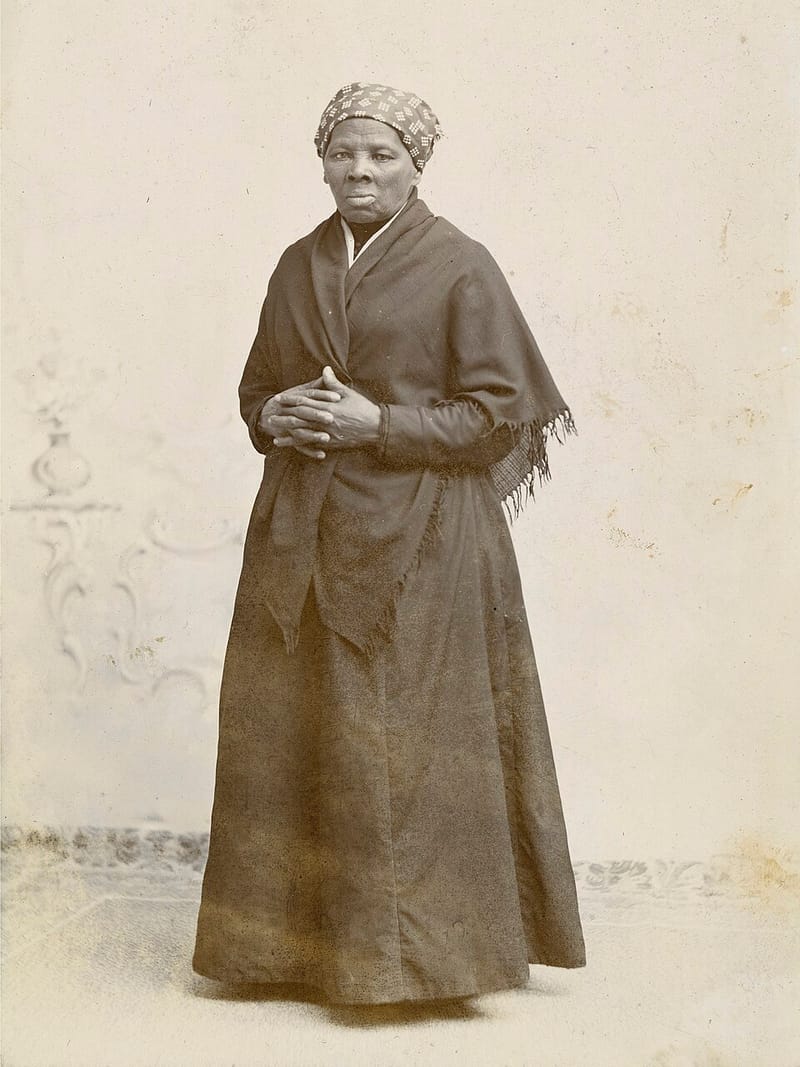
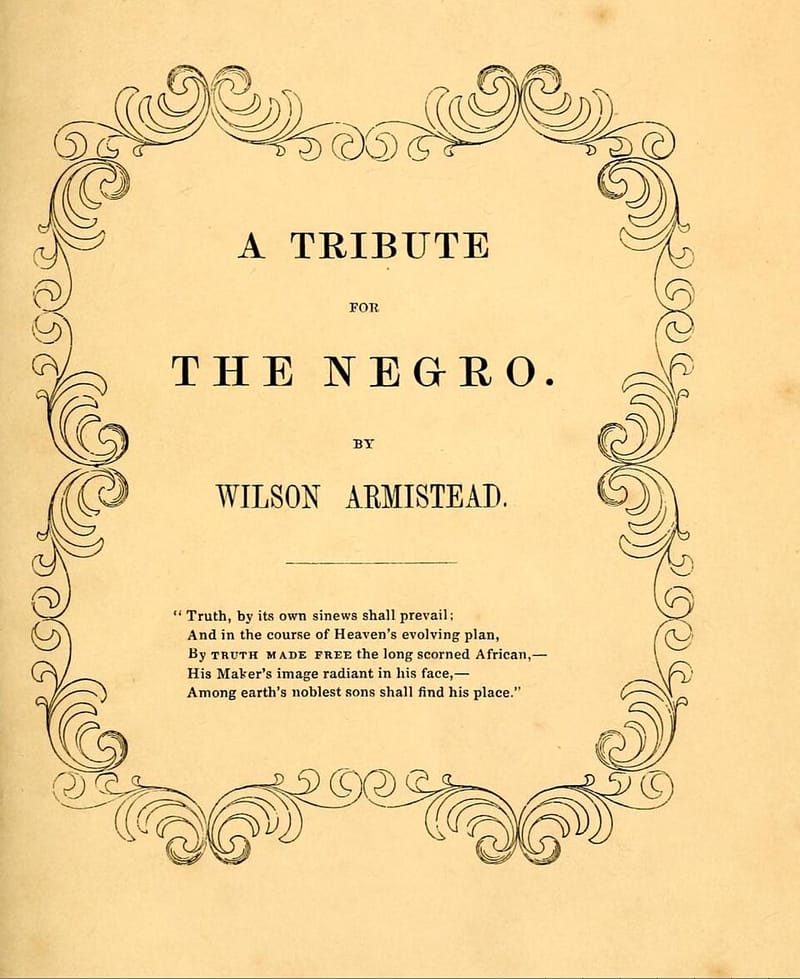
Resistance. Enslaved people resisted every day — slowing work, preserving family ties and culture, learning to read, and escaping. Freedom seekers fled by the thousands, aided by the networks known as the Underground Railroad. Black and white abolitionists, among them Frederick Douglass and Harriet Tubman, made slavery a national moral issue.
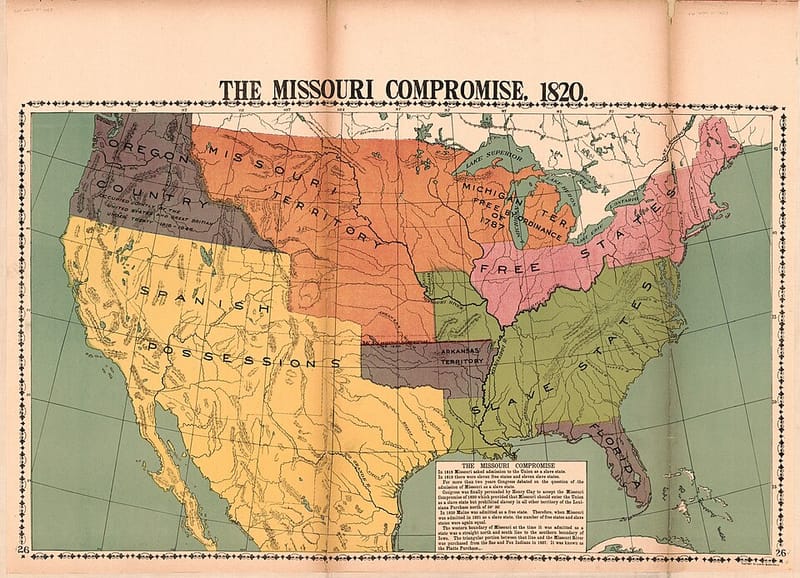
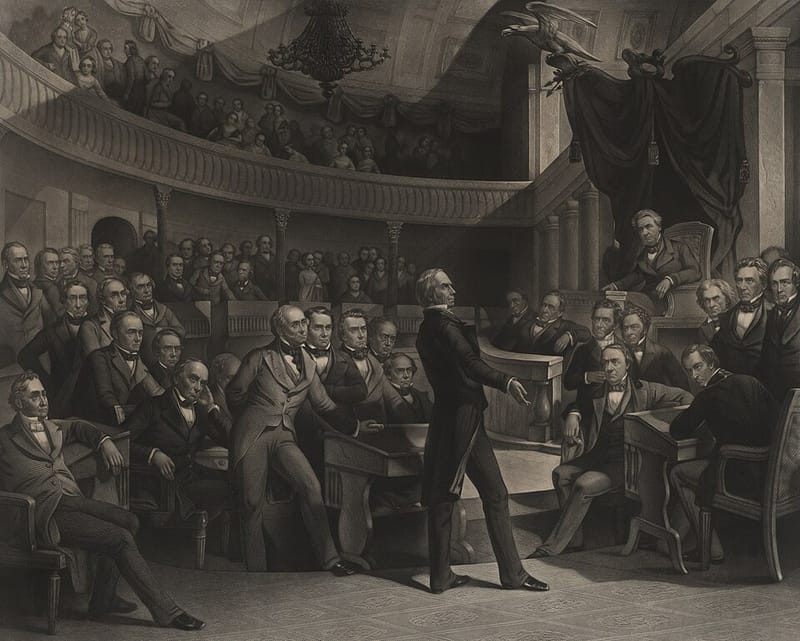
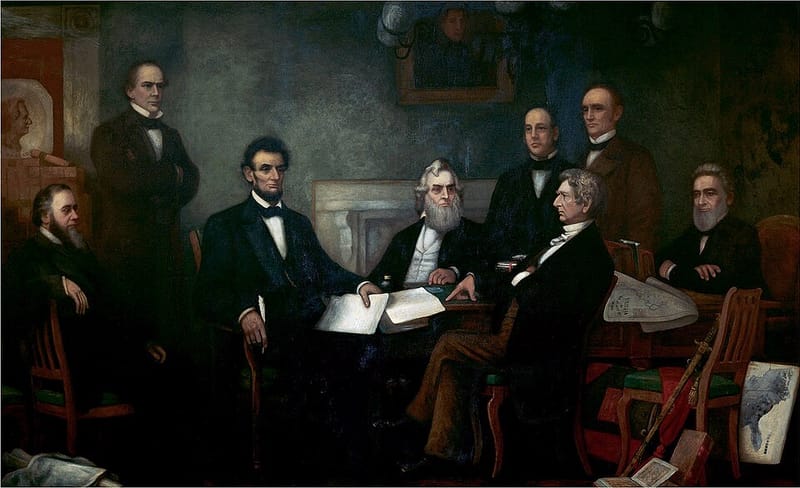
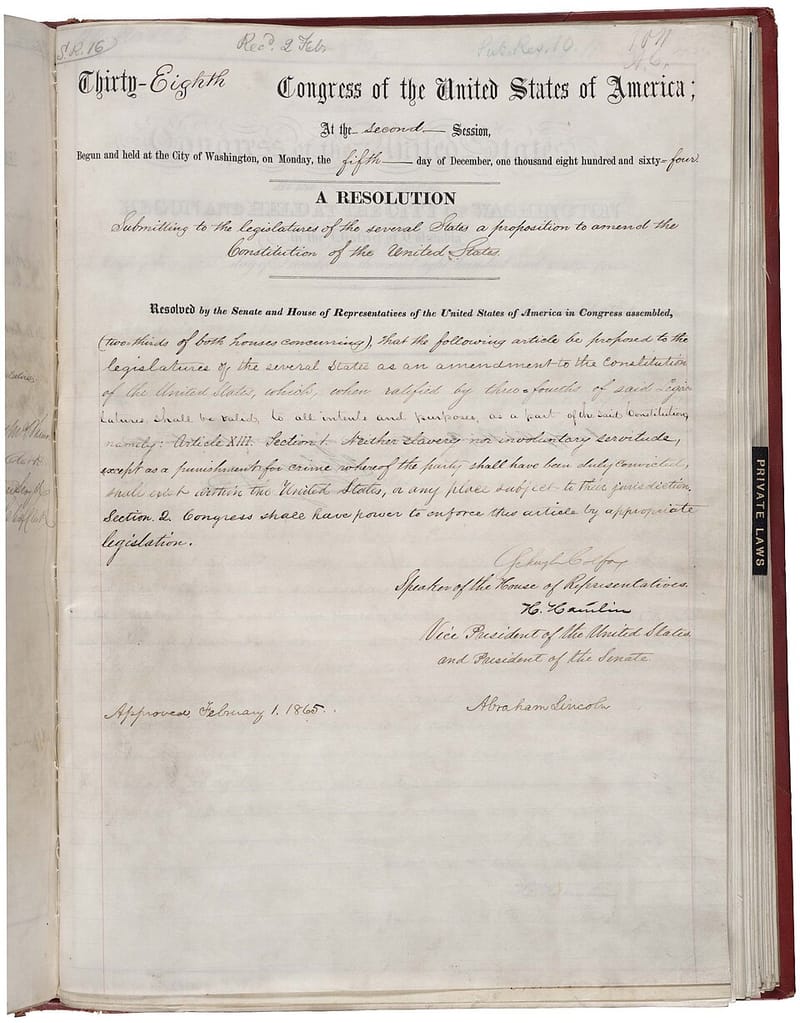
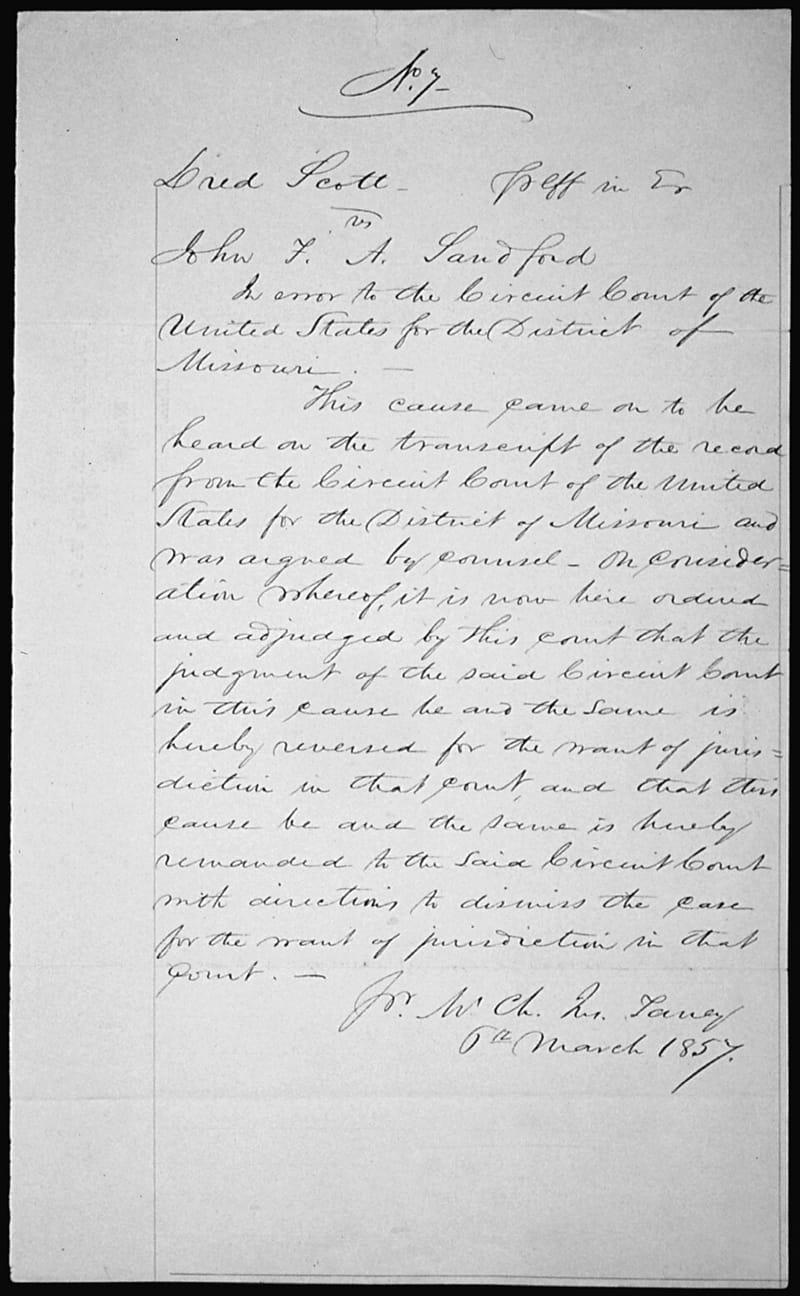
Crisis and abolition. Disputes over slavery’s expansion — in the Missouri Compromise, the Compromise of 1850, the Kansas-Nebraska Act, and the Dred Scott decision — split the nation and led to secession and civil war. The Emancipation Proclamation (1863) and the Thirteenth Amendment (1865) ended slavery.
Examples
- Virginia’s tobacco plantations, which turned to enslaved labor in the 1600s.
- New York’s gradual emancipation, under which Sojourner Truth was not legally freed until 1827.
- The Fugitive Slave Act of 1850, which required free states to help capture people who had escaped.
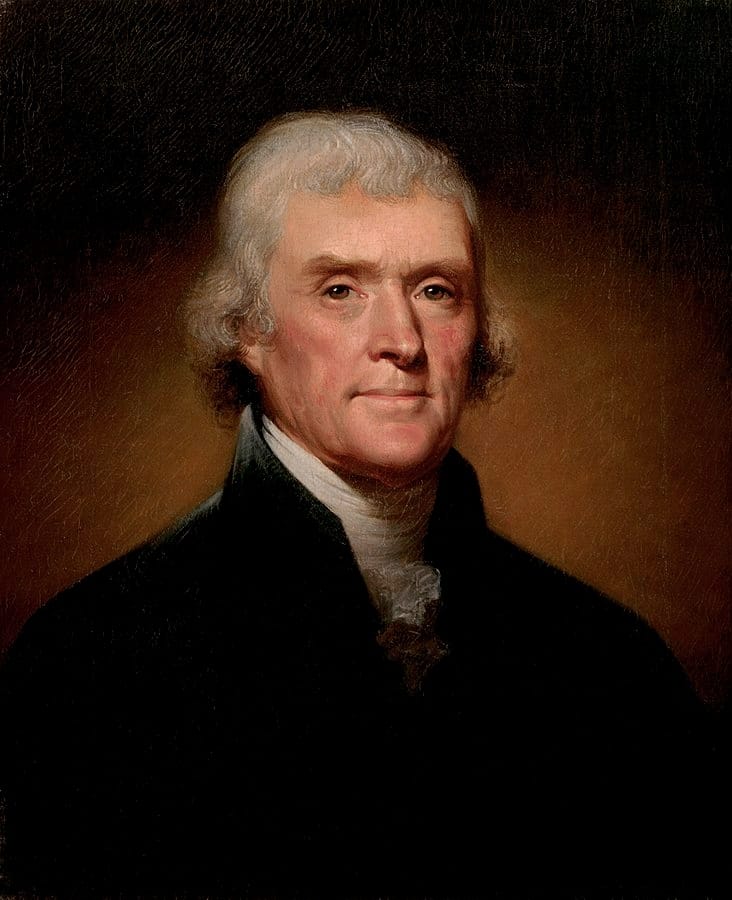
- The slaveholding presidents of the early republic, including Washington, Jefferson, Madison, and Jackson.
Study this entry
Check your understanding
Try answering in your own words, then open the answer.
1.What does “Slavery in America” mean?Show answerHide
Chattel slavery treated enslaved people as movable property that could be bought, sold, mortgaged, and inherited. In the American colonies and the United States, it became tied to race: by law, the children of enslaved mothers were enslaved for life, and Africans and their descendants were presumed to be slaves.From “Definition” above.
2.Where did the idea come from?Show answerHide
Origins. The first documented Africans in English Virginia arrived in 1619, captured from a Portuguese slave ship. Their status was at first unsettled, but over the seventeenth century colonial laws made slavery lifelong, hereditary, and racial.From “Historical context” above.
3.What are some examples?Show answerHide
- Virginia’s tobacco plantations, which turned to enslaved labor in the 1600s. - New York’s gradual emancipation, under which Sojourner Truth was not legally freed until 1827. - The Fugitive Slave Act of 1850, which required free states to help capture people who had escaped. - The slaveholding presidents of the early republic, including Washington, Jefferson, Madison, and Jackson.From “Examples” above.
Turn this entry into 11 flashcards (key facts, dates, and why it matters) and review them in Learn.
Related History
How this connects to the rest of the atlas.
Events
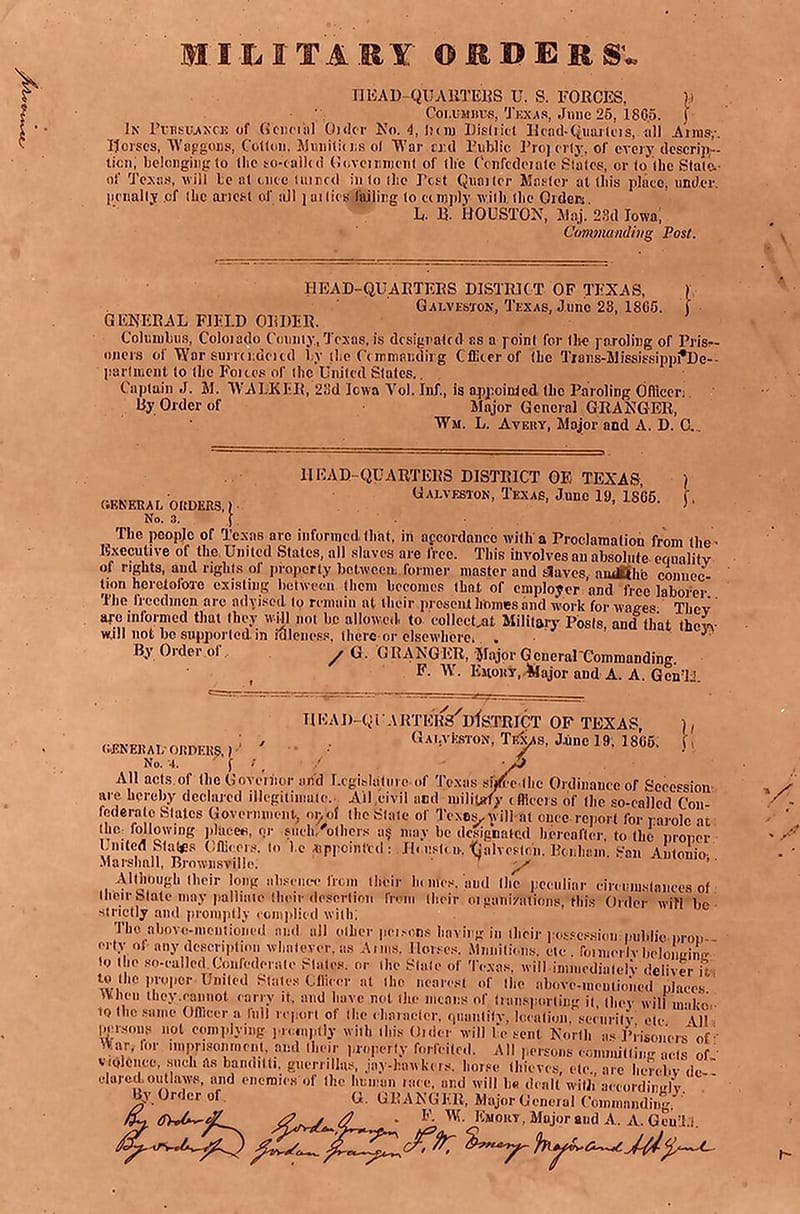
Wars
People
Documents
Movements

Sources
- 1.The Transatlantic Slave Trade and the Middle Passage
Encyclopedia Virginia, Virginia Humanities · Scholarly · cited for 12.5 million; North America’s share; 1808 ban
- 2.How Many Slaves Landed in the U.S.? (Henry Louis Gates Jr.)
PBS, The African Americans: Many Rivers to Cross · Scholarly · cited for about 388,000 landed in North America
- 3.Viral post gets it wrong on extent of slavery in 1860
PolitiFact · Reference · cited for 1860 census totals; share of slaveholding families
- 4.A More Perfect Union: The Creation of the U.S. Constitution
National Archives · Institutional · cited for constitutional compromises over slavery
- 5.President Andrew Jackson’s Message to Congress “On Indian Removal” (1830) — Milestone Documents
National Archives · Primary source · cited for removal opened land to the expansion of slavery
- 6.What Is the Underground Railroad?
National Park Service, Network to Freedom · Institutional · cited for freedom seekers, routes, helpers
- 7.Sojourner Truth
National Women’s History Museum · Institutional · cited for life, escape, lawsuit, name, Akron speech, Civil War, death
Image credits
- Wilson Chinn, a branded slave from Louisiana, Myron Holly Kimball, 1863. Via Wikimedia Commons · Public domain · Source
Written for American History Atlas from the sources above. See how entries are researched.
Atlas by Alexander. More on Telegram.