Court CaseExpansion and Sectional Conflict
Dred Scott v. Sandford
The Supreme Court denies Black citizenship and opens the territories to slavery
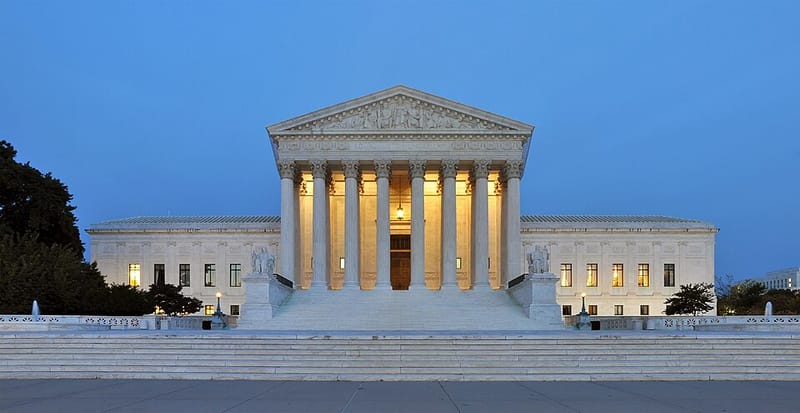
1857Washington, D.C.
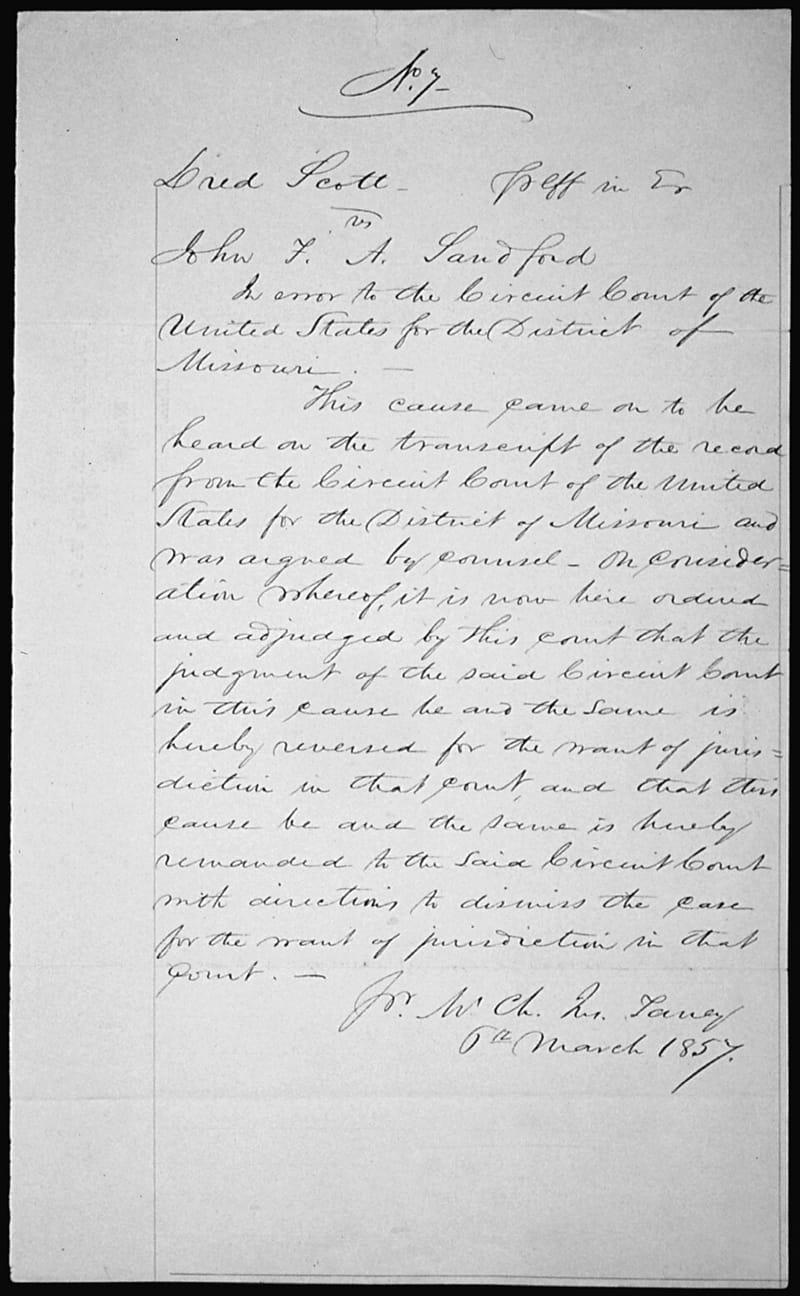
Dred Scott, an enslaved man who had lived for years on free soil, sued for his freedom. In 1857 the Supreme Court ruled against him, with Chief Justice Roger Taney declaring that Black Americans — enslaved or free — could not be citizens of the United States, and that Congress had no power to ban slavery in the territories. Intended to settle the slavery question, the decision instead inflamed it, and is widely considered the worst decision the Court has ever issued.
Key facts
- Citation
- 60 U.S. (19 How.) 393 (1857)
- Decided
- March 6, 1857
- Vote
- 7–2
- Majority opinion
- Chief Justice Roger B. Taney
- Location
- Washington, D.C.
- Holding
- People of African descent could not be U.S. citizens; the Missouri Compromise was unconstitutional
- Dissents
- Justices Benjamin R. Curtis and John McLean
- Overturned by
- The Thirteenth and Fourteenth Amendments
Why it matters
Dred Scott denied Black Americans any claim to citizenship and tried to put slavery beyond the reach of Congress — and in doing so helped bring on the war that destroyed slavery and rewrote the Constitution.
Historical context
In 1846 Dred Scott and his wife, Harriet, sued for their freedom in St. Louis. From 1833 to 1843 Scott had lived with his enslaver, an army surgeon, in the free state of Illinois and in federal territory where the Missouri Compromise forbade slavery, including Fort Snelling, and courts had previously ruled that long residence on free soil made enslaved people free. What looked like a routine suit became an eleven-year legal struggle. Scott lost in the Missouri courts, filed a new suit in federal court, and appealed to the Supreme Court as slavery became the most explosive issue in American politics.
The legal question
- Could a Black man descended from enslaved people be a citizen with the right to sue in federal court?
- Did residence in a free territory make Scott free?
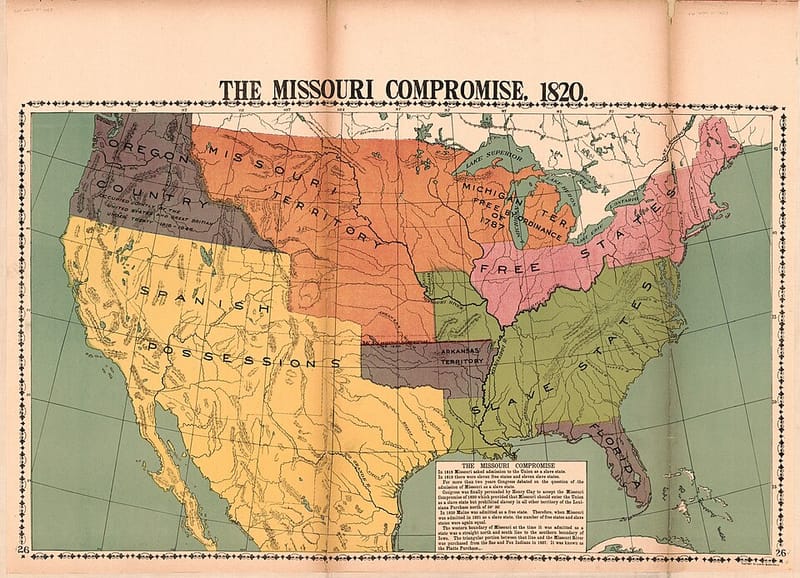
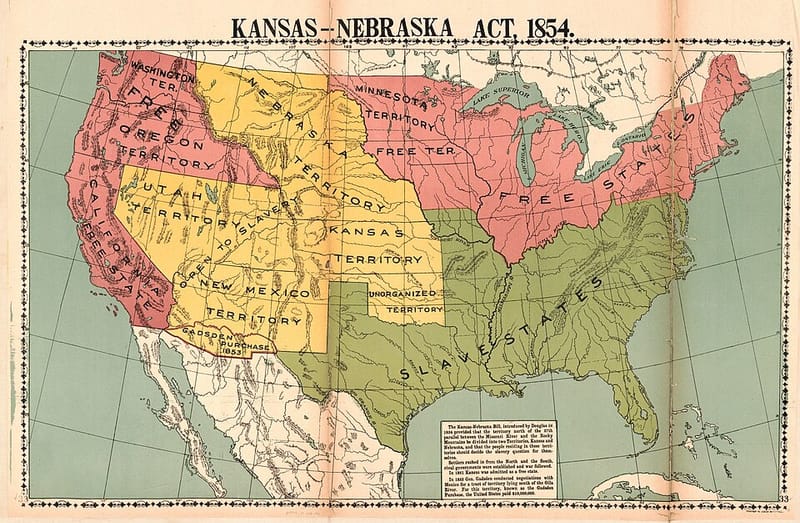
- Did Congress have power to prohibit slavery in the territories, as the Missouri Compromise had done?
The ruling
By a 7–2 vote, the Court ruled against Scott. Chief Justice Taney held that a Black person whose ancestors had been brought to the country and sold as slaves — whether enslaved or free — could not be an American citizen and therefore could not sue in federal court. He went further: the Missouri Compromise was unconstitutional, because Congress could not prohibit slavery in federal territories.
The Court’s reasoning
Taney reasoned that people of African descent whose ancestors had been brought to the country as slaves were not part of the political community that created the Constitution, and so could not be citizens. He held that enslaved people were property protected by the Fifth Amendment, so a federal law depriving a slaveholder of that property by banning slavery in a territory was unconstitutional. In dissent, Justice Benjamin Curtis criticized Taney for deciding the merits after concluding the Court lacked jurisdiction and cast doubt on Taney’s claim that the founders categorically opposed antislavery laws; Justice John McLean also dissented.
Consequences
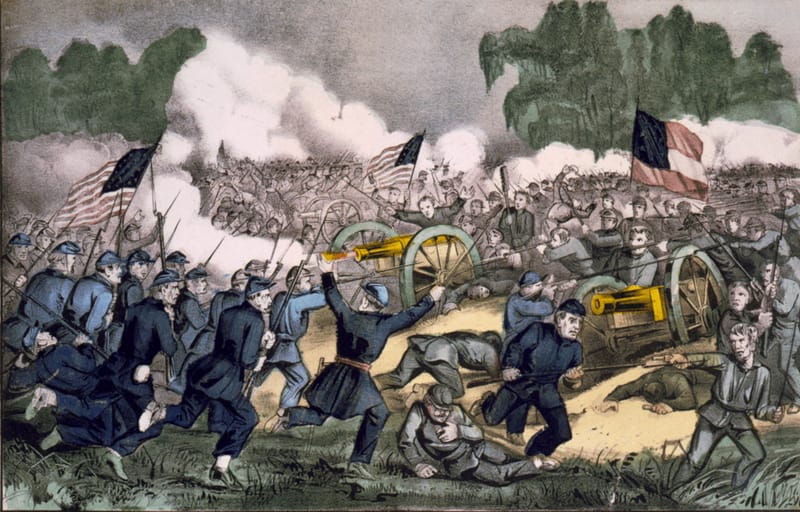
The decision delighted Southern slaveholders and outraged Northerners. By declaring that Congress could not stop slavery’s spread into the territories, it struck at the heart of the new Republican Party’s program. Rather than settling the slavery question, the ruling moved the nation closer to civil war.
Later interpretation
How later courts, scholars, and the public have judged the case — not part of the ruling itself.
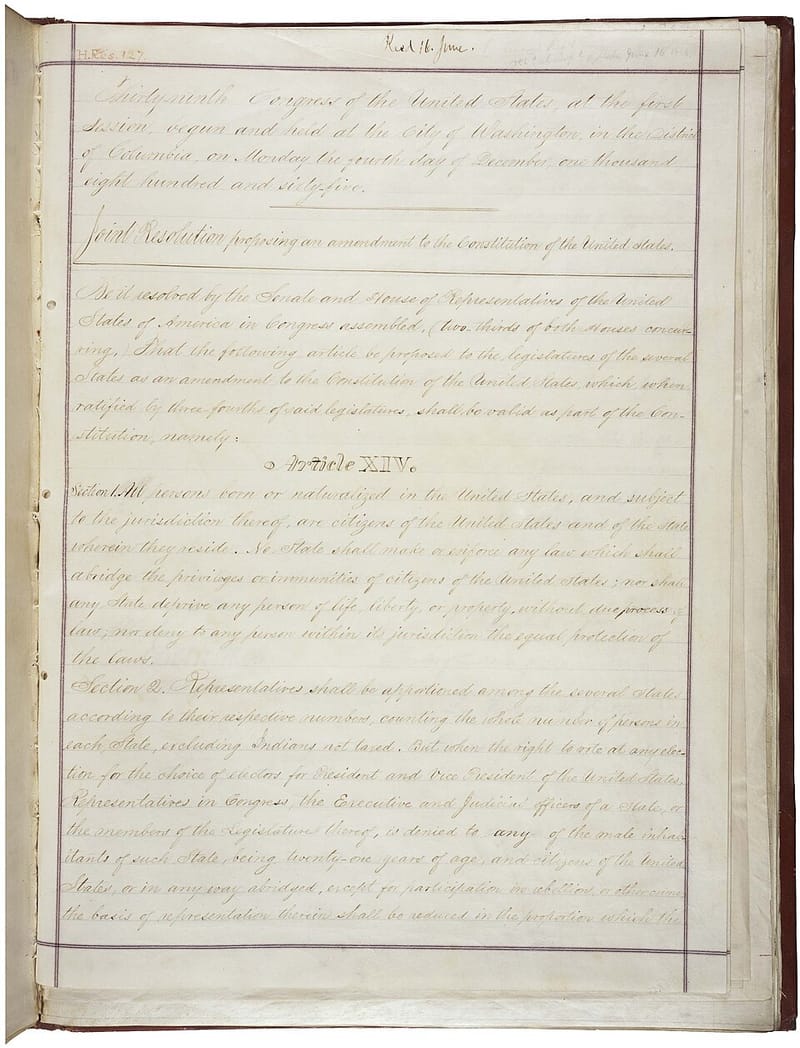
The Thirteenth and Fourteenth Amendments overturned the decision, abolishing slavery and declaring all persons born in the United States citizens. Many legal scholars consider Dred Scott the worst decision ever rendered by the Supreme Court, and it is often cited as a warning against judges attempting to resolve deep political conflicts by judicial decree.
Study this entry
Check your understanding
Try answering in your own words, then open the answer.
1.What question did the Court have to answer?Show answerHide
- Could a Black man descended from enslaved people be a citizen with the right to sue in federal court? - Did residence in a free territory make Scott free? - Did Congress have power to prohibit slavery in the territories, as the Missouri Compromise had done?From “The legal question” above.
2.What did the Court decide?Show answerHide
By a 7–2 vote, the Court ruled against Scott. Chief Justice Taney held that a Black person whose ancestors had been brought to the country and sold as slaves — whether enslaved or free — could not be an American citizen and therefore could not sue in federal court.From “The ruling” above.
3.How did the Court justify its decision?Show answerHide
Taney reasoned that people of African descent whose ancestors had been brought to the country as slaves were not part of the political community that created the Constitution, and so could not be citizens.From “The Court’s reasoning” above.
4.What were the consequences?Show answerHide
The decision delighted Southern slaveholders and outraged Northerners. By declaring that Congress could not stop slavery’s spread into the territories, it struck at the heart of the new Republican Party’s program.From “Consequences” above.
Turn this entry into 9 flashcards (key facts, dates, and why it matters) and review them in Learn.
Related History
How this connects to the rest of the atlas.
Documents

Sources
- 1.Dred Scott v. Sandford (1857) — Milestone Documents
National Archives · Primary source · cited for facts, ruling, significance, later reversal
- 2.Dred Scott v. Sandford
Oyez (Cornell LII, Justia, Chicago-Kent College of Law) · Scholarly · cited for holding, vote, Curtis dissent
Image credits
- Judgment in the U.S. Supreme Court Case Dred Scott v. John F. A. Sandford, Unknown author Unknown author or not provided, 6 March 1857. Via Wikimedia Commons · Public domain · Source
Written for American History Atlas from the sources above. See how entries are researched.
Atlas by Alexander. More on Telegram.