The Missouri Compromise
Congress balances slave and free states, 1820
February 1819 – August 1821Washington, D.C.; the Louisiana Territory
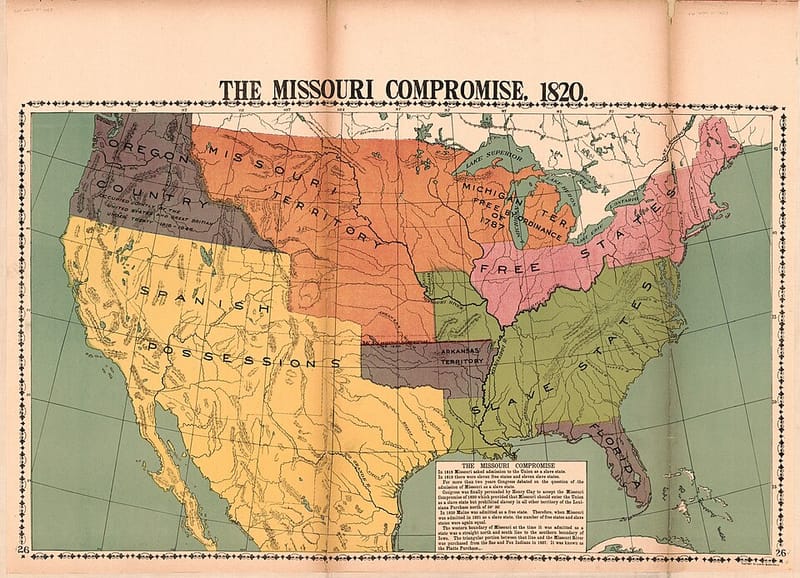
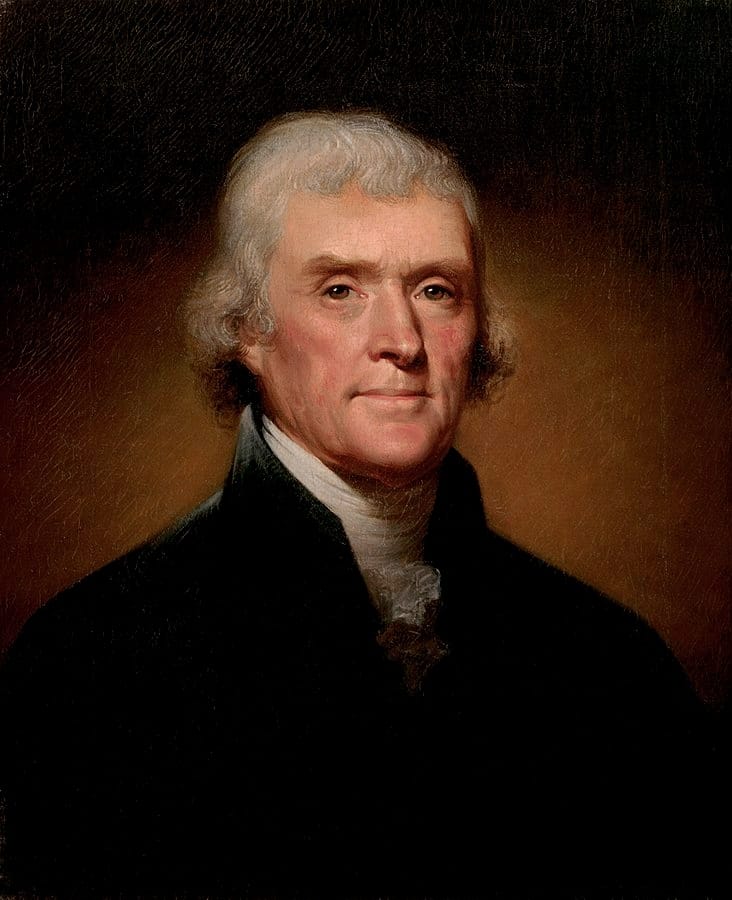
When Missouri asked to join the Union as a slave state in 1819, it set off the first great national crisis over slavery. The Missouri Compromise of 1820 admitted Missouri as a slave state and Maine as a free state, preserving the balance between them in the Senate, and banned slavery in the rest of the Louisiana Purchase north of latitude 36°30′. The line held for thirty-four years, but the crisis revealed how deeply slavery divided the nation — Thomas Jefferson called it “a fire bell in the night.”
Key facts
- Date
- February 1819 – August 1821
- Location
- Washington, D.C.; the Louisiana Territory
- Dating note
- The crisis began with Missouri’s statehood bill in February 1819; Congress passed the compromise in March 1820; Missouri was admitted in August 1821.
- Admitted
- Missouri as a slave state; Maine (separated from Massachusetts) as a free state
- The line
- No slavery in the remaining Louisiana Territory north of 36°30′ latitude, except Missouri
- Repealed
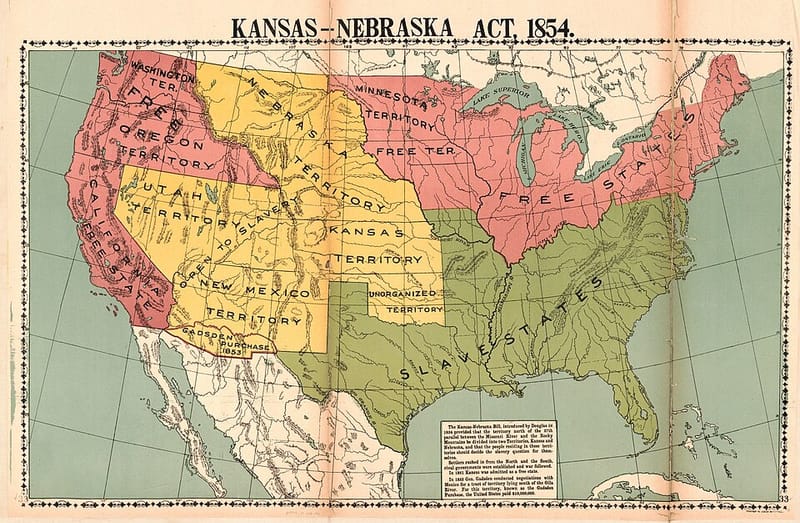
- By the Kansas-Nebraska Act (1854)
- Declared unconstitutional
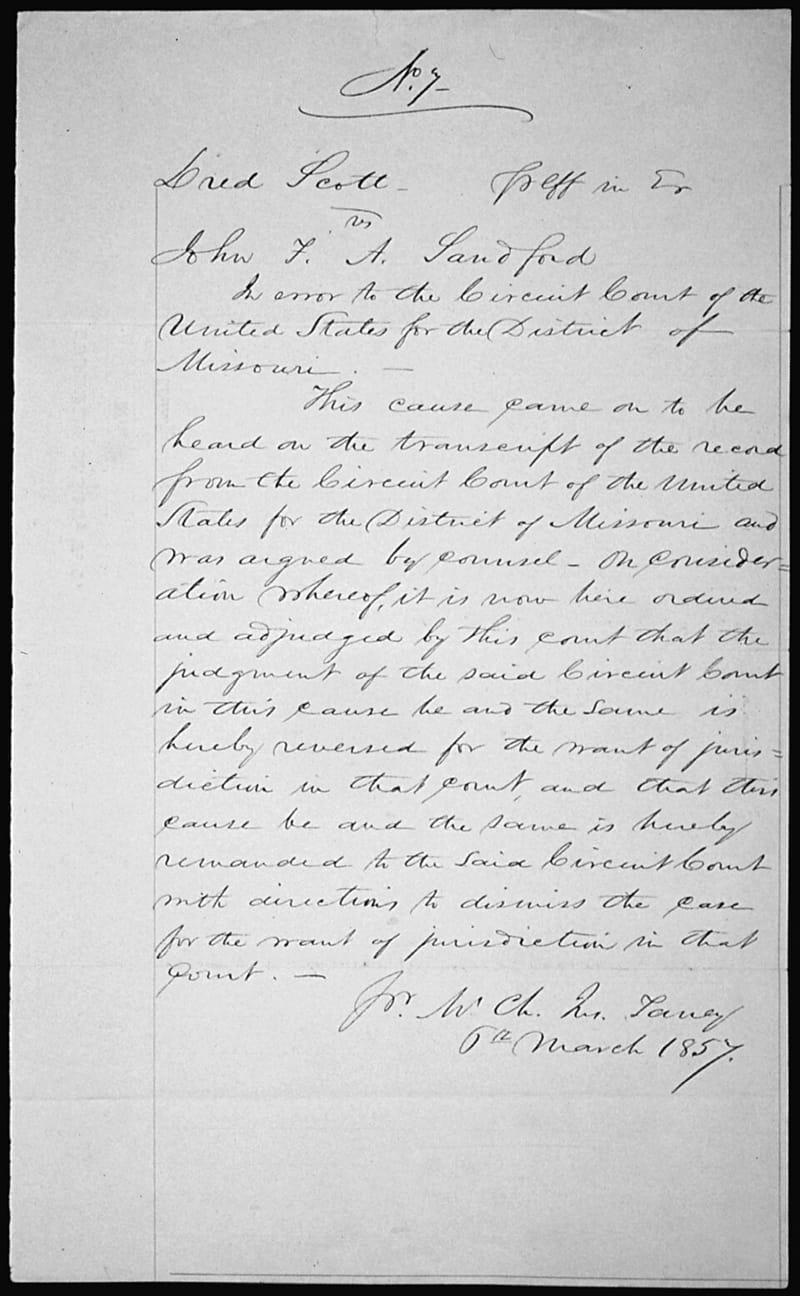
- By the Supreme Court in Dred Scott v. Sandford (1857)
Why it matters
The Missouri Compromise was the first great bargain over slavery’s expansion, and its unraveling a generation later marked the road to disunion.
Historical background
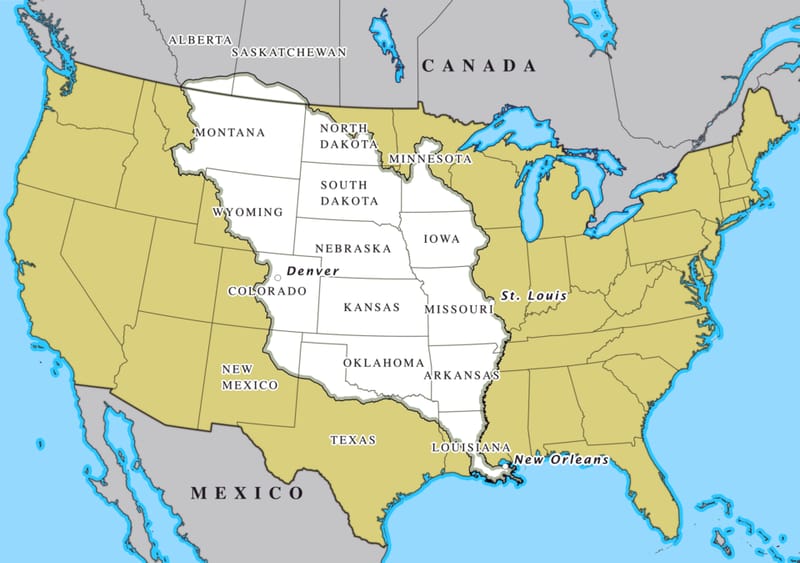
In 1819 the Union had eleven free states and eleven slave states, giving each section equal votes in the Senate even as the North’s faster-growing population gave it a majority in the House. The Louisiana Purchase had added an immense territory with no settled rule on slavery. Missouri, settled largely by Southerners who brought enslaved people with them, applied for statehood.
Causes and contributing factors
In February 1819, Representative James Tallmadge of New York proposed amending Missouri’s statehood bill to prohibit bringing more enslaved people into the state and to provide for the gradual emancipation of those already there. After fierce debate, the House adopted the amendment by a straight sectional vote; the Senate defeated it. Northerners attacked the expansion of slavery, and Southerners insisted Congress had no power to restrict it in a new state.
What happened
The deadlock broke when Maine, long part of Massachusetts, sought statehood. Congress paired the two admissions: Missouri would enter as a slave state and Maine as a free state, preserving the balance in the Senate. Congress also prohibited slavery in the rest of the Louisiana Territory north of 36°30′, while the land south of the line — organized as Arkansas Territory — stayed open to slavery. A conference committee reported the compromise on March 1, 1820, and it became law. A second dispute erupted when Missouri submitted a constitution denying free Black people the right to live in the state; it was resolved with a further proviso, and Missouri was admitted in 1821.
Immediate consequences
The compromise calmed the immediate crisis and kept the two parties of the era from splitting along sectional lines. But it established that the balance of slave and free states was a central political question, to be renegotiated with every new territory.
Long-term significance
For a generation the 36°30′ line kept an uneasy peace. It collapsed when the Mexican-American War added new lands, and Congress repealed it outright in the Kansas-Nebraska Act of 1854. In 1857 the Supreme Court declared in Dred Scott that Congress had never had the power to ban slavery in the territories, making the compromise retroactively unconstitutional. The question it had postponed — whether slavery would expand west — led directly to the Civil War.
Study this entry
Check your understanding
Try answering in your own words, then open the answer.
1.What led to the Missouri Compromise?Show answerHide
In February 1819, Representative James Tallmadge of New York proposed amending Missouri’s statehood bill to prohibit bringing more enslaved people into the state and to provide for the gradual emancipation of those already there.From “Causes and contributing factors” above.
2.What happened?Show answerHide
The deadlock broke when Maine, long part of Massachusetts, sought statehood. Congress paired the two admissions: Missouri would enter as a slave state and Maine as a free state, preserving the balance in the Senate.From “What happened” above.
3.What were the immediate consequences?Show answerHide
The compromise calmed the immediate crisis and kept the two parties of the era from splitting along sectional lines. But it established that the balance of slave and free states was a central political question, to be renegotiated with every new territory.From “Immediate consequences” above.
4.Why does it still matter?Show answerHide
For a generation the 36°30′ line kept an uneasy peace. It collapsed when the Mexican-American War added new lands, and Congress repealed it outright in the Kansas-Nebraska Act of 1854.From “Long-term significance” above.
Turn this entry into 10 flashcards (key facts, dates, and why it matters) and review them in Learn.
Related History
How this connects to the rest of the atlas.
Events
Documents

Sources
- 1.Missouri Compromise (1820) — Milestone Documents
National Archives · Primary source · cited for provisions, balance of states, repeal, Dred Scott
- 2.The Missouri Controversy (History 276 course notes)
Vanderbilt University, Department of History · Scholarly · cited for Tallmadge amendment, Maine, Arkansas Territory, second crisis
- 3.Letter from Thomas Jefferson to John Holmes (April 22, 1820)
Encyclopedia Virginia, Virginia Humanities · Primary source · cited for “fire bell in the night” quotation
Image credits
- Map of the Missouri Compromise, 1820, McConnell Map Co., 1919. Via Wikimedia Commons · Public domain · Source
Written for American History Atlas from the sources above. See how entries are researched.
Atlas by Alexander. More on Telegram.