Marbury v. Madison
The case in which the Supreme Court first struck down an act of Congress
1803Washington, D.C.
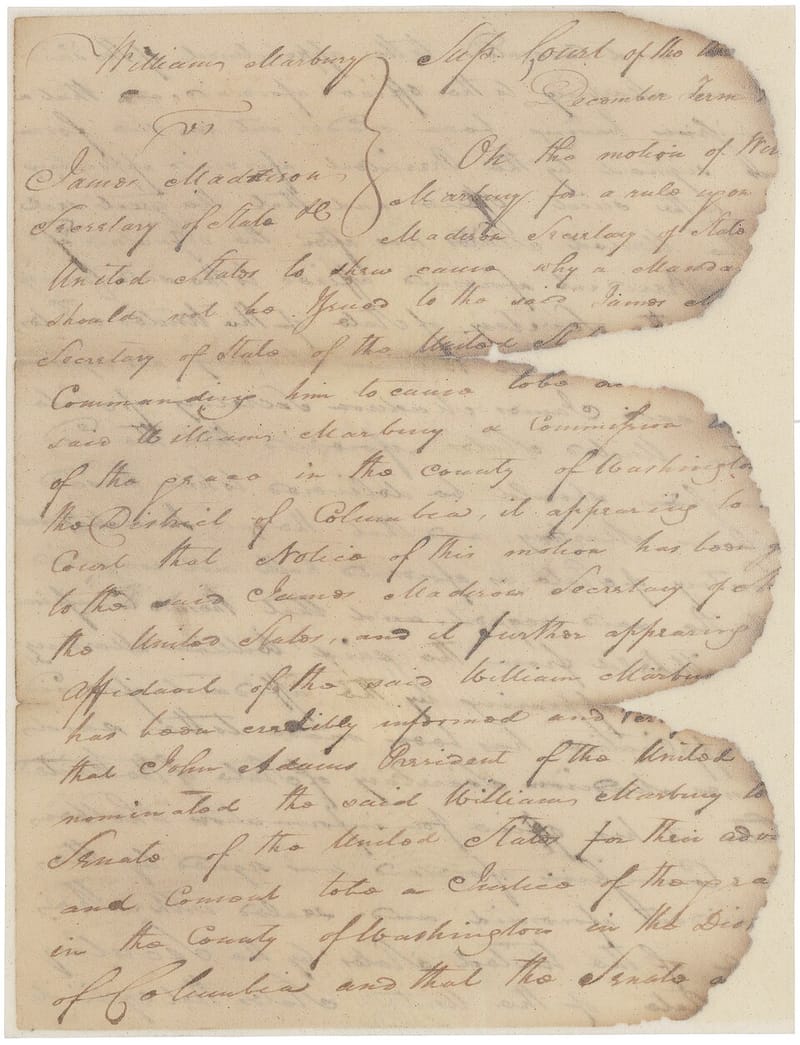
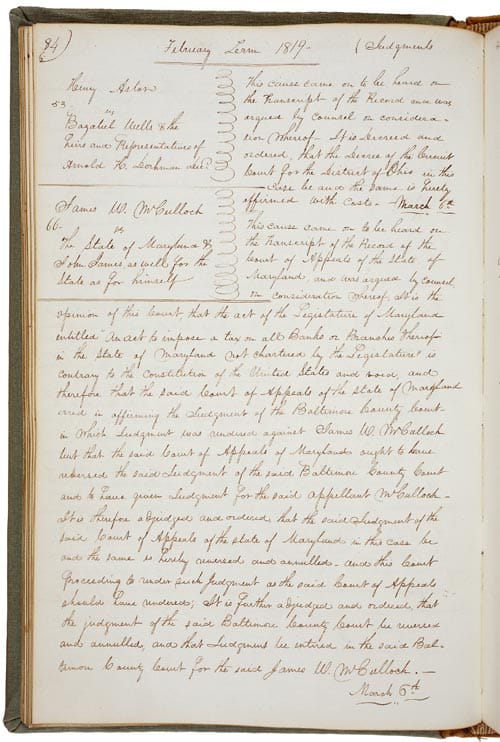
In Marbury v. Madison, Chief Justice John Marshall turned a minor dispute over an undelivered job commission into the foundation of American judicial power. The Court ruled that William Marbury was entitled to his commission but that it could not order it delivered, because the law giving the Court that power was itself unconstitutional. In declaring an act of Congress void, the Court claimed the power of judicial review — the authority to decide whether laws conform to the Constitution.
Key facts
- Citation
- 5 U.S. (1 Cranch) 137 (1803)
- Decided
- February 24, 1803
- Vote
- 4–0
- Majority opinion
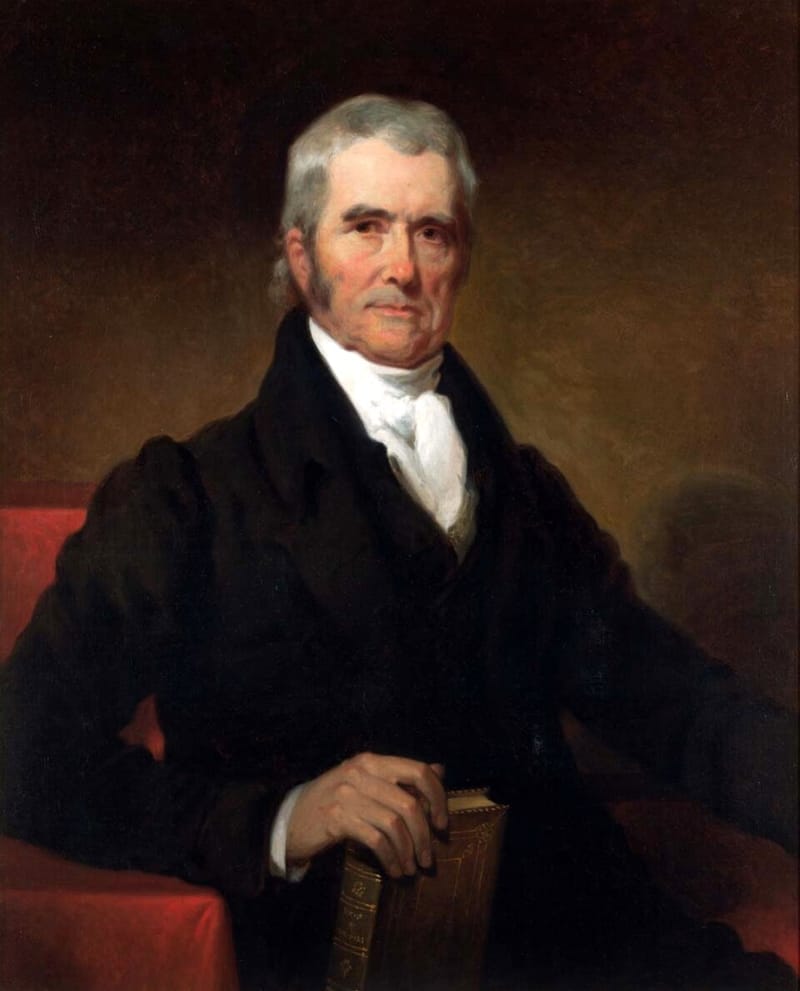
- Chief Justice John Marshall
- Location
- Washington, D.C.
- Parties
- William Marbury, an appointed justice of the peace, against James Madison, Secretary of State
- Law struck down
- Section 13 of the Judiciary Act of 1789, insofar as it let the Court issue writs of mandamus in original jurisdiction
- Next federal law struck down
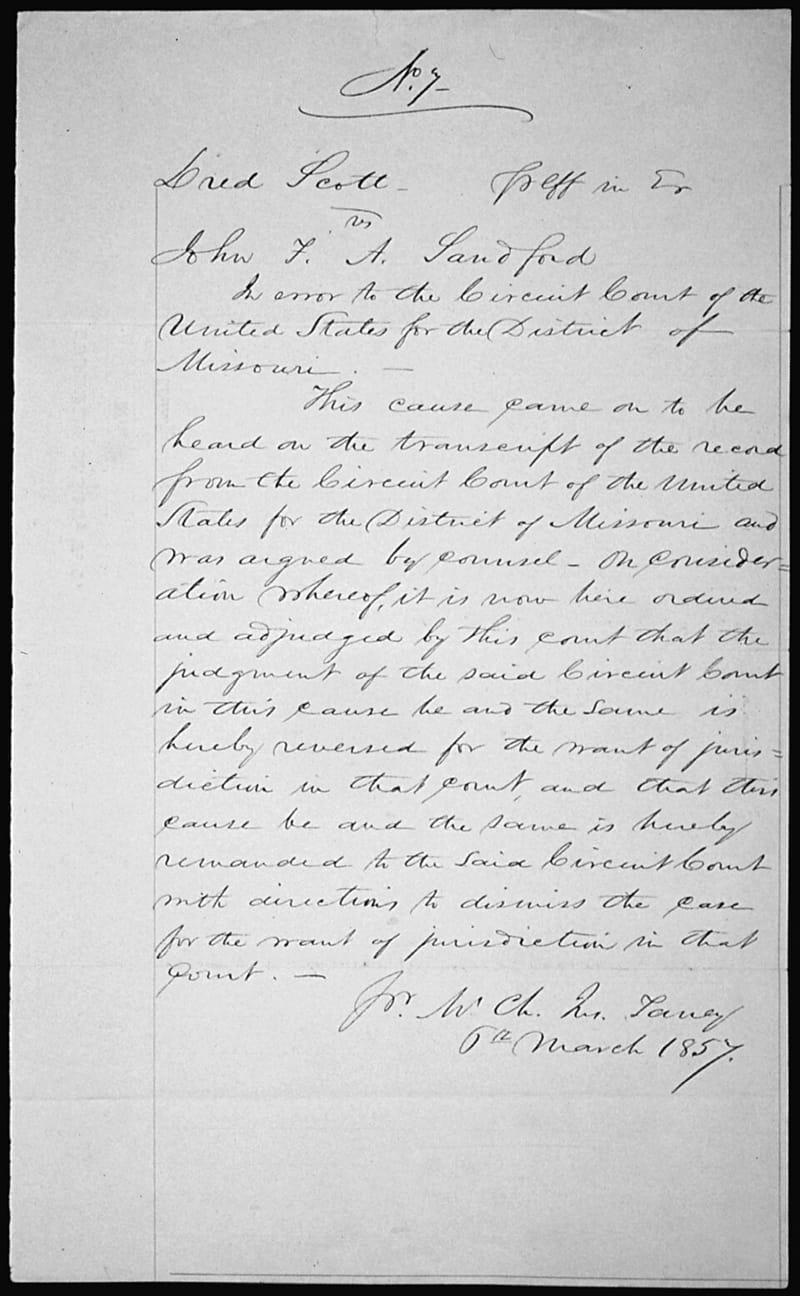
- Not until Dred Scott v. Sandford in 1857
- Famous line
- “It is emphatically the province and duty of the judicial department to say what the law is.”
Why it matters
Marbury v. Madison made the Supreme Court a co-equal branch with the power to measure laws against the Constitution. Nearly every later landmark decision on civil rights, federal power, or individual liberty rests on the authority claimed in this case.
Historical context
The case grew out of the bitter transfer of power after the election of 1800, when Thomas Jefferson’s Democratic-Republicans defeated John Adams and the Federalists. Before leaving office on March 4, 1801, Adams and the outgoing Federalist Congress passed the Judiciary Act of 1801, creating new courts and judgeships, and Adams rushed to fill them — appointing 16 new circuit judges and 42 justices of the peace for the District of Columbia. The Senate confirmed the appointees, but some commissions had not been delivered when Jefferson took office. His secretary of state, James Madison, refused to deliver them.
William Marbury, one of the justices of the peace, joined by three other appointees, asked the Supreme Court to issue a writ of mandamus — a court order — compelling Madison to hand over the commissions. The case put the Court, led by Chief Justice John Marshall, a Federalist and Adams appointee, in a dangerous position. If it ordered Madison to act, the Jefferson administration would likely ignore the order, exposing the Court’s weakness. If it declined, it would appear to bow to political pressure.
The legal question
The Court framed three questions:
- Does Marbury have a right to the commission he demands?
- If so, and that right has been violated, do the laws of the country afford him a remedy?
- If they do, is that remedy a mandamus issued by the Supreme Court?
The third question raised a deeper one: may the Supreme Court refuse to enforce an act of Congress that conflicts with the Constitution?
The ruling
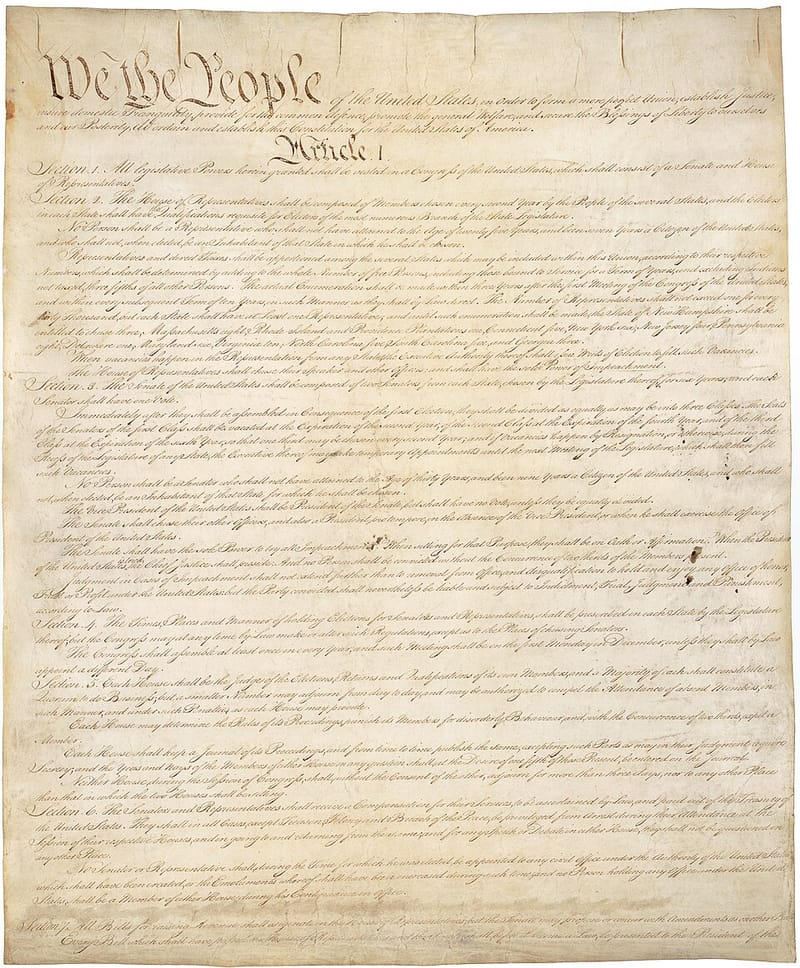
Unanimously, the Court held that Marbury had a legal right to his commission, that Madison’s refusal to deliver it violated that right, and that mandamus was the proper remedy in principle. But the Court held that it could not issue the writ. Section 13 of the Judiciary Act of 1789, which Marbury relied on, purported to give the Supreme Court power to issue such writs as part of its original jurisdiction — the cases it hears first, rather than on appeal. Because Article III of the Constitution defines that original jurisdiction narrowly, Congress could not expand it by ordinary legislation. The provision was void, and Marbury’s petition was dismissed.
The Court’s reasoning
Marshall’s opinion argued that a written constitution is the people’s fundamental and paramount law, binding on every branch of government. If Congress could pass laws contrary to it, the Constitution’s limits would mean nothing. When a law and the Constitution conflict, a court must decide which governs the case before it — and the Constitution, as the superior law, must prevail. “A law repugnant to the constitution is void,” he wrote, and “it is emphatically the province and duty of the judicial department to say what the law is.”
The Constitution nowhere explicitly gives the courts this power. Marshall derived it from the nature of a written constitution, the judicial oath to support it, and the supremacy clause, which lists the Constitution first among the supreme laws of the land.
Consequences
Politically, the decision was a strategic success. Jefferson’s administration won the immediate dispute — Marbury never got his commission — so it had nothing to defy. Yet the Court established a far larger power for itself. The Court did not use that power against another federal law for more than half a century, until Dred Scott in 1857, but it soon applied similar reasoning to review state laws and state court decisions.
Later interpretation
How later courts, scholars, and the public have judged the case — not part of the ruling itself.
Over time Marbury became the cornerstone of judicial review in the United States, and the National Archives describes the Court’s power to invalidate federal and state laws contrary to the Constitution as never seriously challenged since. Scholars still debate how much of that power Marshall actually claimed in 1803. Some read the opinion narrowly — as asserting only that courts may decline to apply unconstitutional laws in cases before them — and argue that the broader idea of the Supreme Court as the final interpreter of the Constitution, binding on the other branches, developed much later, especially in Cooper v. Aaron (1958). Others see the broad claim already present in Marshall’s reasoning. Critics of judicial power, from Jefferson onward, have argued that each branch should interpret the Constitution for itself.
Study this entry
Check your understanding
Try answering in your own words, then open the answer.
1.What question did the Court have to answer?Show answerHide
The Court framed three questions:From “The legal question” above.
2.What did the Court decide?Show answerHide
Unanimously, the Court held that Marbury had a legal right to his commission, that Madison’s refusal to deliver it violated that right, and that mandamus was the proper remedy in principle. But the Court held that it could not issue the writ.From “The ruling” above.
3.How did the Court justify its decision?Show answerHide
Marshall’s opinion argued that a written constitution is the people’s fundamental and paramount law, binding on every branch of government. If Congress could pass laws contrary to it, the Constitution’s limits would mean nothing.From “The Court’s reasoning” above.
4.What were the consequences?Show answerHide
Politically, the decision was a strategic success. Jefferson’s administration won the immediate dispute — Marbury never got his commission — so it had nothing to defy.From “Consequences” above.
Turn this entry into 10 flashcards (key facts, dates, and why it matters) and review them in Learn.
Related History
How this connects to the rest of the atlas.
Events
People
Documents
Court cases

Sources
- 1.Marbury v. Madison (1803) — Milestone Documents (with opinion excerpt)
National Archives · Primary source · cited for background, quotations, significance
- 2.Marbury v. Madison
Oyez (Cornell LII, Justia, Chicago-Kent College of Law) · Scholarly · cited for facts, questions, holding, vote, decision date
Image credits
- Marbury vs Madison page1, US Supreme Court. Calvin Ballantine at German Wikipedia. Via Wikimedia Commons · Public domain · Source
Written for American History Atlas from the sources above. See how entries are researched.
Atlas by Alexander. More on Telegram.