PersonRevolution and Independence
James Madison
Architect of the Constitution and fourth president
1751–1836
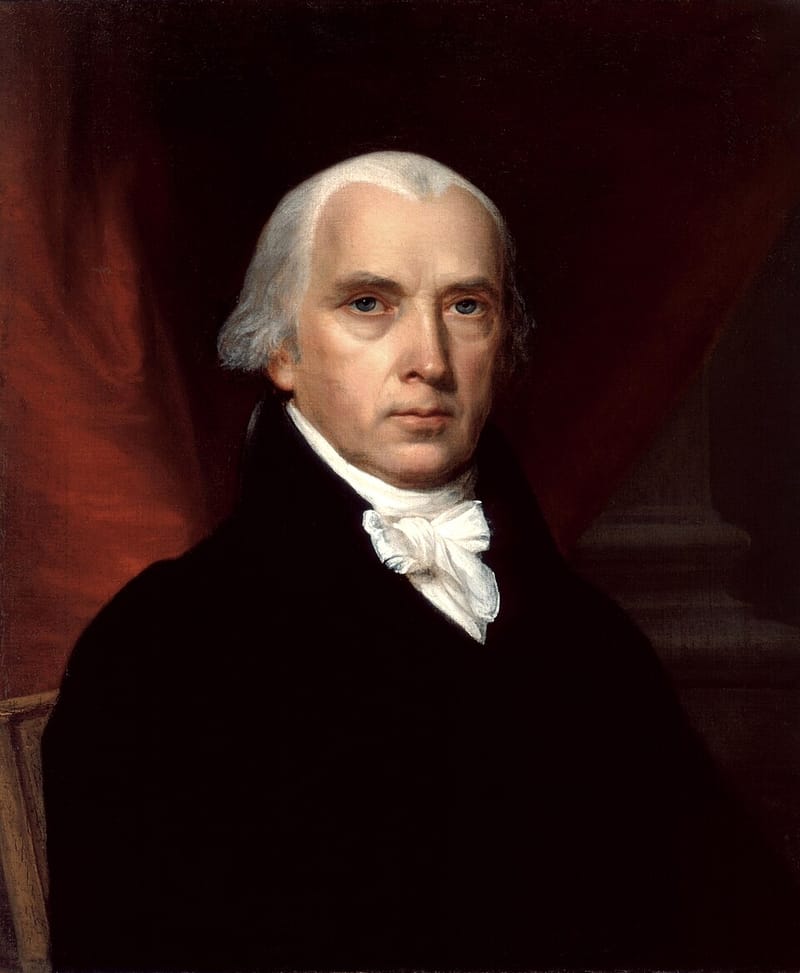
James Madison did more than anyone to design the Constitution. His Virginia Plan set the agenda at the 1787 convention, his essays in the Federalist Papers defended the result, and as a congressman he drafted the amendments that became the Bill of Rights. Later, as Jefferson’s partner in founding the Democratic-Republican Party and as the fourth president, he led the country through the War of 1812. He enslaved more than one hundred people and never freed them.
Key facts
- Born
- March 16, 1751, Port Conway, Virginia
- Died
- June 28, 1836, Montpelier, Virginia
- Roles
- Delegate to the Constitutional Convention; Co-author of the Federalist Papers; U.S. representative who drafted the Bill of Rights; Secretary of state (1801–1809); Fourth president (1809–1817)
- Federalist essays
- Wrote 29 of the 85, including No. 10 on factions and No. 51 on checks and balances
- Bill of Rights
- Proposed nineteen amendments in June 1789; Congress reduced them to twelve, and ten were ratified
- Party
- Democratic-Republican
- Wife
- Dolley Payne Todd Madison, married 1794
Why it matters
Madison shaped both the structure of the federal government and the Bill of Rights that limits it, and his writings remain the starting point for understanding why American government divides power the way it does.
Early life and context
Madison was born on March 16, 1751, at Port Conway, Virginia, into a family whose wealth rested on Piedmont tobacco land and on the enslaved people who worked it and helped build Montpelier, the family’s brick house in Orange County. At about eight he inherited an enslaved infant held in trust by his father; master and slave, the Miller Center observes, seemed to him as natural as parent and child. Trained in Latin, Greek, and mathematics by a Scottish schoolmaster, he broke with Virginia custom by choosing the College of New Jersey (now Princeton) over William and Mary. There the Scottish-born president John Witherspoon taught him the Enlightenment — including David Hume, whose idea that a large republic could balance competing interests would shape Madison’s constitutional thinking.
He graduated in 1771 and returned home small, sickly, and adrift, writing gloomy letters in expectation of an early death. What roused him was injustice close at hand: Virginia was persecuting Baptists, and Madison, who disliked their worship, denounced the “diabolical Hell conceived principle of persecution.” In 1776, a quiet young member of the Virginia Convention among older and more experienced men, he spoke up to change the state’s Declaration of Rights from mere toleration of religion to a right of conscience that government could not touch. In 1794 he married Dolley Payne Todd, a lively Philadelphia Quaker widow.
Major actions and achievements
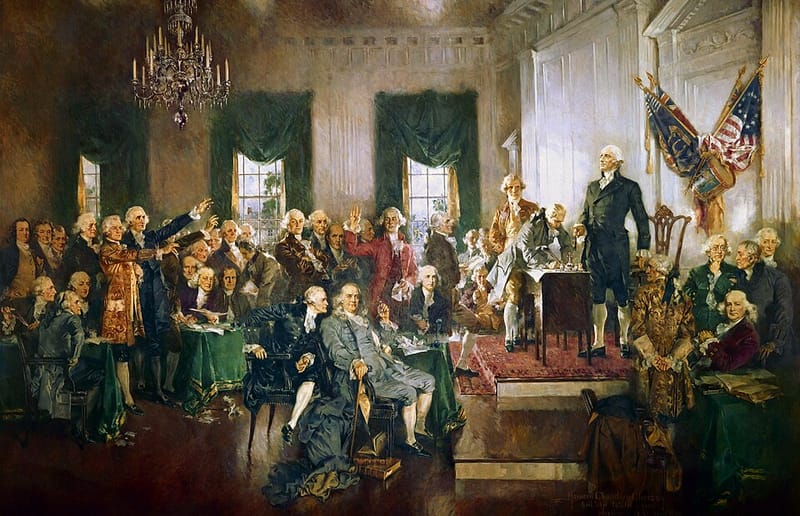
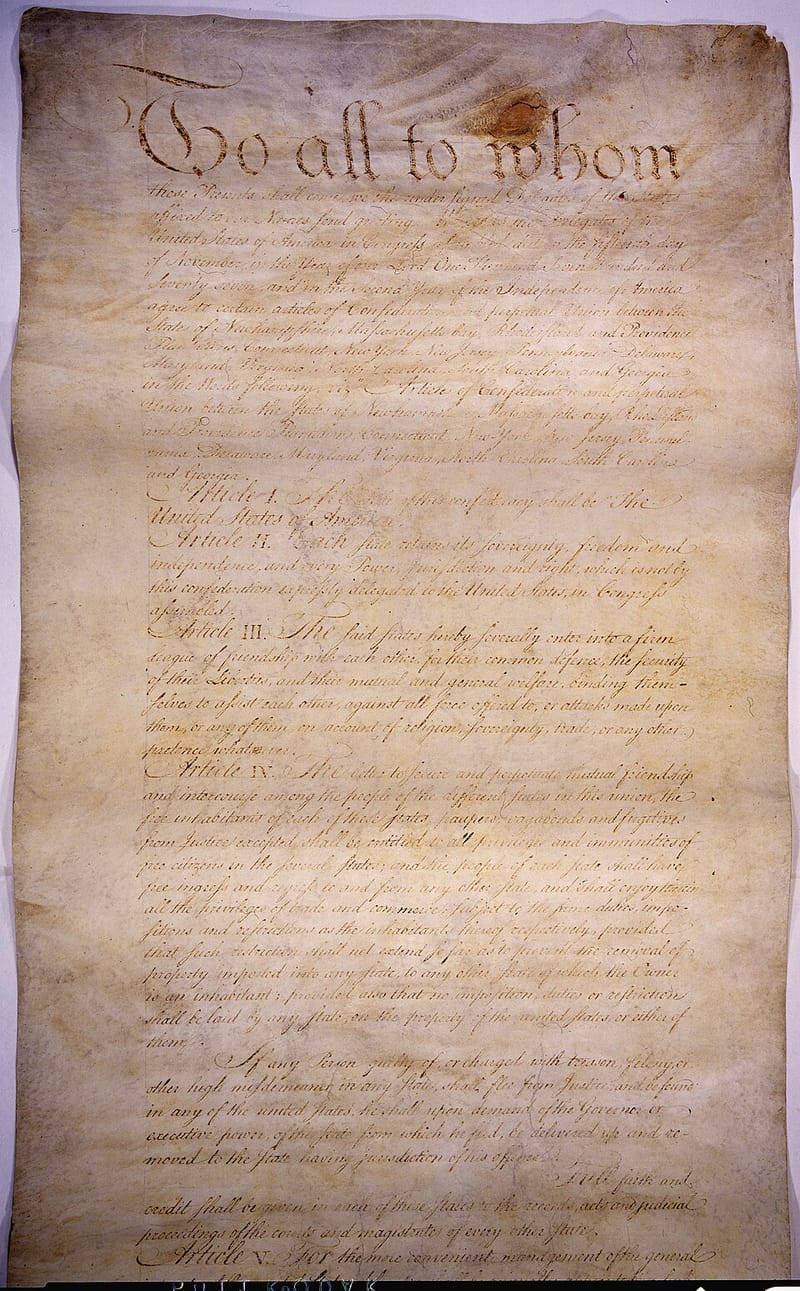
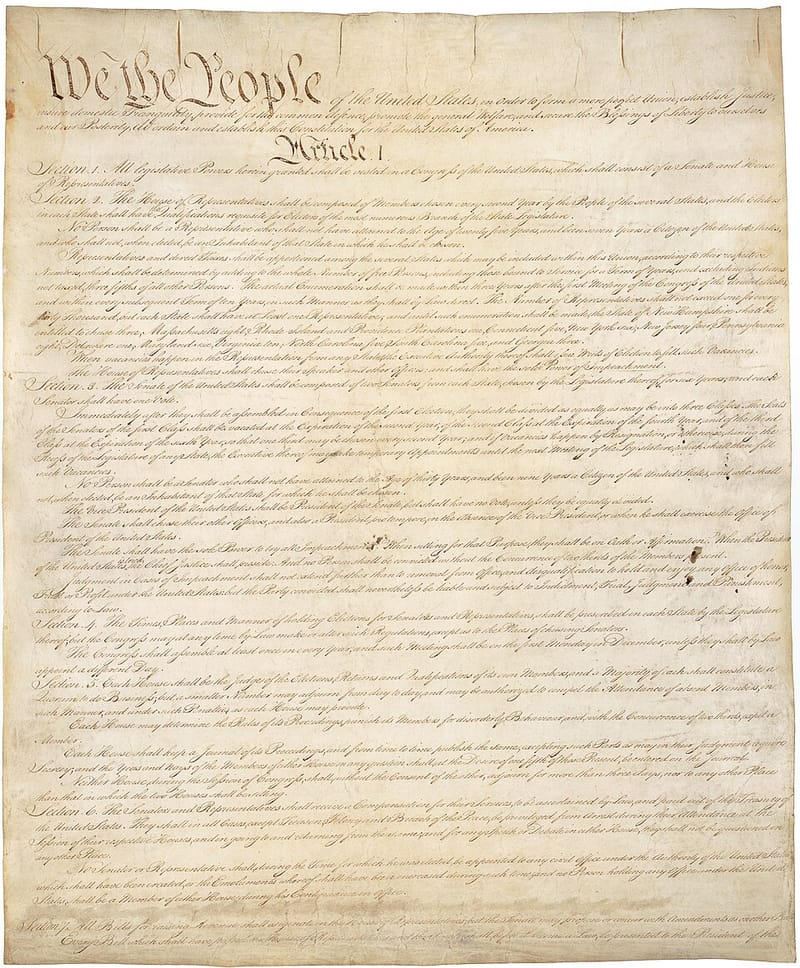
Madison served in Virginia’s revolutionary convention and in the Continental Congress, where he saw first-hand the weakness of the Articles of Confederation. Before the 1787 Constitutional Convention he studied the history of failed confederations and concluded that the United States needed a national republic with a strong federal government. That was the essence of the Virginia Plan, which framed the convention’s debates. His detailed notes are the best record of what happened in Philadelphia.
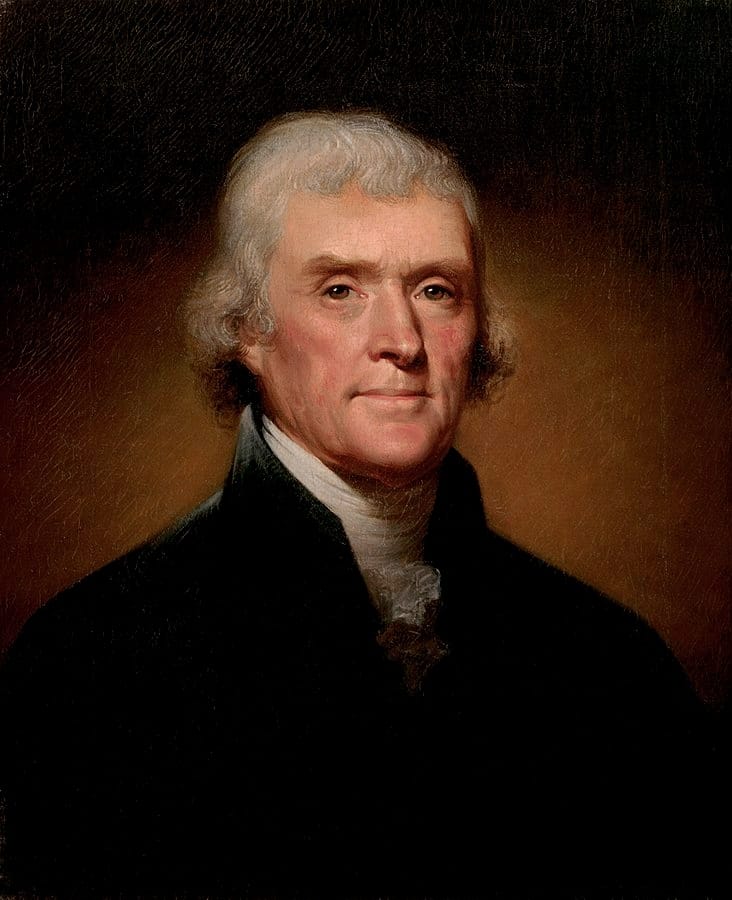
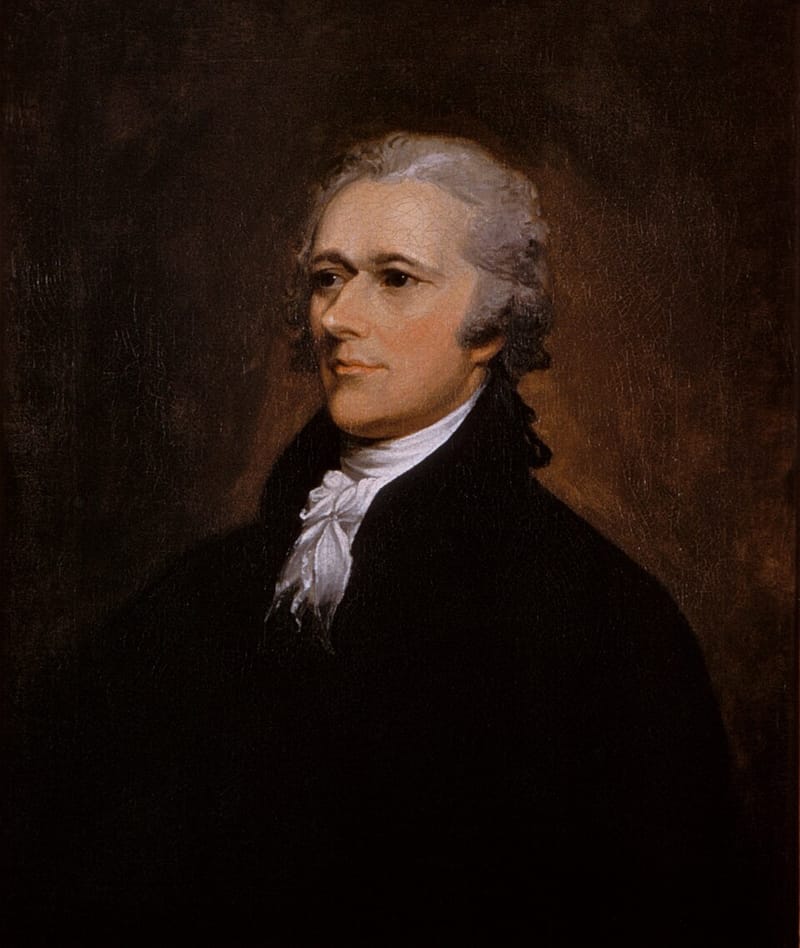
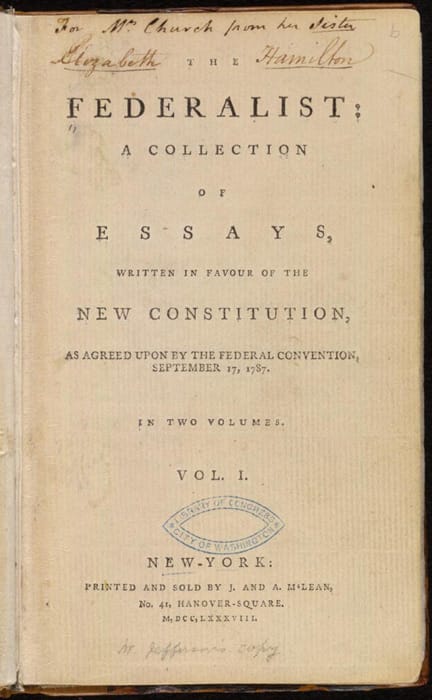
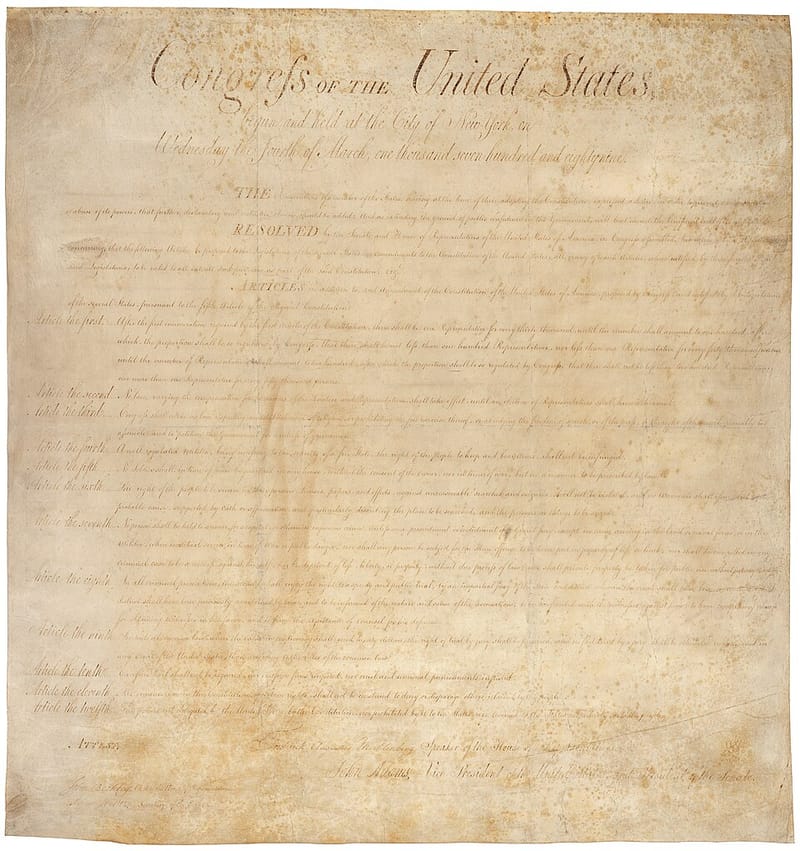
During ratification he joined Alexander Hamilton and John Jay in writing the Federalist Papers. In Federalist No. 10 he argued that a large republic would control the dangers of faction better than a small one; in No. 51 he explained how the separation of powers would let “ambition … counteract ambition.” In Congress he kept a promise to critics of the Constitution: in June 1789 he proposed nineteen amendments, which Congress reduced to twelve and the states pared to the ten that make up the Bill of Rights.
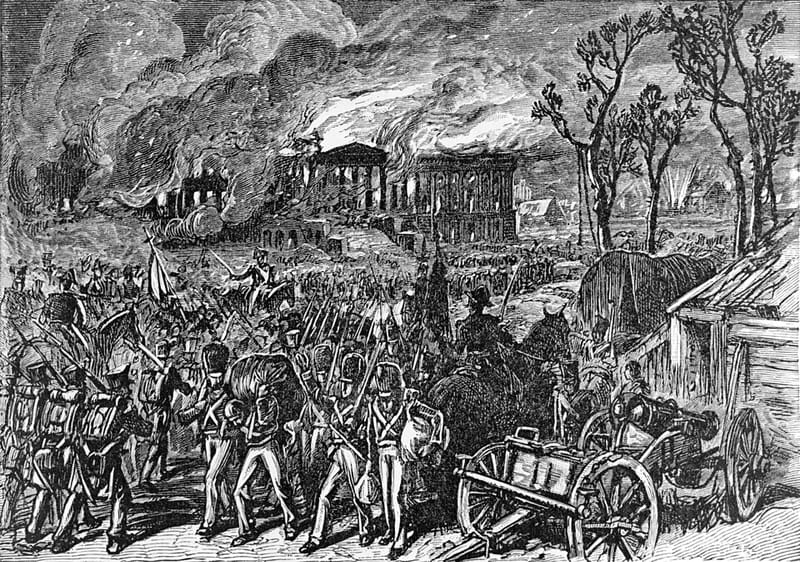
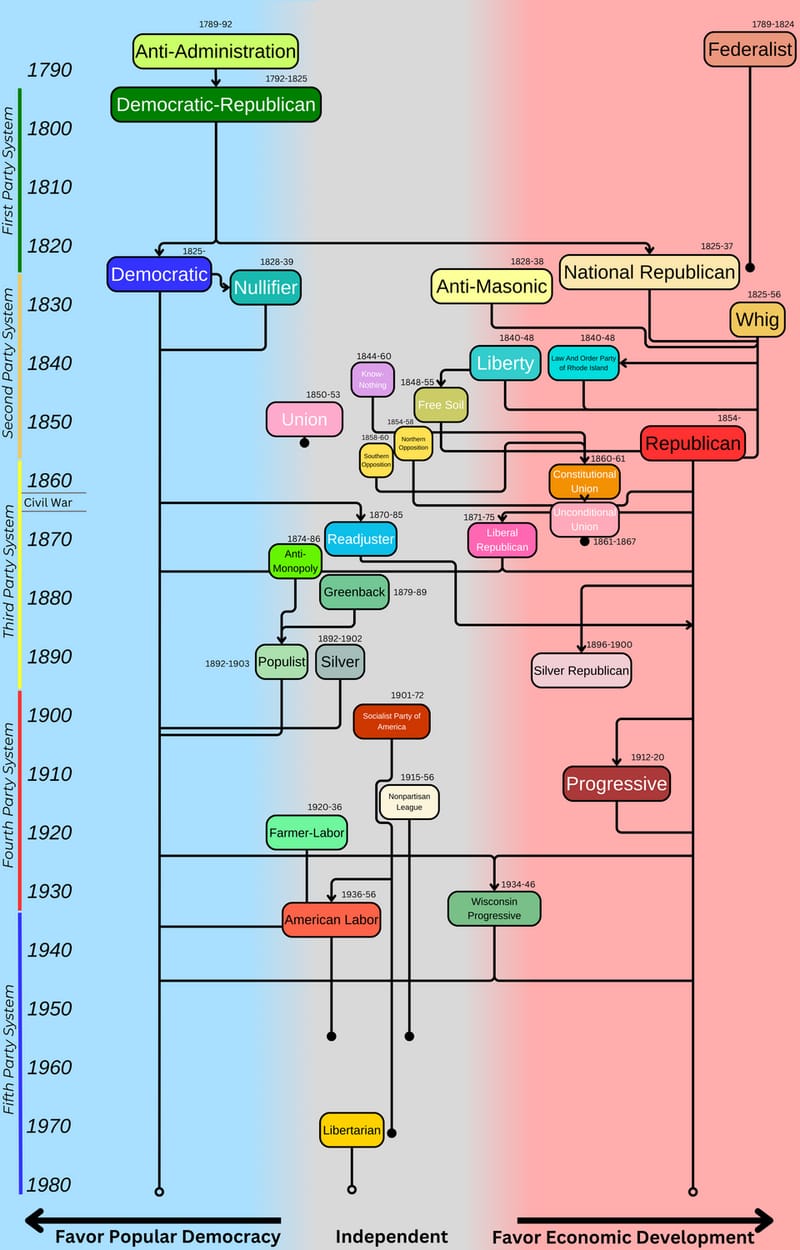
Opposing Hamilton’s financial program, Madison and Jefferson organized the Democratic-Republican Party. In 1798 he wrote the Virginia Resolutions condemning the Alien and Sedition Acts as unconstitutional. He served eight years as Jefferson’s secretary of state and was elected president in 1808. In June 1812 he persuaded Congress to declare war on Britain over the seizure of American sailors and ships. The war went badly at first — British troops burned Washington in 1814 — and ended in stalemate, though Andrew Jackson’s victory at New Orleans let Americans remember it as a triumph.
Beliefs and ideas
Madison believed in republican government but feared majorities as much as monarchs: the central problem of politics, for him, was protecting the rights of minorities and individuals from factions. His answer was an extended republic, representation, federalism, and separated powers. He also championed religious freedom and freedom of the press. His shift from Federalist nationalist in the 1780s to defender of states’ rights in the 1790s has puzzled readers since; Madison himself saw the two positions as consistent responses to different threats.
Controversies, limits, and criticism
Madison enslaved more than one hundred people. Like many Virginia enslavers, he said he disliked slavery and hoped for its gradual end through compensated emancipation paired with removal of freed people abroad — he supported colonization in Liberia — but he did not free the people he held, even in his will, and he doubted that Black and white Americans could live together as equals. In Federalist No. 54 he defended counting enslaved people as three-fifths of a person for representation.
His presidency is often judged by the War of 1812, whose aims were unclear, which divided the country, and which led to the only foreign sacking of the capital.
Legacy
Madison retired to Montpelier in 1817, where debts and falling tobacco prices troubled his last years. He died there on June 28, 1836, the last of the major framers. Often called the “Father of the Constitution,” he left the most influential American writing on how to design a government that controls itself. His fears about factions and his faith in institutional checks remain central to debates about American democracy.
Study this entry
Check your understanding
Try answering in your own words, then open the answer.
1.What shaped James Madison early in life?Show answerHide
Madison was born on March 16, 1751, at Port Conway, Virginia, into a family whose wealth rested on Piedmont tobacco land and on the enslaved people who worked it and helped build Montpelier, the family’s brick house in Orange County.From “Early life and context” above.
2.What were James Madison’s major achievements?Show answerHide
Madison served in Virginia’s revolutionary convention and in the Continental Congress, where he saw first-hand the weakness of the Articles of Confederation.From “Major actions and achievements” above.
3.What criticism or controversy surrounds James Madison?Show answerHide
Madison enslaved more than one hundred people.From “Controversies, limits, and criticism” above.
4.How is James Madison remembered?Show answerHide
Madison retired to Montpelier in 1817, where debts and falling tobacco prices troubled his last years. He died there on June 28, 1836, the last of the major framers.From “Legacy” above.
Turn this entry into 10 flashcards (key facts, dates, and why it matters) and review them in Learn.
Related History
How this connects to the rest of the atlas.
Events
People
Documents
Court cases
Institutions

Sources
- 1.James Madison (1751–1836)
Encyclopedia Virginia, Virginia Humanities · Scholarly · cited for life, Virginia Plan, Federalist essays, amendments, War of 1812, slavery
- 2.James Madison: Life in Brief
Miller Center, University of Virginia · Scholarly · cited for overview
- 3.James Madison: Impact and Legacy
Miller Center, University of Virginia · Scholarly · cited for assessment of the War of 1812
- 4.The Federalist No. 51
Avalon Project, Yale Law School · Primary source · cited for quotation
- 5.James Madison: Life Before the Presidency
Miller Center, University of Virginia · Scholarly · cited for family, education, religious liberty, early revolutionary career
Image credits
- James Madison, John Vanderlyn, 1816. Via Wikimedia Commons · Public domain · Source
Written for American History Atlas from the sources above. See how entries are researched.
Atlas by Alexander. More on Telegram.