The War of 1812
The United States fights Britain again, 1812–1815
June 18, 1812 – February 18, 1815Canada and the Great Lakes, the Chesapeake, the Gulf Coast, and the Atlantic
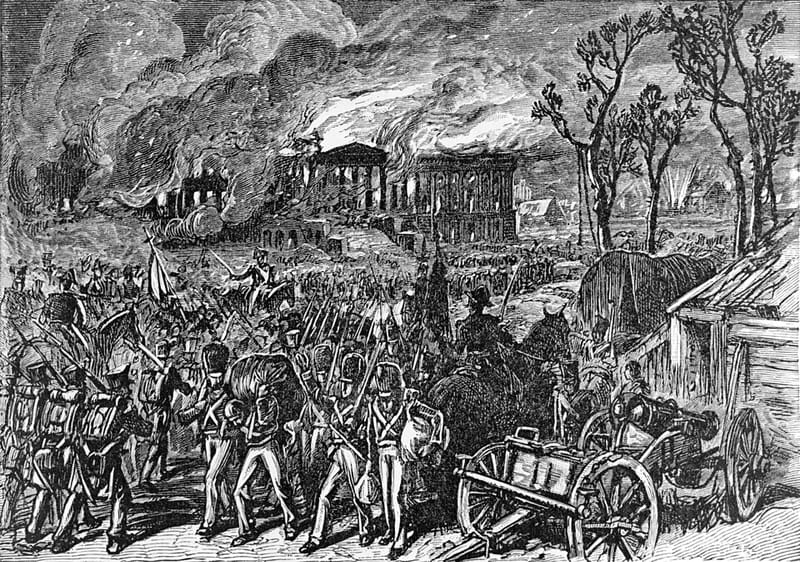
Caught between Britain and France in the Napoleonic Wars, the United States declared war on Britain in 1812 over the seizure of American sailors and ships — and over western expansion and British support for Native resistance. American invasions of Canada failed; British troops burned Washington; and the 1814 Treaty of Ghent ended the war essentially as a draw. Yet Americans remembered it as a “second war of independence,” while for Native nations east of the Mississippi it was a decisive defeat.
Key facts
- Date
- June 18, 1812 – February 18, 1815
- Location
- Canada and the Great Lakes, the Chesapeake, the Gulf Coast, and the Atlantic
- Dating note
- Congress declared war June 18, 1812; the Treaty of Ghent was signed December 24, 1814, and ratified February 18, 1815. The Battle of New Orleans was fought after the treaty was signed.
- Declared
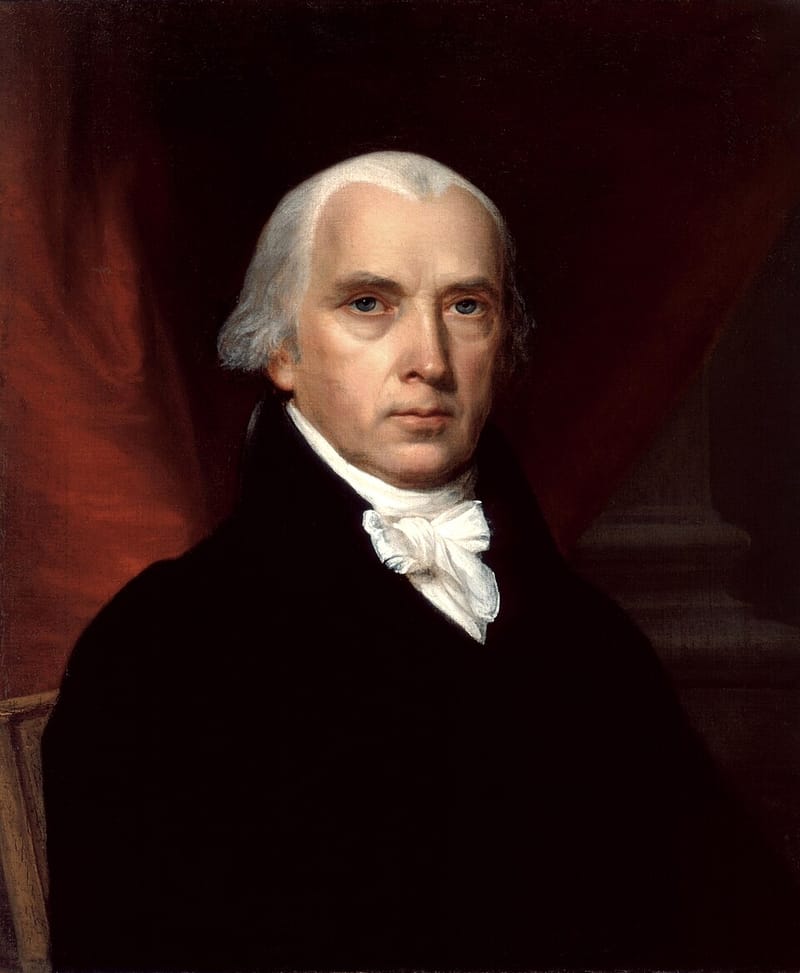
- June 18, 1812, at President Madison’s request — the first time Congress declared war on a foreign nation
- Ended
- Treaty of Ghent, signed December 24, 1814; ratified February 18, 1815
- U.S. deaths
- About 15,000, mostly from disease
- Famous moments
- Burning of Washington (August 1814); defense of Fort McHenry and “The Star-Spangled Banner” (September 1814); Battle of New Orleans (January 8, 1815)
Why it matters
The War of 1812 settled the United States’ independence from Britain in practice and opened the West to American expansion — at the cost of Native nations whose last hope of a pan-tribal alliance died with Tecumseh.
Who fought
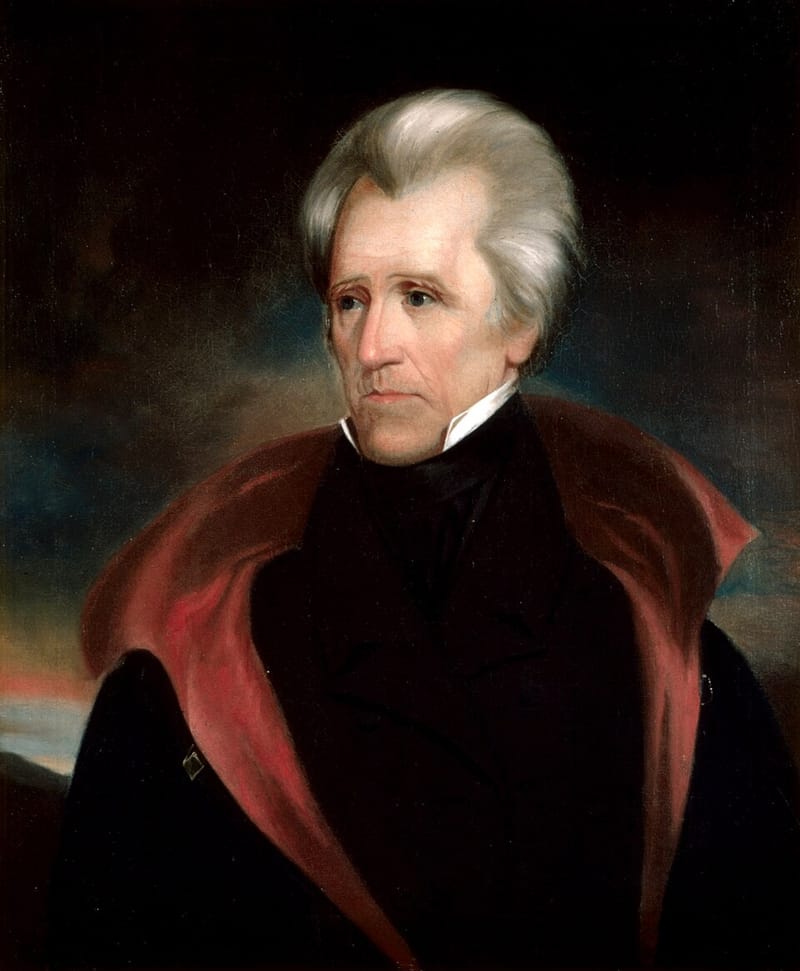
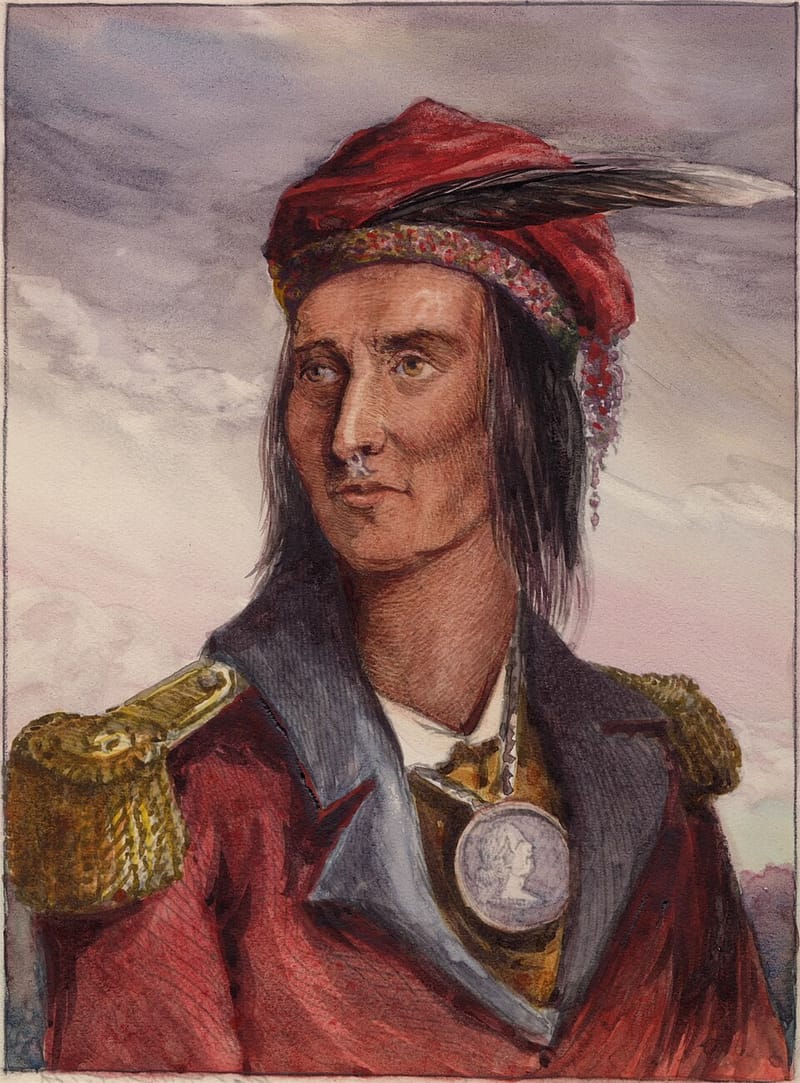
The United States fought Great Britain and its Canadian colonists, who were joined by many Native nations defending their lands against American expansion — above all the confederacy organized by the Shawnee leader Tecumseh. Some Native nations fought with the Americans. In the Southeast, a civil war within the Creek Nation became part of the wider conflict.
Political background
During the long war between Napoleonic France and Britain, both powers restricted neutral trade. Britain stopped American merchant ships to search for deserters and forced — “impressed” — American sailors into the Royal Navy. Jefferson’s Embargo of 1807 and later trade restrictions failed to change British behavior. In the West, Americans blamed Britain for arming Native peoples resisting settlement. A group of young congressmen, the “War Hawks,” also saw British Canada and Spanish Florida as possible prizes.
Major phases
Failed invasions (1812–1813). American attempts to invade Canada collapsed, and Detroit fell to British and Native forces. In September 1813, Oliver Hazard Perry won control of Lake Erie, and in October Americans defeated British and Native forces at the Battle of the Thames, where Tecumseh was killed and his confederacy broken.
The Creek War (1813–1814). In the Southeast, a war erupted between Creek factions — the “Red Sticks,” influenced by Tecumseh’s message of Native unity, and those who sought accommodation with the United States. Andrew Jackson’s militia defeated the Red Sticks at Horseshoe Bend in March 1814, and the Treaty of Fort Jackson forced the entire Creek Nation, including Jackson’s Creek allies, to cede nearly 23 million acres in present-day Alabama and Georgia.
British offensives (1814). With Napoleon defeated, Britain sent veteran troops to America. In August 1814 they routed militia at Bladensburg and burned the public buildings of Washington, including the White House. In September, Fort McHenry withstood a 25-hour bombardment at Baltimore, inspiring Francis Scott Key’s “The Star-Spangled Banner.” A British invasion from Canada was turned back at Lake Champlain.
Peace and New Orleans (1814–1815). Negotiators signed the Treaty of Ghent on Christmas Eve 1814. Before news arrived, Andrew Jackson won the war’s greatest American land victory at New Orleans on January 8, 1815.
Turning points
- Lake Erie and the Thames (1813): secured the Northwest for the United States and destroyed Tecumseh’s confederacy.
- Horseshoe Bend (1814): broke Creek power and opened the Southeast to American settlement.
- Baltimore and Lake Champlain (1814): stopped Britain’s major offensives and encouraged both sides to settle.
Outcome
The Treaty of Ghent restored prewar boundaries, created commissions to settle border disputes, and provided for peace with Native nations. It said nothing about impressment or neutral rights — issues that faded once the war in Europe ended.
Consequences for American society
Americans emerged with a surge of nationalism, new heroes such as Andrew Jackson, and confidence that the republic could hold its own. The Federalist Party, which had opposed the war, never recovered. For Native nations east of the Mississippi, the war was a catastrophe: their British ally withdrew support, Tecumseh’s confederacy collapsed, and the Creek cession foreshadowed the Indian removal policies of the coming decades. Canadians, for their part, remember the war as a successful defense of their homeland.
Study this entry
Check your understanding
Try answering in your own words, then open the answer.
1.Why did the war begin?Show answerHide
During the long war between Napoleonic France and Britain, both powers restricted neutral trade. Britain stopped American merchant ships to search for deserters and forced — “impressed” — American sailors into the Royal Navy.From “Political background” above.
2.What were the turning points?Show answerHide
- Lake Erie and the Thames (1813): secured the Northwest for the United States and destroyed Tecumseh’s confederacy. - Horseshoe Bend (1814): broke Creek power and opened the Southeast to American settlement. - Baltimore and Lake Champlain (1814): stopped Britain’s major offensives and encouraged both sides to settle.From “Turning points” above.
3.How did it end?Show answerHide
The Treaty of Ghent restored prewar boundaries, created commissions to settle border disputes, and provided for peace with Native nations. It said nothing about impressment or neutral rights — issues that faded once the war in Europe ended.From “Outcome” above.
4.How did it change American society?Show answerHide
Americans emerged with a surge of nationalism, new heroes such as Andrew Jackson, and confidence that the republic could hold its own. The Federalist Party, which had opposed the war, never recovered.From “Consequences for American society” above.
Turn this entry into 9 flashcards (key facts, dates, and why it matters) and review them in Learn.
Related History
How this connects to the rest of the atlas.
Events
People
Documents

Sources
- 1.War of 1812–1815
U.S. Department of State, Office of the Historian · Institutional · cited for causes, course, Treaty of Ghent
- 2.A Brief Overview of the War of 1812
American Battlefield Trust · Scholarly · cited for campaigns, Creek War, burning of Washington, Fort McHenry, deaths
- 3.Battle of the Thames
American Battlefield Trust · Scholarly · cited for Tecumseh’s death and the end of his confederacy
- 4.New Orleans
American Battlefield Trust · Scholarly · cited for January 8, 1815 battle
- 5.James Madison (1751–1836)
Encyclopedia Virginia, Virginia Humanities · Scholarly · cited for declaration of war, June 18, 1812
Image credits
- Burning of Washington 1814, Unknown author Unknown author, 1876. Via Wikimedia Commons · Public domain · Source
Written for American History Atlas from the sources above. See how entries are researched.
Atlas by Alexander. More on Telegram.