PersonExpansion and Sectional Conflict
Andrew Jackson
Seventh president, champion of the “common man,” and architect of Indian removal
1767–1845
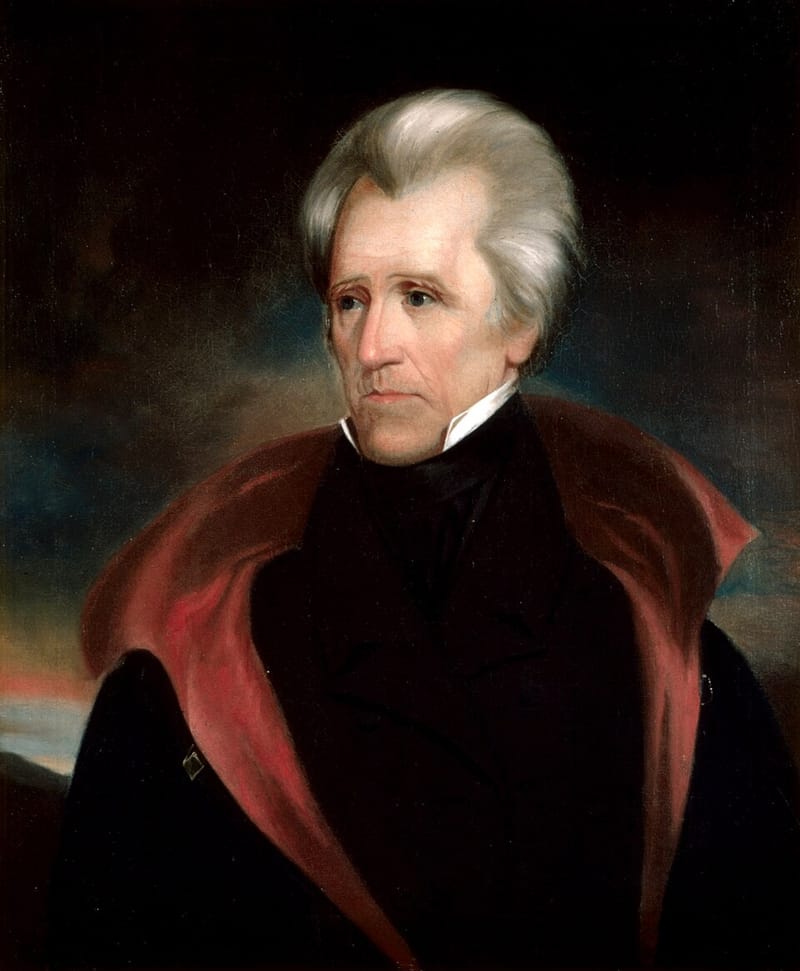
Andrew Jackson, the seventh president of the United States (1829–1837), dominated American politics between Jefferson and Lincoln. An orphan of the Revolution who became a Tennessee lawyer, duelist, planter, and the hero of the Battle of New Orleans, he won the presidency as the self-proclaimed champion of ordinary people against privilege. He expanded presidential power, destroyed the national bank, and faced down South Carolina’s threat of nullification. He was also an enslaver and the driving force behind the removal of Native nations from the Southeast.
Key facts
- Born
- March 15, 1767, Waxhaw settlement, on the North Carolina–South Carolina border
- Died
- June 8, 1845, The Hermitage, near Nashville, Tennessee
- Roles
- Major general in the War of 1812; Seventh president (1829–1837); Founder of the Democratic Party; Tennessee planter and enslaver
- Presidency
- 1829–1837 (elected 1828, reelected 1832)
- Party
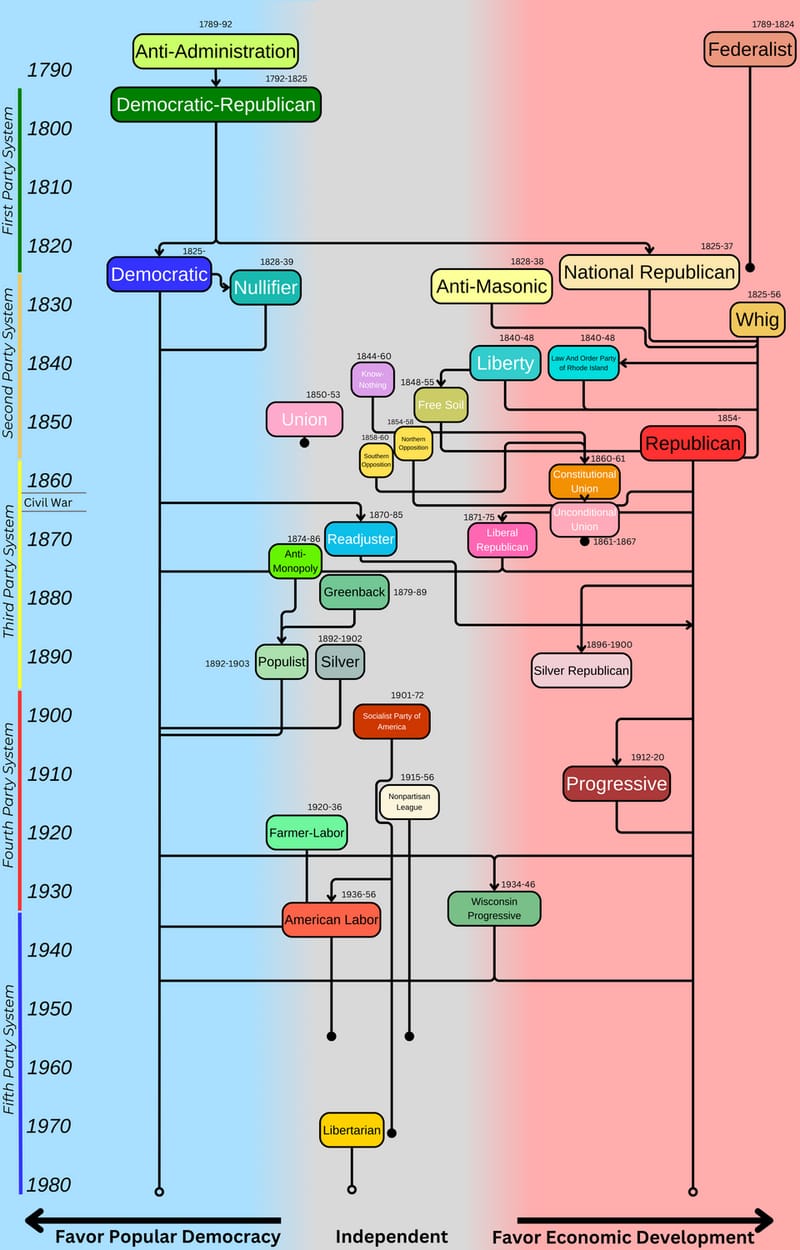
- Democratic, which he helped found
- Signature fights
- The Bank War, the nullification crisis, Indian removal
- Vetoes
- More than all previous presidents combined
- Home
- The Hermitage, a cotton plantation near Nashville worked by enslaved people
Why it matters
Jackson expanded presidential power and mass party politics in the name of ordinary white Americans — and used that power to dispossess Native nations and protect slavery. He embodies the democratic and exclusionary sides of his era at once.
Early life and context
Jackson was born on March 15, 1767, in the Waxhaw settlement of Scotch-Irish immigrants on the border of North and South Carolina; his father had died before he was born. The Revolution destroyed his family. His oldest brother died in patriot service; Andrew and his brother Robert, too young to be regular soldiers, fought with irregulars, were captured in 1781, and caught smallpox, which killed Robert. Their mother died of illness while trying to free relatives from a British prison ship. At fifteen Jackson was an orphan and a hardened veteran.
He read law, and in 1788 arrived in frontier Nashville as public prosecutor, building a practice and acquiring land and enslaved people. In 1791 he began living with Rachel Donelson Robards, who was separated from her husband; they formally married in 1794 after the divorce, and opponents later charged him with bigamy and “wife-stealing.” His rise was meteoric — Tennessee’s first congressman, a senator, a judge — but so was his temper. In 1806 a quarrel over a horse race ended in a duel in which Charles Dickinson, a crack shot, hit Jackson in the chest; Jackson stood his ground, aimed, and killed him, and he carried Dickinson’s bullet for the rest of his life. In 1804 he bought The Hermitage, a cotton plantation near Nashville worked by enslaved people.
Major actions and achievements
In the War of 1812, Jackson’s willingness to share his men’s hardships on a punishing march earned him the nickname “Old Hickory.” In 1813–1814 he led Tennesseans and Native allies against the Red Stick Creeks, annihilating their main force at Horseshoe Bend; treaties he then negotiated stripped the Creeks, Choctaws, Chickasaws, and Cherokees of millions of acres. At New Orleans on January 8, 1815, his force of regulars, militia, free Black soldiers, and pirates cut down a British frontal assault, inflicting more than 2,000 casualties while losing thirteen dead. The peace treaty had already been signed, but the victory made him a hero second only to Washington. In 1818 he conquered Spanish Florida in pursuit of the Seminoles, executing two British subjects — a raid that helped persuade Spain to cede Florida.
In 1824 Jackson won the most popular and electoral votes in a four-way race but lost in the House of Representatives to John Quincy Adams. He won decisively in 1828 and again in 1832. As president he transformed the office from chief administrator into popular tribune. When South Carolina declared federal tariffs null and void in 1832, he proclaimed the Union indivisible and threatened force, while backing a lower tariff that ended the crisis. In the “Bank War,” he vetoed the recharter of the Second Bank of the United States and removed federal deposits from it, denouncing it as a tool of privileged stockholders. He rewarded loyal supporters with government jobs — the “spoils system” — and vetoed more bills than all his predecessors combined.
Beliefs and ideas
Jackson believed in majority rule, a limited federal government that granted no special privileges, hard money over paper currency, and a Union that no state could leave. He saw himself as the direct representative of the people against entrenched elites. His democracy, however, was for white men: he condemned antislavery agitation and regarded Native nations as obstacles to be moved west.
Controversies, limits, and criticism
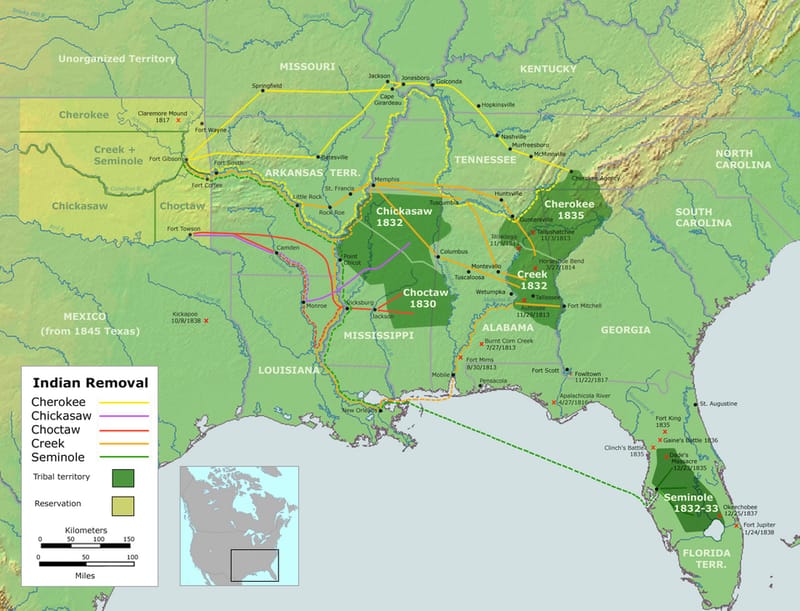
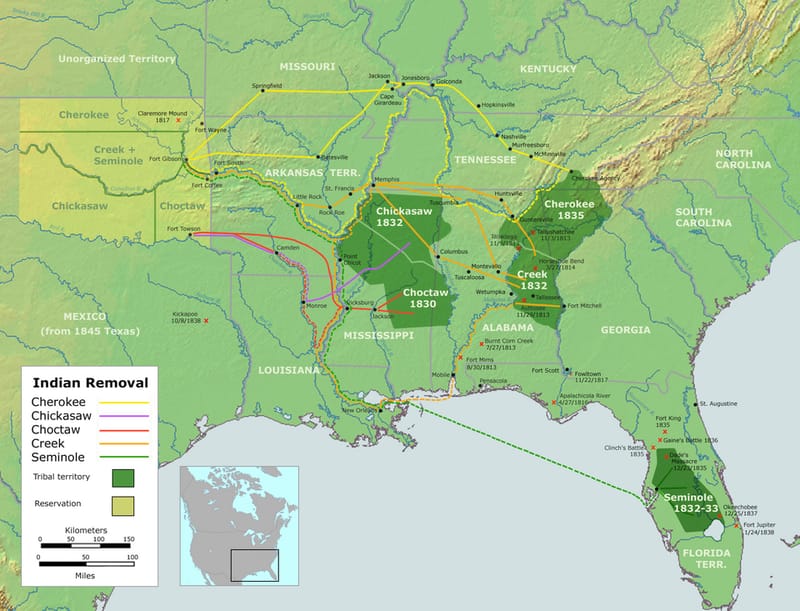
Jackson’s Indian policy is the darkest part of his legacy. He pressed the Indian Removal Act of 1830 through Congress and, in Georgia’s conflict with the Cherokee Nation, sided with the state and refused to protect treaty rights the Supreme Court had recognized in Worcester v. Georgia. His administration negotiated nearly seventy removal treaties, leading to the forced relocation of tens of thousands of people and thousands of deaths, including on the Trail of Tears.
He built his fortune on enslaved labor at the Hermitage. His violent quarrels — duels, a street brawl with the Benton brothers in 1813 that nearly cost him an arm — marked him in his own day as a dangerous man. His destruction of the national bank arguably contributed to the Panic of 1837, opponents called him “King Andrew” for his use of executive power, and the Senate censured him in 1834.
Legacy
Jackson retired to the Hermitage after his chosen successor, Martin Van Buren, won the 1836 election, and died there in 1845. His Democratic Party became one of the nation’s enduring institutions, and his rhetoric of the people against a “money power” became a lasting theme in American politics. Historians who once celebrated “Jacksonian democracy” now weigh it against Indian removal and slavery, and his reputation remains among the most contested of any president.
Study this entry
Check your understanding
Try answering in your own words, then open the answer.
1.What shaped Andrew Jackson early in life?Show answerHide
Jackson was born on March 15, 1767, in the Waxhaw settlement of Scotch-Irish immigrants on the border of North and South Carolina; his father had died before he was born. The Revolution destroyed his family.From “Early life and context” above.
2.What were Andrew Jackson’s major achievements?Show answerHide
In the War of 1812, Jackson’s willingness to share his men’s hardships on a punishing march earned him the nickname “Old Hickory.”From “Major actions and achievements” above.
3.What criticism or controversy surrounds Andrew Jackson?Show answerHide
Jackson’s Indian policy is the darkest part of his legacy. He pressed the Indian Removal Act of 1830 through Congress and, in Georgia’s conflict with the Cherokee Nation, sided with the state and refused to protect treaty rights the Supreme Court had recognized in Worcester v. Georgia.From “Controversies, limits, and criticism” above.
4.How is Andrew Jackson remembered?Show answerHide
Jackson retired to the Hermitage after his chosen successor, Martin Van Buren, won the 1836 election, and died there in 1845. His Democratic Party became one of the nation’s enduring institutions, and his rhetoric of the people against a “money power” became a lasting theme in American politics.From “Legacy” above.
Turn this entry into 11 flashcards (key facts, dates, and why it matters) and review them in Learn.
Related History
How this connects to the rest of the atlas.
Events
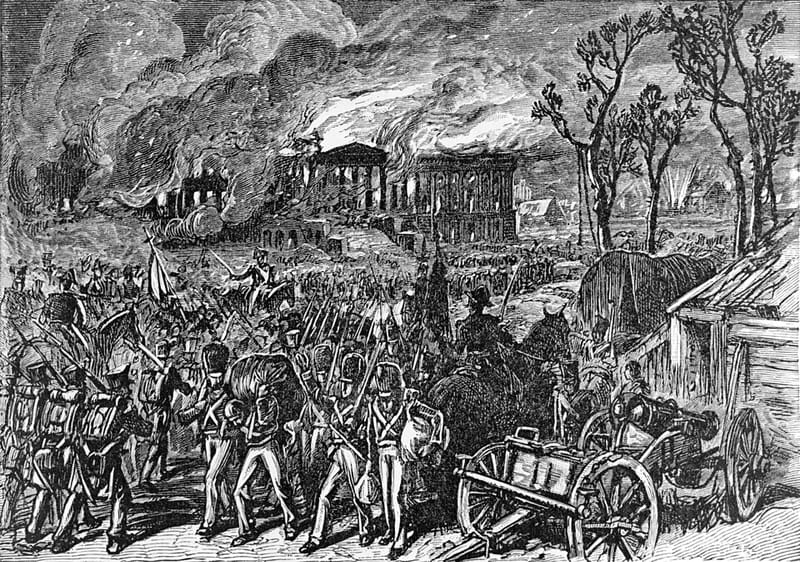
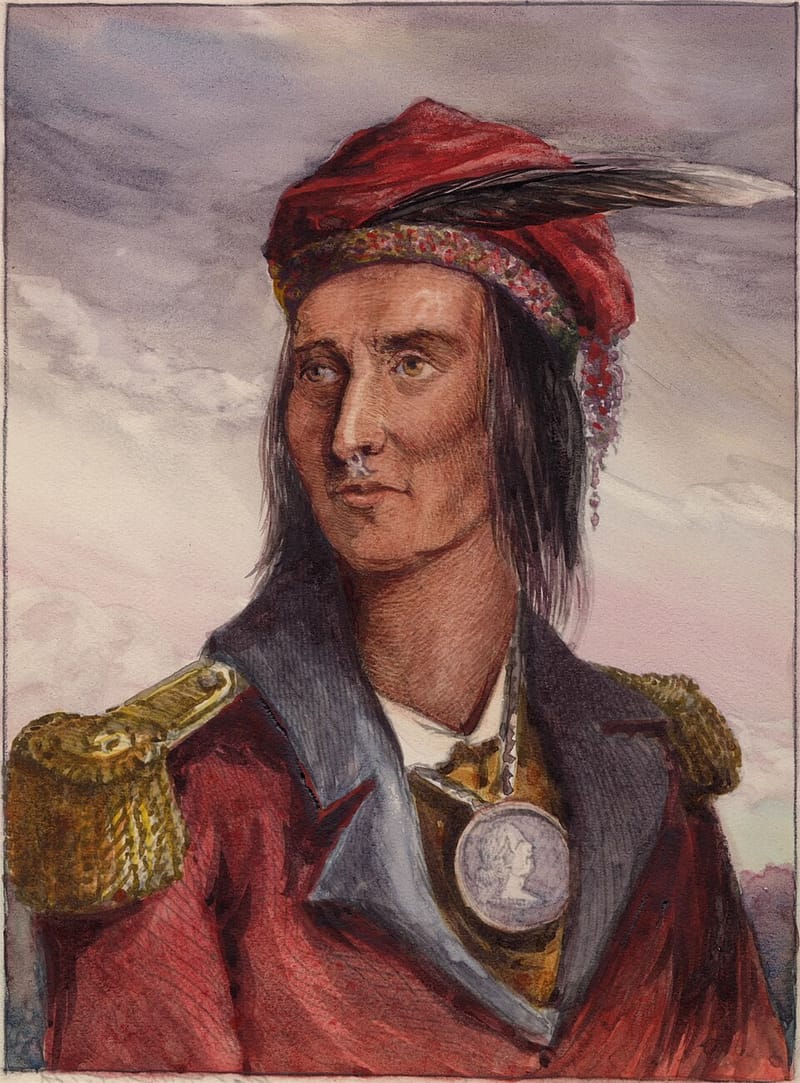
Court cases
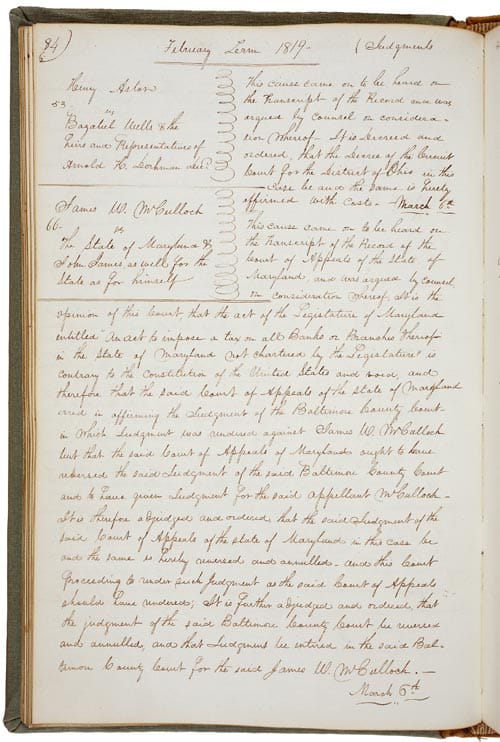
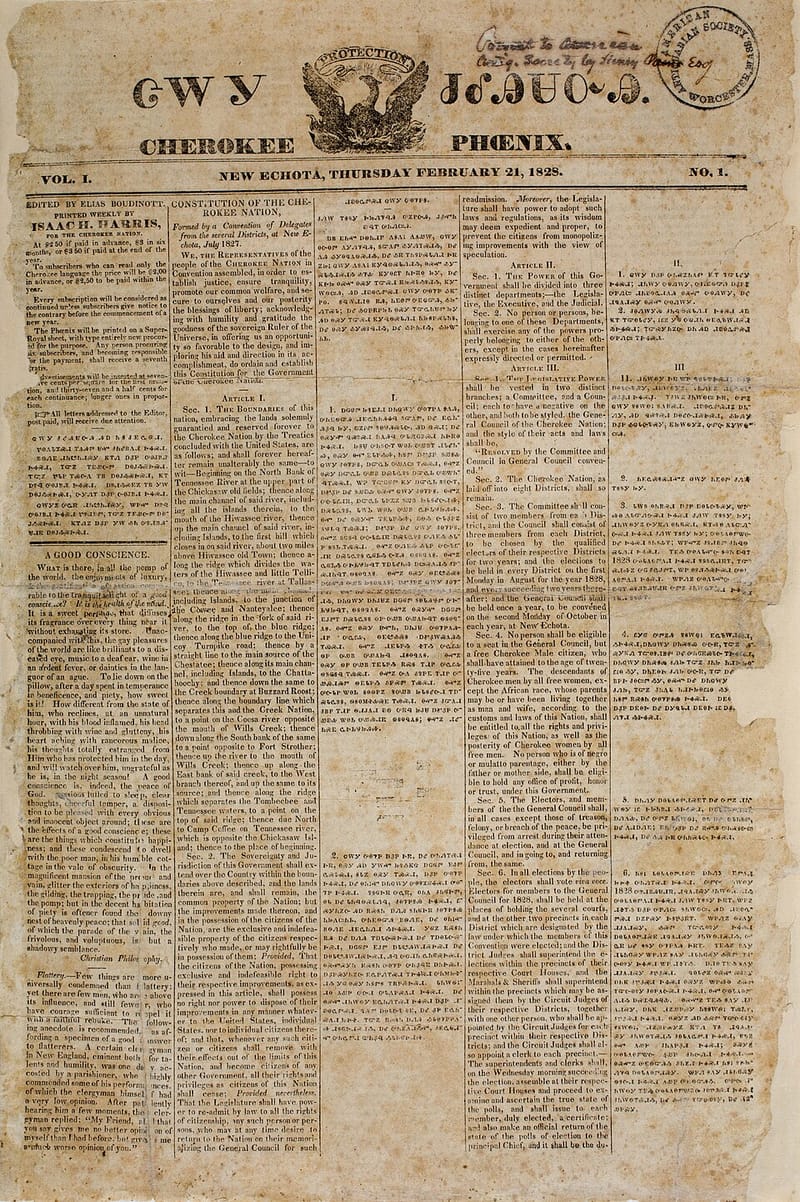
Institutions

Sources
- 1.Andrew Jackson: Life in Brief
Miller Center, University of Virginia · Scholarly · cited for life, elections, nullification, Bank War, spoils, removal, Hermitage
- 2.Andrew Jackson: Domestic Affairs
Miller Center, University of Virginia · Scholarly · cited for domestic policies
- 3.President Andrew Jackson’s Message to Congress “On Indian Removal” (1830) — Milestone Documents
National Archives · Primary source · cited for Removal Act, Jackson’s message, treaties, numbers removed, New Echota, deaths
- 4.Andrew Jackson: Life Before the Presidency
Miller Center, University of Virginia · Scholarly · cited for childhood, Revolution, Nashville, duels, Creek War, New Orleans, Florida
- 5.Andrew Jackson: Impact and Legacy
Miller Center, University of Virginia · Scholarly · cited for “King Andrew,” reputation
Image credits
- Andrew jackson head, Ralph Eleaser Whiteside Earl, 2011-01-18. Via Wikimedia Commons · Public domain · Source
Written for American History Atlas from the sources above. See how entries are researched.
Atlas by Alexander. More on Telegram.