Court CaseExpansion and Sectional Conflict
Worcester v. Georgia
The Supreme Court recognizes Cherokee sovereignty — and the president refuses to enforce it
1832Washington, D.C.
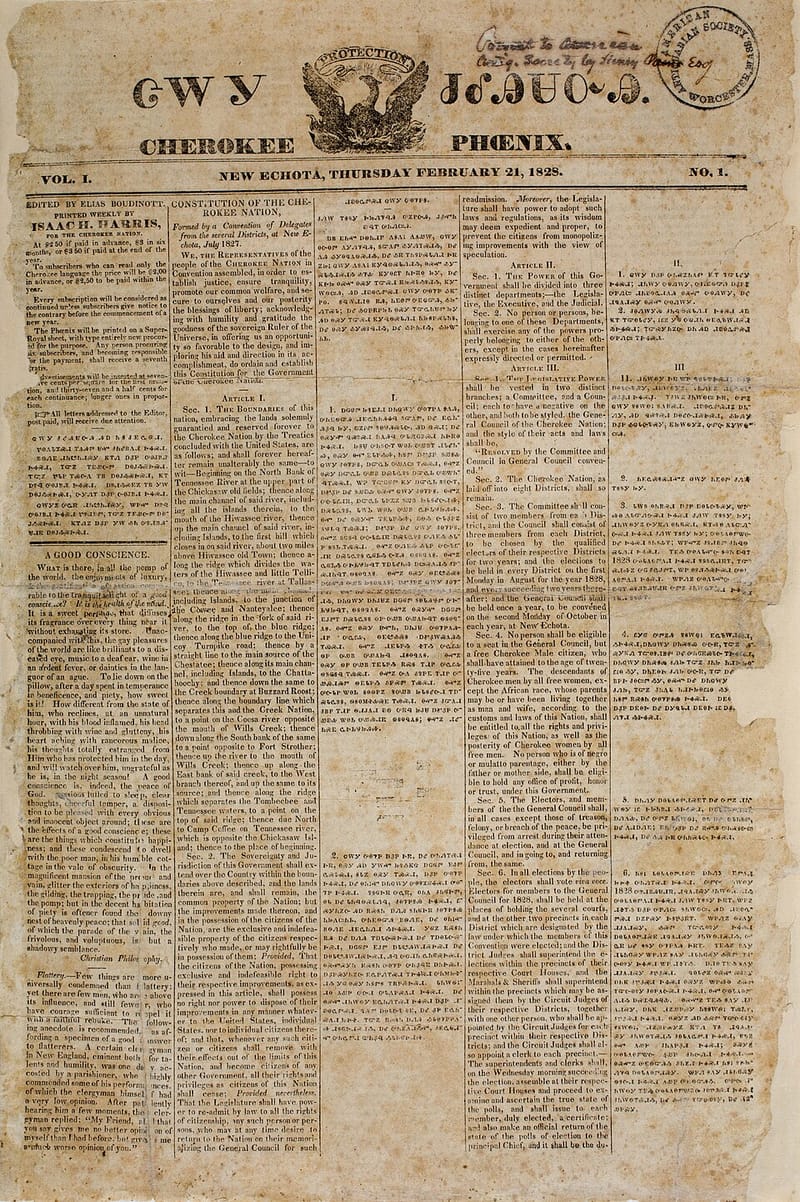
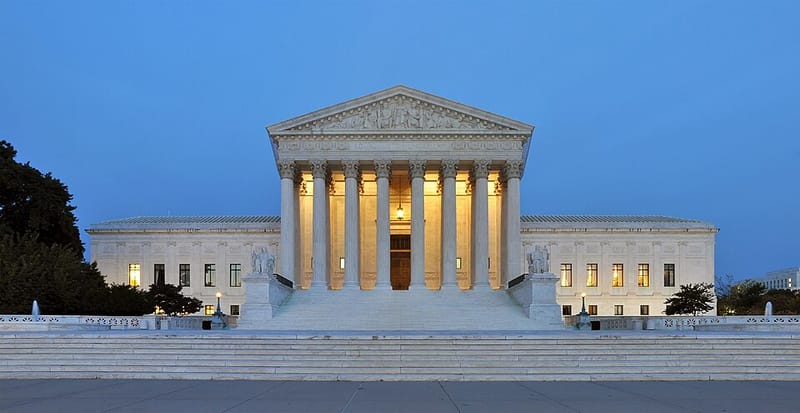
Samuel Worcester, a missionary living in the Cherokee Nation, was imprisoned by Georgia for refusing to obtain a state license. In 1832 the Supreme Court ruled that the Cherokee Nation was “a distinct community occupying its own territory in which the laws of Georgia can have no force,” and that only the federal government could deal with it. The decision affirmed tribal sovereignty in principle, but Georgia ignored it and President Jackson declined to enforce it, and the Cherokee were forcibly removed six years later.
Key facts
- Citation
- 31 U.S. (6 Pet.) 515 (1832)
- Decided
- March 3, 1832
- Vote
- 5–1
- Majority opinion
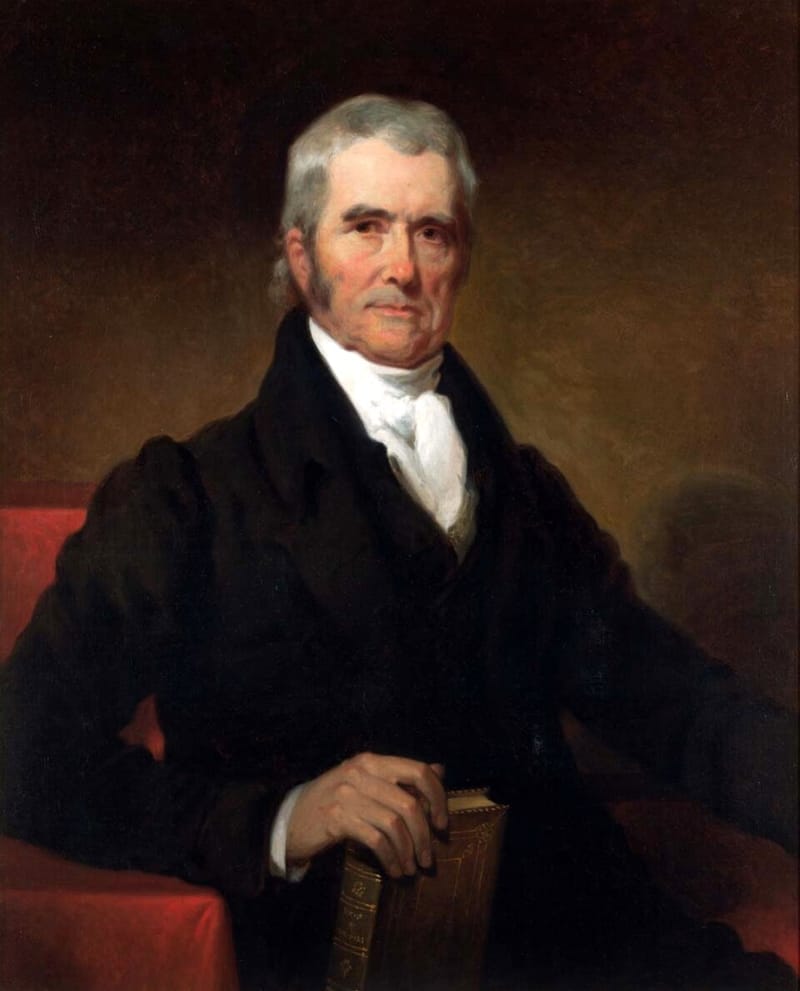
- Chief Justice John Marshall
- Location
- Washington, D.C.
- Parties
- Samuel A. Worcester, a missionary, v. the State of Georgia
- Holding
- Georgia’s law regulating whites in Cherokee territory violated the Constitution, federal treaties, and federal law
- Related case
- Cherokee Nation v. Georgia (1831), in which the Court called tribes “domestic dependent nations”
Why it matters
Worcester v. Georgia recognized Native nations as distinct political communities beyond the reach of state law — a principle that the federal government abandoned in practice in the 1830s but that remains central to tribal sovereignty today.
Historical context
Georgia was determined to take Cherokee land. After the Indian Removal Act of 1830 and the discovery of gold, the state passed laws asserting authority over Cherokee territory, including an 1830 act requiring all white people living there to obtain a state license and swear an oath to Georgia’s laws — a measure aimed at missionaries who supported Cherokee resistance. In 1831 the Cherokee had brought their own suit, Cherokee Nation v. Georgia, but the Court ruled it lacked jurisdiction because a tribe was not a foreign state.
The legal question
Does the state of Georgia have authority to regulate relations between its citizens and members of the Cherokee Nation within Cherokee territory?
The ruling
No. The Court held that the Georgia act under which Worcester was prosecuted violated the Constitution, treaties, and laws of the United States, and was therefore void. Worcester’s conviction was reversed. Justice Henry Baldwin dissented on procedural grounds.
The Court’s reasoning
Chief Justice Marshall reasoned that U.S. treaties and laws treated Indian territory as completely separate from the states and placed all relations with Native nations in the hands of the federal government. “The Cherokee nation, then, is a distinct community occupying its own territory in which the laws of Georgia can have no force,” he wrote. “The whole intercourse between the United States and this nation, is, by our constitution and laws, vested in the government of the United States.” Georgia’s law interfered with that federal authority.
Consequences
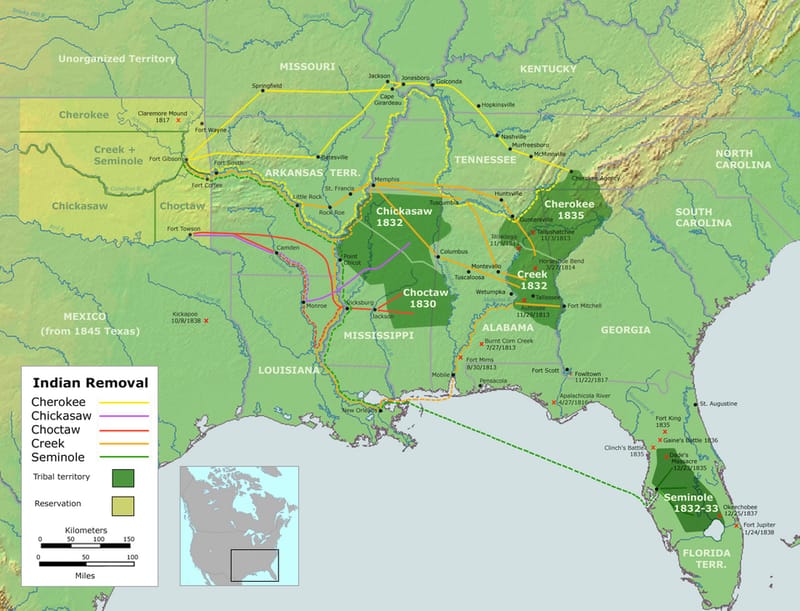
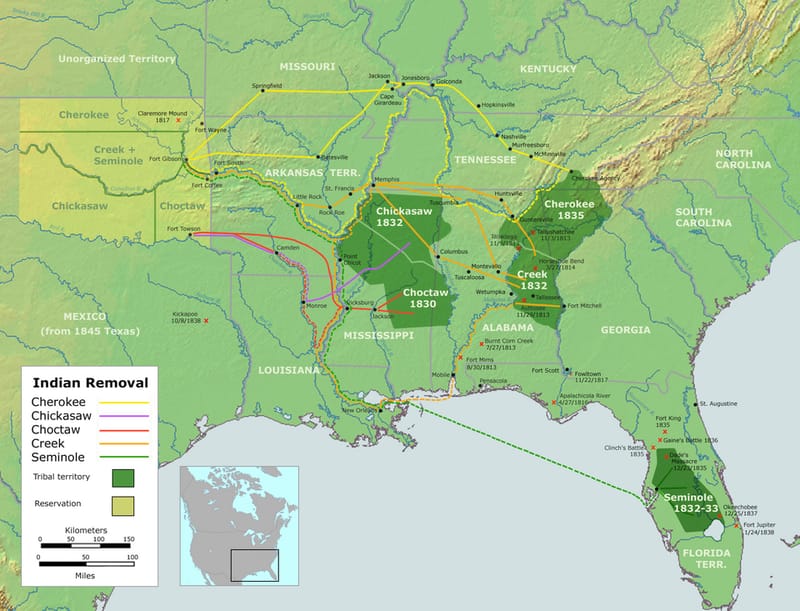
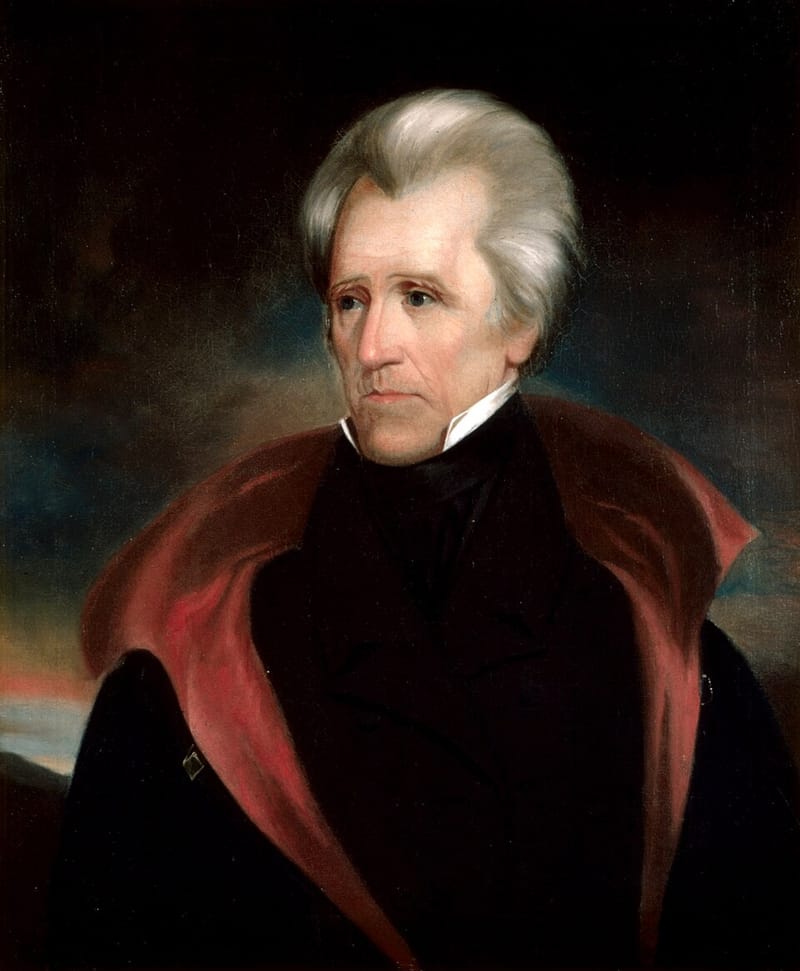
Georgia refused to comply. President Jackson did nothing to enforce the decision; he is reported to have said, “John Marshall has made his decision; let him enforce it now if he can.” Whether or not he used those words, they captured his policy. Without federal protection, the Cherokee were pressured into the Treaty of New Echota and forced west on the Trail of Tears in 1838.
Later interpretation
How later courts, scholars, and the public have judged the case — not part of the ruling itself.
Worcester became one of the foundations of federal Indian law. Its principle — that tribes are sovereign nations whose relations are governed by the federal government, not the states — has been cited by courts and tribal governments ever since, including in modern disputes over tribal jurisdiction. At the same time, its failure in 1832 is a lasting lesson in the limits of judicial power when the executive will not act.
Study this entry
Check your understanding
Try answering in your own words, then open the answer.
1.What question did the Court have to answer?Show answerHide
Does the state of Georgia have authority to regulate relations between its citizens and members of the Cherokee Nation within Cherokee territory?From “The legal question” above.
2.What did the Court decide?Show answerHide
No. The Court held that the Georgia act under which Worcester was prosecuted violated the Constitution, treaties, and laws of the United States, and was therefore void. Worcester’s conviction was reversed.From “The ruling” above.
3.How did the Court justify its decision?Show answerHide
Chief Justice Marshall reasoned that U.S. treaties and laws treated Indian territory as completely separate from the states and placed all relations with Native nations in the hands of the federal government.From “The Court’s reasoning” above.
4.What were the consequences?Show answerHide
Georgia refused to comply. President Jackson did nothing to enforce the decision; he is reported to have said, “John Marshall has made his decision; let him enforce it now if he can.”From “Consequences” above.
Turn this entry into 9 flashcards (key facts, dates, and why it matters) and review them in Learn.
Related History
How this connects to the rest of the atlas.
Events
People

Sources
- 1.Worcester v. Georgia
Oyez (Cornell LII, Justia, Chicago-Kent College of Law) · Scholarly · cited for facts, question, holding, vote, dates
- 2.What Happened on the Trail of Tears?
National Park Service, Trail of Tears National Historic Trail · Institutional · cited for Cherokee history, Georgia laws, New Echota, roundup, routes, survivor testimony
- 3.Indian Treaties and the Removal Act of 1830
U.S. Department of State, Office of the Historian · Institutional · cited for Cherokee Nation v. Georgia and the federal government’s violation of rulings
Image credits
- Cherokee Phoenix first issue, Elias Boudinot and Isaac H. Harris, 1828-02-21. Via Wikimedia Commons · Public domain · Source
Written for American History Atlas from the sources above. See how entries are researched.
Atlas by Alexander. More on Telegram.