DocumentCivil War and Reconstruction
The Emancipation Proclamation
Lincoln declares freedom for enslaved people in the Confederacy, 1863
January 1, 1863
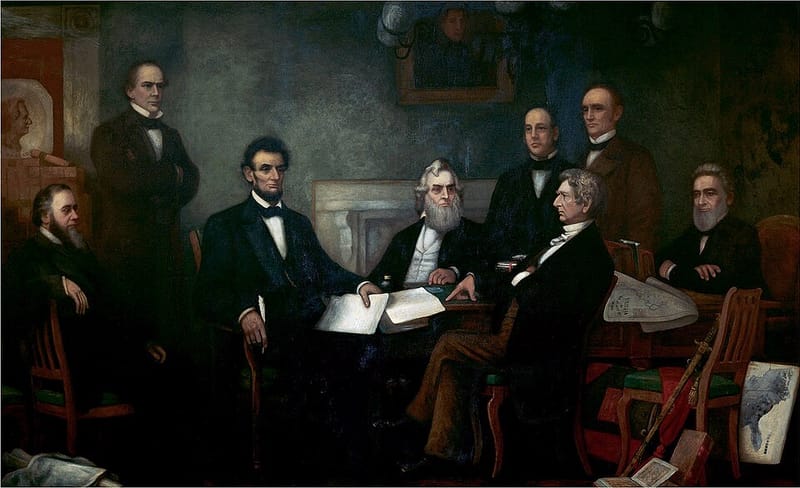
On January 1, 1863, President Abraham Lincoln declared that “all persons held as slaves” in areas still in rebellion “are, and henceforward shall be free.” Issued as a war measure, the Emancipation Proclamation did not apply to the loyal border states or to Confederate areas already under Union control, and its promise depended on Union victory. But it transformed the Civil War into a war against slavery, opened the Union army and navy to Black men, and set the nation on the road to the Thirteenth Amendment.
Key facts
- Date
- January 1, 1863
- Author
- President Abraham Lincoln
- Dating note
- Preliminary proclamation issued September 22, 1862; final proclamation January 1, 1863.
- Preliminary proclamation
- September 22, 1862, days after the Union victory at Antietam
- Final proclamation
- January 1, 1863
- Applied to
- Areas in rebellion — not the loyal border states or Union-occupied parts of the Confederacy
- Black soldiers and sailors
- Almost 200,000 served by war’s end
Read the text at the National Archives
Why it matters
Although it did not end slavery everywhere, the proclamation fundamentally changed the character of the war: every advance of Union troops now expanded the domain of freedom, and the liberated could become liberators. It confirmed what enslaved people had already insisted — that a war for the Union must become a war for freedom — and it helped make the Thirteenth Amendment possible.
Historical circumstances
At first the North fought to prevent secession and preserve the Union; ending slavery was not an official war aim, even though conflict over slavery had caused the war. From the first days of the war, however, enslaved people acted to secure their own liberty, escaping to Union lines. Abolitionists pressed Lincoln to act. After Union forces turned back Lee’s invasion of Maryland at Antietam in September 1862, Lincoln issued a preliminary proclamation warning that enslaved people in any state still in rebellion on January 1, 1863, would be declared free. One hundred days later, with the rebellion continuing, he issued the final proclamation.
Principal ideas
- Freedom in rebel territory. All persons held as slaves in designated states and parts of states in rebellion “are, and henceforward shall be free,” and the military would recognize and maintain their freedom.
- A war measure. Lincoln acted as commander in chief, justifying the proclamation as “a fit and necessary war measure.” That legal basis explains its limits: it did not reach the loyal border states or exempted areas under Union control.
- Black military service. The proclamation announced that freed men would be received into the armed service of the United States.
Lincoln hoped it would encourage enslaved people to support the Union and discourage Britain and France from recognizing or aiding the Confederacy.
Study this entry
Check your understanding
Try answering in your own words, then open the answer.
1.Why was this document written?Show answerHide
At first the North fought to prevent secession and preserve the Union; ending slavery was not an official war aim, even though conflict over slavery had caused the war. From the first days of the war, however, enslaved people acted to secure their own liberty, escaping to Union lines.From “Historical circumstances” above.
2.What are its principal ideas?Show answerHide
- Freedom in rebel territory. All persons held as slaves in designated states and parts of states in rebellion “are, and henceforward shall be free,” and the military would recognize and maintain their freedom. - A war measure. Lincoln acted as commander in chief, justifying the proclamation as “a fit and necessary war measure.”From “Principal ideas” above.
Turn this entry into 10 flashcards (key facts, dates, and why it matters) and review them in Learn.
Related History
How this connects to the rest of the atlas.

Sources
- 1.Emancipation Proclamation (1863) — Milestone Documents
National Archives · Primary source · cited for dates, limits, Black soldiers, significance
- 2.Abraham Lincoln: Life in Brief
Miller Center, University of Virginia · Scholarly · cited for life, secession, war, emancipation, Black soldiers, legacy
- 3.War Department General Order 143: Creation of the U.S. Colored Troops (1863)
National Archives · Primary source · cited for Bureau of Colored Troops
- 4.Frequently Asked Questions
National Park Service, Reconstruction Era National Historical Park · Institutional · cited for definition and dates of Reconstruction; Port Royal
Image credits
- First Reading of the Emancipation Proclamation by President Lincoln, Francis Bicknell Carpenter, 1864. Via Wikimedia Commons · Public domain · Source
Written for American History Atlas from the sources above. See how entries are researched.
Atlas by Alexander. More on Telegram.