EventThe Twenties and the Great Depression
The Great Depression
The deepest economic collapse in American history, 1929–1941
August 1929 – 1941Nationwide and worldwide
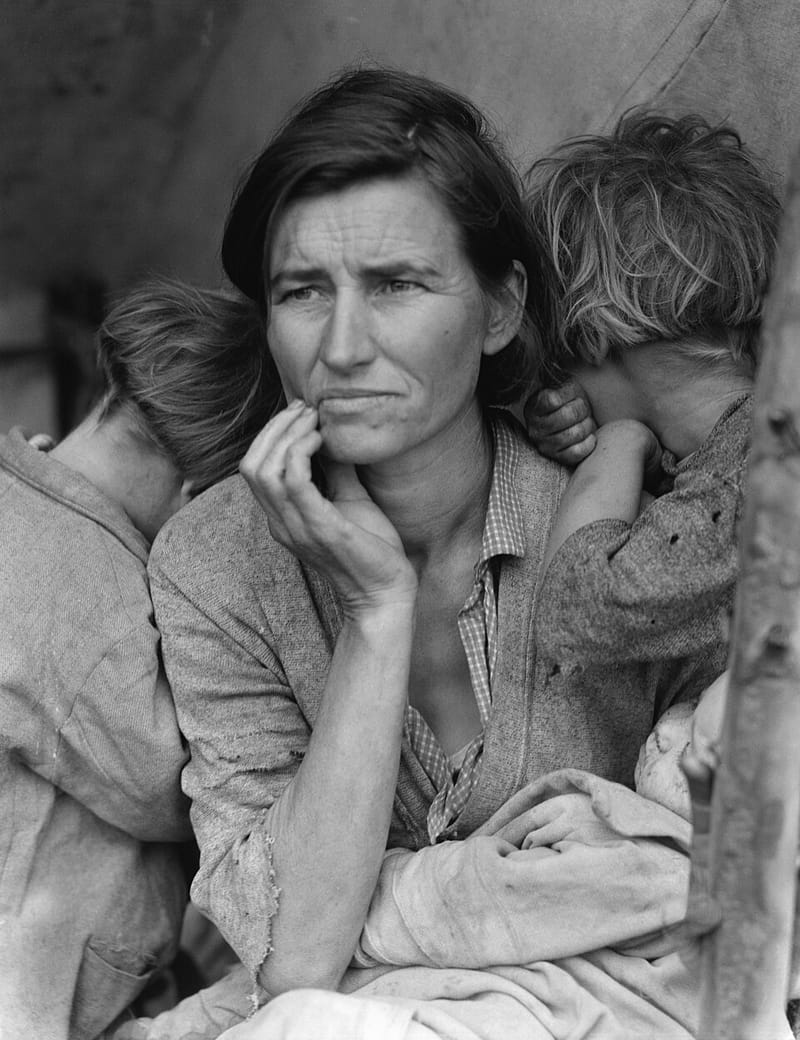
The Great Depression was the longest and deepest economic downturn in the history of the United States. Beginning in 1929, it brought a stock market crash, thousands of bank failures, collapsing farm prices, and unemployment that reached about 25 percent by 1932. Federal Reserve mistakes made it far worse. Herbert Hoover’s limited response gave way to Franklin D. Roosevelt’s New Deal, which transformed the federal government, but full recovery came only with World War II.
Key facts
- Date
- August 1929 – 1941
- Location
- Nationwide and worldwide
- Dating note
- The Federal Reserve dates the downturn from August 1929; it hit bottom in March 1933, and full employment returned only with World War II.
- Began
- August 1929 (the end of the 1920s expansion)
- Bottom
- March 1933, with the collapse of the banking system and Roosevelt’s banking holiday
- Unemployment
- About 25% nationally in 1932; Black unemployment as high as 50%
- Bank failures
- 1,352 in 1930; nearly 2,300 in 1932
- Money supply
- Fell by nearly 30% from fall 1930 to winter 1933
Why it matters
The Great Depression was the defining crisis of twentieth-century American capitalism, and the response to it created the modern federal government.
Historical background
Prosperity in the 1920s was unevenly shared. Per capita income rose 10 percent for all Americans during the decade but 75 percent for the wealthiest. Farmers had been in depression since 1920, when crop prices began to fall, and soil exhaustion compounded their troubles. The international gold standard tied nations’ economies together, so shocks in one country spread to others.
Causes and contributing factors
Historians and economists stress a combination of causes: rising inequality, weak demand, rural collapse, overextended investors, and the bursting of speculative bubbles. The crash of 1929 shook confidence, but the decisive blow was the collapse of the banking system: regional banking panics in 1930 and 1931 were followed by national and international crises through 1933. The Federal Reserve raised interest rates in 1928 and 1929 and then failed to act as a lender of last resort while thousands of banks failed. In 2002 Federal Reserve governor (later chairman) Ben Bernanke acknowledged that the Fed’s mistakes had contributed to “the worst economic disaster in American history.” The Smoot-Hawley Tariff of 1930, the highest in American history, prompted retaliation abroad; world trade fell from $36 billion in 1929 to $12 billion in 1932.
What happened
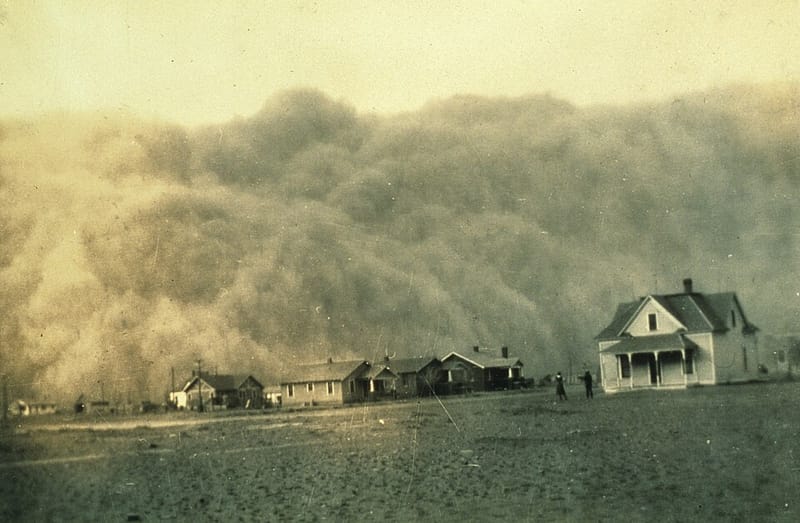
Industrial production plummeted, prices fell, and debts became crushing. Families lost homes and farms to foreclosure; homeless Americans built shantytowns called “Hoovervilles.” By 1932 sociologists estimated that millions of men were on the roads and rails looking for work. On the Great Plains, drought turned farmland into the Dust Bowl.
President Herbert Hoover believed in limited federal action. In 1932 he created the Reconstruction Finance Corporation to lend to banks, railroads, and businesses, but critics complained it bypassed the needy. That summer, thousands of unemployed World War I veterans — the “Bonus Army” — camped in Washington to demand early payment of promised bonuses; Hoover ordered them out, and troops under General Douglas MacArthur burned their camp.
The crisis hit some groups hardest. Black workers were often the first fired. Officials in the Southwest pushed out Mexican immigrants and Mexican Americans through deportation raids and “repatriation” drives; the Mexican-born population of Arizona, California, New Mexico, and Texas fell from about 617,000 in 1930 to 377,000 in 1940.
Immediate consequences
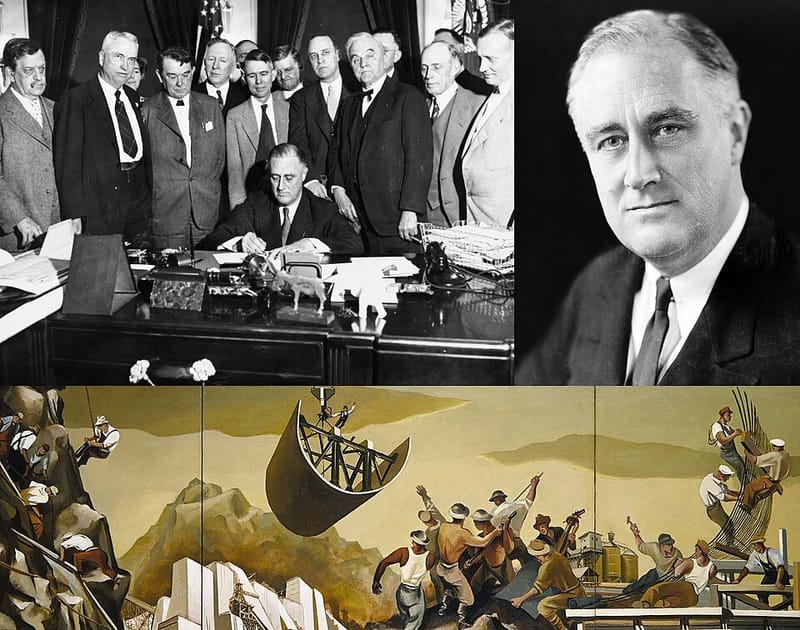
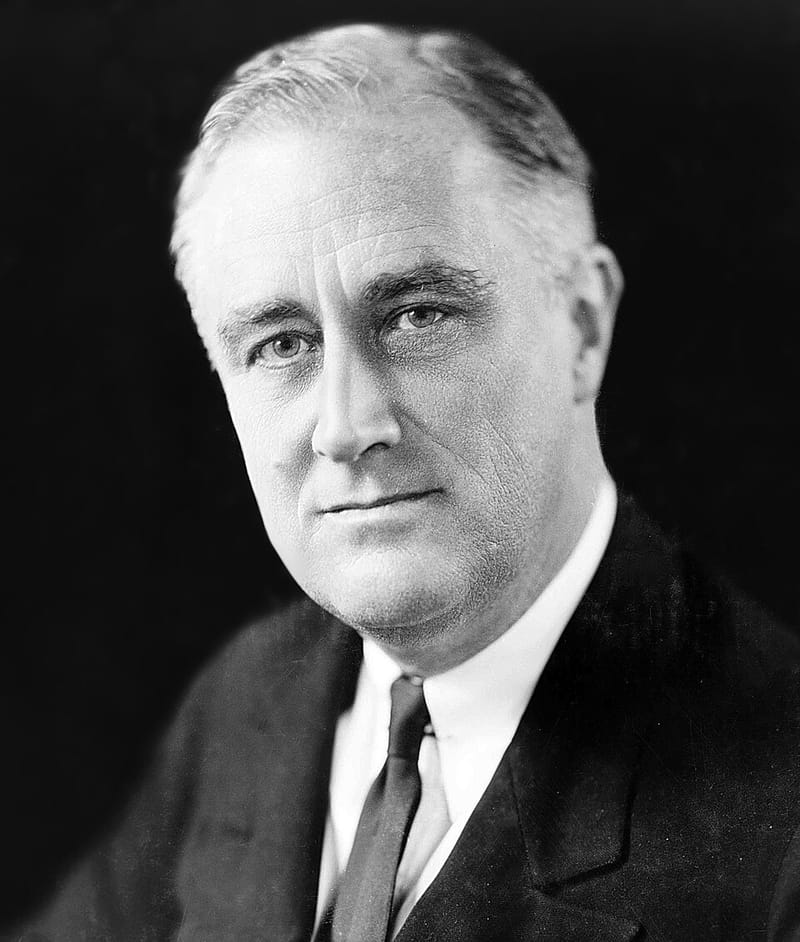
Voters elected Franklin D. Roosevelt in a landslide in 1932. The downturn bottomed out in March 1933, when he declared a national bank holiday. The New Deal brought relief, recovery, and reform, but recovery was interrupted by a second, “double-dip” recession in 1937. Unemployment remained in double digits in 1940, and only wartime mobilization restored full employment.
Long-term significance
The Depression permanently changed Americans’ expectations of government: Washington now took responsibility for the economy, banking stability, and a basic safety net. Memories of hard times shaped the outlook of two generations, and economists and central bankers still study the Depression to avoid repeating its mistakes.
Study this entry
Check your understanding
Try answering in your own words, then open the answer.
1.What led to the Great Depression?Show answerHide
Historians and economists stress a combination of causes: rising inequality, weak demand, rural collapse, overextended investors, and the bursting of speculative bubbles.From “Causes and contributing factors” above.
2.What happened?Show answerHide
Industrial production plummeted, prices fell, and debts became crushing. Families lost homes and farms to foreclosure; homeless Americans built shantytowns called “Hoovervilles.”From “What happened” above.
3.What were the immediate consequences?Show answerHide
Voters elected Franklin D. Roosevelt in a landslide in 1932. The downturn bottomed out in March 1933, when he declared a national bank holiday.From “Immediate consequences” above.
4.Why does it still matter?Show answerHide
The Depression permanently changed Americans’ expectations of government: Washington now took responsibility for the economy, banking stability, and a basic safety net. Memories of hard times shaped the outlook of two generations, and economists and central bankers still study the Depression to avoid repeating its mistakes.From “Long-term significance” above.
Turn this entry into 11 flashcards (key facts, dates, and why it matters) and review them in Learn.
Related History
How this connects to the rest of the atlas.
Events
People


Sources
- 1.The Great Depression
Federal Reserve History (Federal Reserve System) · Institutional · cited for dates, banking panics, money supply, Fed mistakes
- 2.Stock Market Crash of 1929
Federal Reserve History (Federal Reserve System) · Institutional · cited for Dow figures, dates, margin buying, Fed policy
- 3.The Great Depression and U.S. Foreign Policy
U.S. Department of State, Office of the Historian · Institutional · cited for global dimension, gold standard
- 4.Great Depression Facts
Franklin D. Roosevelt Presidential Library and Museum (National Archives) · Institutional · cited for statistics
- 5.Franklin D. Roosevelt: Impact and Legacy
Miller Center, University of Virginia (William E. Leuchtenburg) · Scholarly · cited for assessment of the New Deal and presidency
- 6.The American Yawp, “The Great Depression”
The American Yawp (eds. Joseph Locke and Ben Wright; Stanford University Press) · Scholarly · cited for crash, Depression, New Deal, Dust Bowl
Image credits
- Migrant mother, Nipomo, California, Dorothea Lange, 6 March 1936. Via Wikimedia Commons · Public domain · Source
Written for American History Atlas from the sources above. See how entries are researched.
Atlas by Alexander. More on Telegram.