PersonThe Progressive Era and World War I
Henry Ford
Automaker who put America on wheels with the Model T, the moving assembly line, and the Five Dollar Day
1863–1947
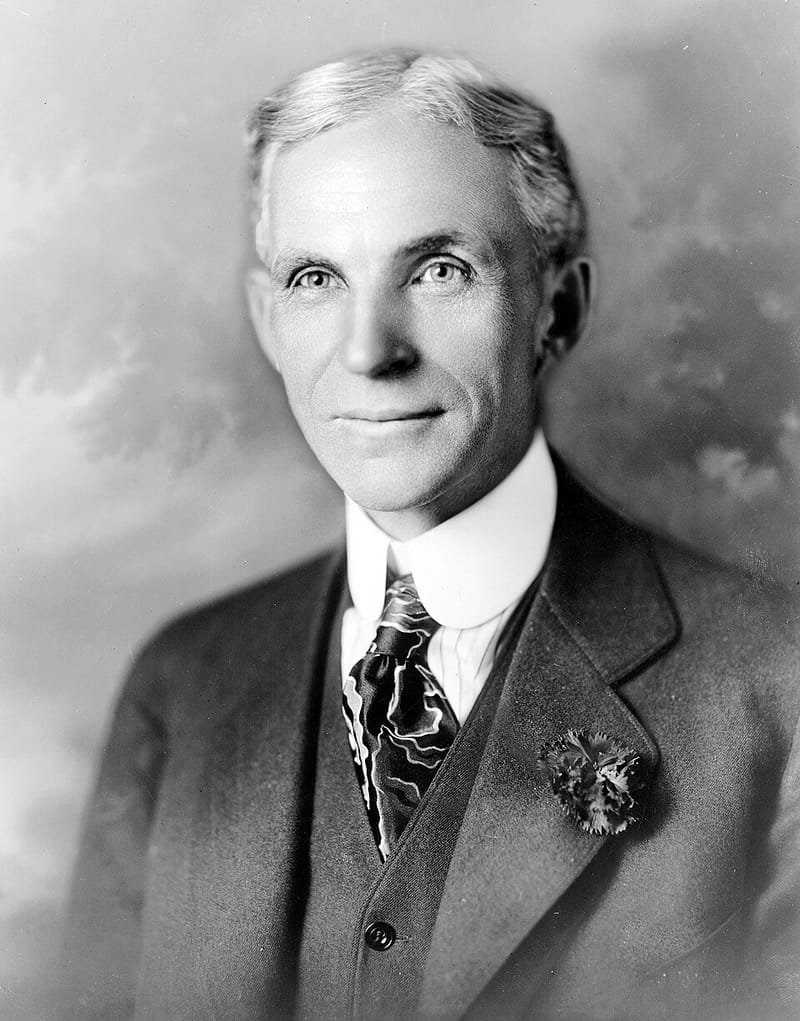
Henry Ford did not invent the automobile or the assembly line, but more than anyone else he turned the car from a rich man’s novelty into a machine for the multitude. His Model T of 1908 was cheap, rugged, and easy to fix; his moving assembly line of 1913 cut its assembly time dramatically; and his Five Dollar Day of 1914 doubled workers’ pay so that they could buy the cars they built. Ford became a folk hero — and also one of the most notorious antisemites in American history, whose newspaper spread conspiracy theories that the Nazis admired.
Key facts
- Born
- July 30, 1863, Dearborn, Michigan
- Died
- 1947
- Roles
- Engineer, Edison Electric Illuminating Company; Founder of Ford Motor Company (1903); Owner of The Dearborn Independent
- Ford Motor Company
- Founded June 16, 1903, after two failed car companies
- Model T
- Introduced October 1, 1908; about 15 million sold before production ended in 1927
- Assembly line
- 1913: chassis assembly time cut from 12.5 hours to 1.5
- Five Dollar Day
- January 1914: double the going factory wage, for an eight-hour day
- “The International Jew”
- Antisemitic series in his Dearborn Independent, 1920–1922
Why it matters
Ford’s methods of mass production and mass consumption — standardized products, assembly lines, and high wages that let workers buy what they made — became a model for twentieth-century industry. His career also shows how fame and wealth could amplify hatred: his antisemitic publications circulated worldwide for decades.
Early life and context
Henry Ford was born on July 30, 1863, on a farm in what is now Dearborn, Michigan. As a boy he showed a gift for machinery, a talent for leadership, and a preference for learning by trial and error. At sixteen he left the farm to find work in Detroit. In 1888 he married Clara Bryant, and in 1891 they moved to Detroit, where he became an engineer for the Edison Electric Illuminating Company — the only steady job he ever held. In his spare time he built his first car, the Quadricycle, in 1896: four bicycle-style wheels, a tiller instead of a steering wheel, and two forward speeds with no reverse. He sold it for $200 and used the money to build another.
Major actions and achievements
Ford’s first two car companies failed. In 1901 his racing car beat the era’s top driver, and on June 16, 1903, a new group of investors founded the Ford Motor Company; its first Model A sold on July 23, and by October the company had turned a profit. Ford wanted “a motorcar for the great multitude,” and on October 1, 1908, he introduced the Model T — simple, durable, built of light, strong vanadium steel for rough roads, and easy to operate and repair.
To keep up with demand, Ford adapted methods from other industries and in 1913 introduced the moving assembly line at his Highland Park plant, eventually cutting the time to assemble a Model T chassis from 12.5 hours to 1.5. Workers hated the endless, repetitive labor, and turnover soared. Ford’s answer, in January 1914, was his boldest move: the Five Dollar Day, double the existing factory wage, for a shorter eight-hour day. The day after it was announced, some 10,000 people lined up outside his employment office. The policy stabilized his workforce and let his workers buy the cars they built. By 1925 his factories turned out a Model T every ten seconds, and some 15 million were sold before production ended in 1927. In 1917 he began building the River Rouge complex, which became the largest integrated factory in the world, with its own steel mills, glass factory, and power plant.
Beliefs and ideas
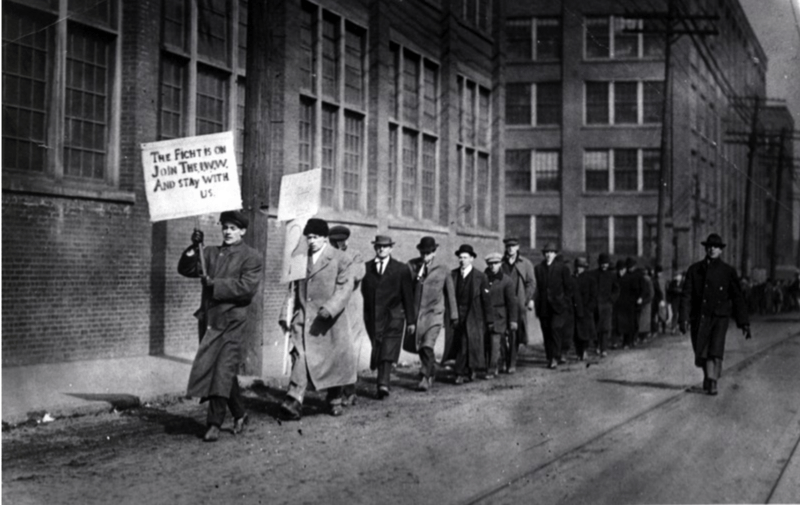
Ford idealized small-town, rural life even as his factories transformed industrial America, and he blamed immigrants for the problems he associated with cities. He was a pacifist: in 1915 he chartered a “Peace Ship” to Europe in a failed attempt to end World War I, and he opposed American entry into World War II. He was also fiercely anti-union and held out against the United Auto Workers until 1941.
Controversies, limits, and criticism
Ford used his fame to spread antisemitism. After the failure of his Peace Ship, which the press mocked as a “Ship of Fools,” he blamed Jews for the war. In 1918 he bought a weekly newspaper, The Dearborn Independent, and from May 1920 it ran a series called “The International Jew,” drawing on the forged Protocols of the Elders of Zion to claim a Jewish conspiracy to control the world. Ford dealers were required to distribute the paper, and it was reissued as books translated into more than a dozen languages. After a libel suit by a Jewish lawyer, Aaron Sapiro, ended in a mistrial in 1927, Ford signed a public apology and closed the paper — but the books kept circulating. Adolf Hitler praised him in Mein Kampf, and in 1938 the Nazi government awarded him the Grand Cross of the German Eagle. His long resistance to unions also brought years of conflict with his workers.
Legacy
In 1919, after battles with his stockholders, Ford bought them out so that his family controlled the company. After his son Edsel died in 1943, the elderly Ford returned as president until his grandson Henry Ford II took over in 1945. Ford died in 1947. His Model T and assembly line made the automobile part of everyday American life; his museum and Greenfield Village in Dearborn preserve his collections. His antisemitic writings, however, are still in circulation today.
Study this entry
Check your understanding
Try answering in your own words, then open the answer.
1.What shaped Henry Ford early in life?Show answerHide
Henry Ford was born on July 30, 1863, on a farm in what is now Dearborn, Michigan. As a boy he showed a gift for machinery, a talent for leadership, and a preference for learning by trial and error.From “Early life and context” above.
2.What were Henry Ford’s major achievements?Show answerHide
Ford’s first two car companies failed. In 1901 his racing car beat the era’s top driver, and on June 16, 1903, a new group of investors founded the Ford Motor Company; its first Model A sold on July 23, and by October the company had turned a profit.From “Major actions and achievements” above.
3.What criticism or controversy surrounds Henry Ford?Show answerHide
Ford used his fame to spread antisemitism. After the failure of his Peace Ship, which the press mocked as a “Ship of Fools,” he blamed Jews for the war.From “Controversies, limits, and criticism” above.
4.How is Henry Ford remembered?Show answerHide
In 1919, after battles with his stockholders, Ford bought them out so that his family controlled the company. After his son Edsel died in 1943, the elderly Ford returned as president until his grandson Henry Ford II took over in 1945.From “Legacy” above.
Turn this entry into 11 flashcards (key facts, dates, and why it matters) and review them in Learn.
Related History
How this connects to the rest of the atlas.
Events

People
Movements


Sources
- 1.K-12 Research Guide: Henry Ford
The Henry Ford (museum), AskUs K-12 Research Guide · Institutional · cited for early life, Quadricycle, Model T, assembly line, Five Dollar Day
- 2.K-12 Research Guide: Ford Motor Company
The Henry Ford (museum), AskUs K-12 Research Guide · Institutional · cited for company founding, 1919 buyout, unions, Henry Ford II
- 3.Ford Company Timeline
Ford Motor Company · Institutional · cited for 1901 race, 1903 profits, Model T sales, assembly-line times, $5 day crowd, River Rouge, Edsel’s death
- 4.Antisemitism and Henry Ford’s “The International Jew”
United States Holocaust Memorial Museum, Holocaust Encyclopedia · Institutional · cited for Peace Ship, Dearborn Independent, The International Jew, Sapiro case, Nazi admiration, death in 1947
- 5.22. The Twenties
The American Yawp (Stanford University Press) · Scholarly · cited for a Model T every ten seconds by 1925
Image credits
- Henry Ford, Fred Hartsook, 1919. Via Wikimedia Commons · Public domain · Source
Written for American History Atlas from the sources above. See how entries are researched.
Atlas by Alexander. More on Telegram.