Congress
The legislative branch: the Senate and the House of Representatives
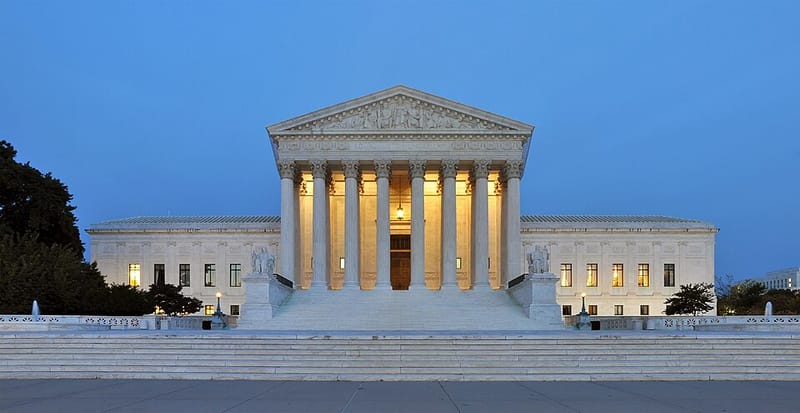
1789U.S. Capitol, Washington, D.C.
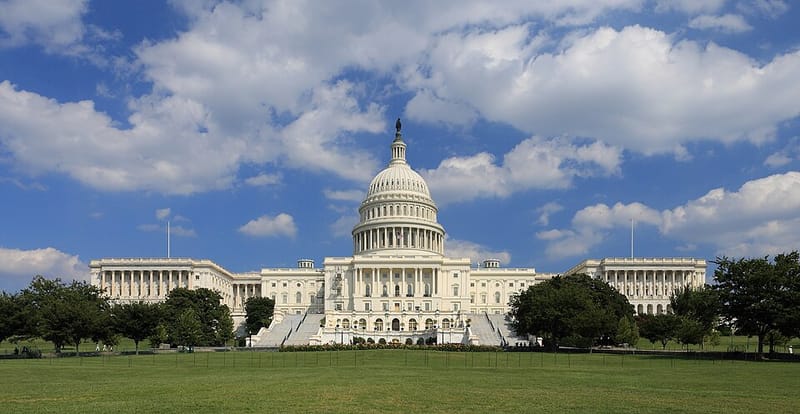
Article I of the Constitution vests “All legislative Powers” in a Congress made up of a Senate and a House of Representatives. Members of the House are elected every two years, with seats apportioned by population; each state has two senators serving six-year terms. Congress makes the laws, levies taxes, declares war, confirms presidential appointments, and can impeach and remove officials. As the branch closest to the people, it has been the stage for many of the great debates of American history.
Key facts
- Date
- 1789
- Location
- U.S. Capitol, Washington, D.C.
- Constitutional basis
- Article I
- House
- Members “chosen every second Year by the People”; the House alone originates revenue bills and holds “the sole Power of Impeachment”
- Senate
- Two senators per state, six-year terms; tries impeachments, approves treaties and appointments
- Election of senators
- By state legislatures until the Seventeenth Amendment (1913) provided for direct election
- First Congress
- 1789
Why it matters
Congress is the first branch of government in the Constitution and the institution through which Americans’ elected representatives make law, control spending, and hold presidents to account.
Origins
The Constitution gives every state two senators regardless of its size, while seats in the House are apportioned among the states according to population. Senators were originally chosen by state legislatures; members of the House have always been elected directly by the people.
Powers and limits
Article I, Section 8 gives Congress power “To lay and collect Taxes,” to borrow money, to regulate commerce, “To declare War,” to raise armies and a navy, and “To make all Laws which shall be necessary and proper” for carrying out its powers. Every bill must pass both houses and be presented to the president, and Congress can override a veto by two-thirds of each house. The Senate confirms or rejects nominations for federal agencies, judges, and the Supreme Court, and Congress can remove a president from office through impeachment.
How it changed over time
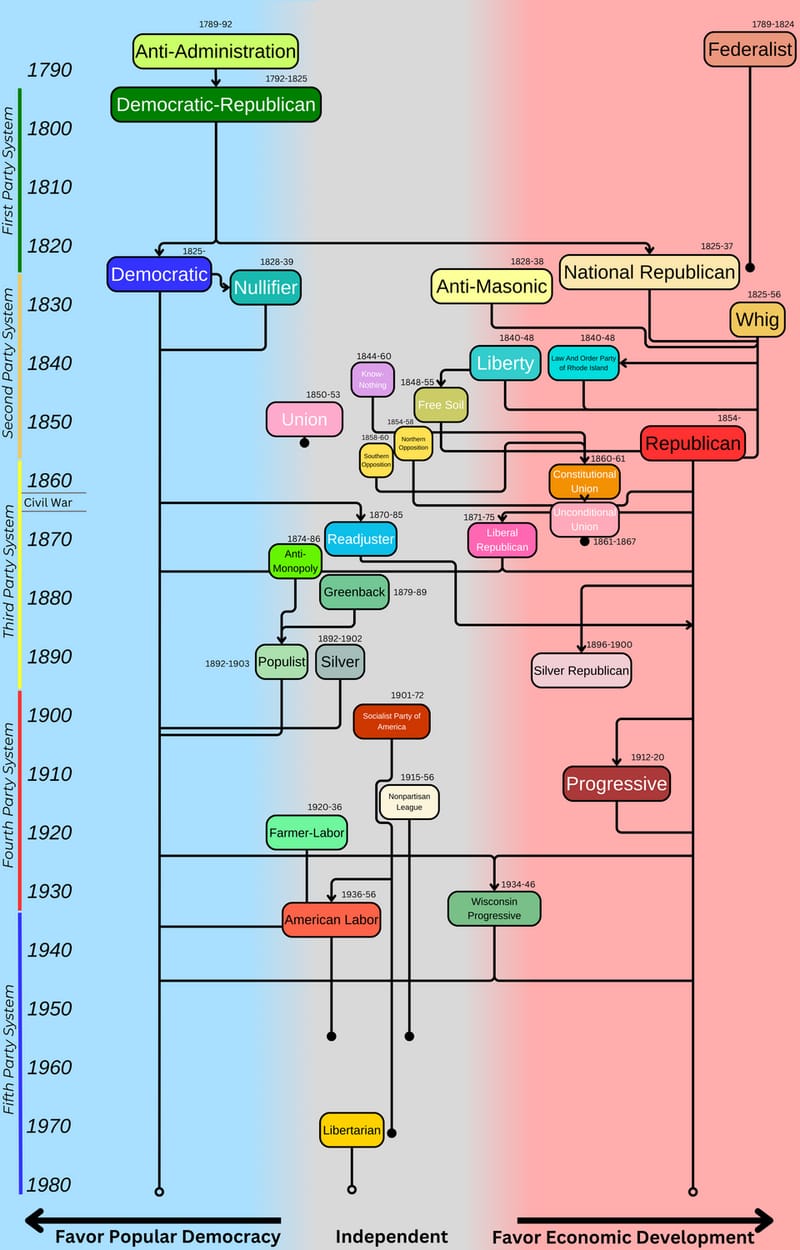
Political parties, which the founders had hoped to avoid, quickly organized Congress; within a decade they absorbed state and local factions in the House. Congress debated slavery’s expansion in compromises from 1820 to 1850, led Reconstruction and passed the Thirteenth, Fourteenth, and Fifteenth Amendments, and in the Progressive Era proposed the Seventeenth Amendment for direct election of senators. In the twentieth century it enacted the New Deal, the Civil Rights Act, and the Great Society, and after Vietnam and Watergate it reasserted its oversight of presidential war-making.
Study this entry
Check your understanding
Try answering in your own words, then open the answer.
1.Where did it come from?Show answerHide
The Constitution gives every state two senators regardless of its size, while seats in the House are apportioned among the states according to population. Senators were originally chosen by state legislatures; members of the House have always been elected directly by the people.From “Origins” above.
2.What can it do, and what limits it?Show answerHide
Article I, Section 8 gives Congress power “To lay and collect Taxes,” to borrow money, to regulate commerce, “To declare War,” to raise armies and a navy, and “To make all Laws which shall be necessary and proper” for carrying out its powers.From “Powers and limits” above.
3.How has it changed over time?Show answerHide
Political parties, which the founders had hoped to avoid, quickly organized Congress; within a decade they absorbed state and local factions in the House.From “How it changed over time” above.
Turn this entry into 10 flashcards (key facts, dates, and why it matters) and review them in Learn.
Related History
How this connects to the rest of the atlas.
Institutions

Sources
- 1.The Constitution of the United States: A Transcription
National Archives · Primary source · cited for text of Articles I and II
- 2.Branches of the U.S. government
USA.gov (U.S. General Services Administration) · Institutional · cited for roles of Congress, the president, and checks and balances
- 3.Party Divisions of the House of Representatives, 1789 to Present
U.S. House of Representatives, Office of the Historian · Institutional · cited for parties in the House since 1789
- 4.17th Amendment — Milestone Documents
National Archives · Primary source · cited for direct election of senators
- 5.The American Yawp, “The Unraveling”
The American Yawp (eds. Joseph Locke and Ben Wright; Stanford University Press) · Scholarly · cited for 1970s: Vietnam’s end, Watergate, feminism, environmentalism
Image credits
- US Capitol west side, Martin Falbisoner, 2013-09-05 15:28:36. Via Wikimedia Commons · CC BY-SA 3.0 · Source
Written for American History Atlas from the sources above. See how entries are researched.
Atlas by Alexander. More on Telegram.