PersonIndustrialization and the Gilded Age
Booker T. Washington
Educator and the most influential Black leader of his generation
1856–1915
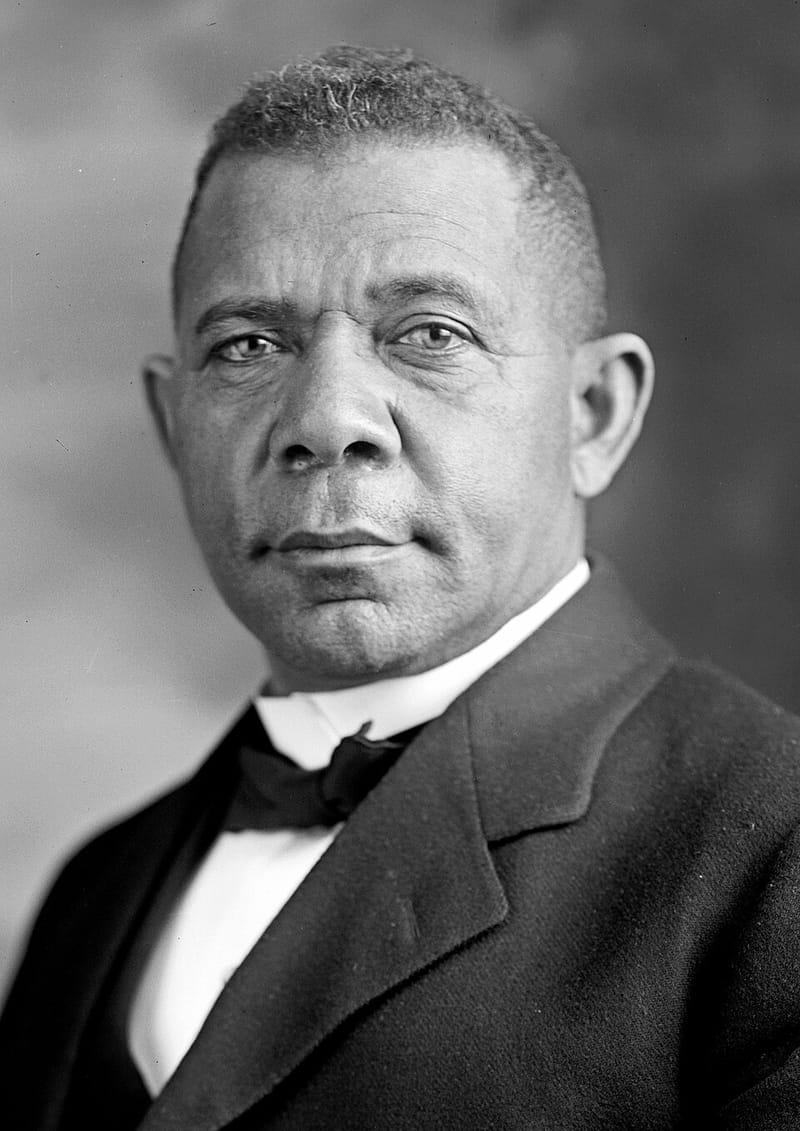
Booker T. Washington was born into slavery in Virginia and became the most prominent Black educator and spokesman of his time. As the founding principal of Alabama’s Tuskegee Institute, he championed industrial and vocational education as the road to Black economic independence. His 1895 Atlanta Exposition address — which seemed to accept segregation in exchange for economic opportunity — made him famous and drew sharp criticism from W. E. B. Du Bois, who called it the “Atlanta Compromise.” In 1901 he became the first African American invited to dine at the White House.
Key facts
- Born
- 1856, Burroughs farm, Franklin County, Virginia
- Died
- November 14, 1915, Tuskegee, Alabama
- Roles
- Founding principal of Tuskegee Institute; Educator and orator; Political adviser
- Born
- 1856, enslaved on the Burroughs farm in Franklin County, Virginia
- Tuskegee
- Opened July 4, 1881, with 30 students
- Atlanta Exposition speech
- September 18, 1895
- White House
- First African American invited to dine at the White House (1901)
- Died
- November 14, 1915
Why it matters
Washington built one of the most important Black institutions in the country and defined one side of a lasting debate over how Black Americans should pursue freedom in the age of Jim Crow.
Early life and context
Washington was born in 1856 on the Burroughs farm in Franklin County, Virginia, the son of the farm’s enslaved cook, Jane; he never knew the exact date or place, writing later only that “I suspect I must have been born somewhere and at some time.” He lived with his mother and two half-siblings in the farm’s one-room kitchen cabin, carried water to the field hands, and carried the Burroughs daughters’ books to a school he was not allowed to attend. After emancipation the family moved to Malden, West Virginia, where the boy packed salt, mined coal, and worked as a butler. In the salt furnace he learned to write his first number, 18; he then persuaded his stepfather to let him attend school around his furnace shifts — and set the mine’s clock ahead an hour to get there on time.
At sixteen, with a few dollars and a small satchel, he traveled more than 500 miles to Hampton Institute in Virginia. He arrived dirty, hungry, and with fifty cents; his entrance examination was to clean a classroom, and he paid his way through school as a janitor. After graduating he taught in Malden, helping his brothers reach Hampton, and in 1879 returned to Hampton as a teacher.
Major actions and achievements
In May 1881 Hampton’s founder, General Armstrong, received a telegram from the board of commissioners of the new Tuskegee State Normal School in Alabama: “Booker T. Washington will suit us … send him at once.” Washington arrived in June, toured the county sleeping in the homes of Black families to learn how they lived, and opened the school on July 4, 1881, with thirty students. He built Tuskegee into an institution devoted to industrial education and vocational training, winning support from white philanthropists such as Andrew Carnegie; it became a model of Black vocational education across the South.
On September 18, 1895, months after Frederick Douglass’s death, Washington spoke at the Cotton States and International Exposition in Atlanta. He urged Black Southerners to “cast your bucket down” and improve their lot where they were, and told white listeners that “in all things that are purely social we can be as separate as the fingers, yet one as the hand in all things essential to mutual progress.” The speech made him famous and the leading spokesman for Black Americans. His autobiography, Up from Slavery (1901), became a classic, and that year he became the first African American invited to dine at the White House.
Beliefs and ideas
Washington believed that economic progress must come before political and social equality. Skills, property, and self-reliance, he argued, would bring African Americans independence and self-respect even within the harsh limits of Jim Crow. He saw education as the great hunger of the freed people; of the years after emancipation he wrote that “it was a whole race trying to go to school.”
Controversies, limits, and criticism
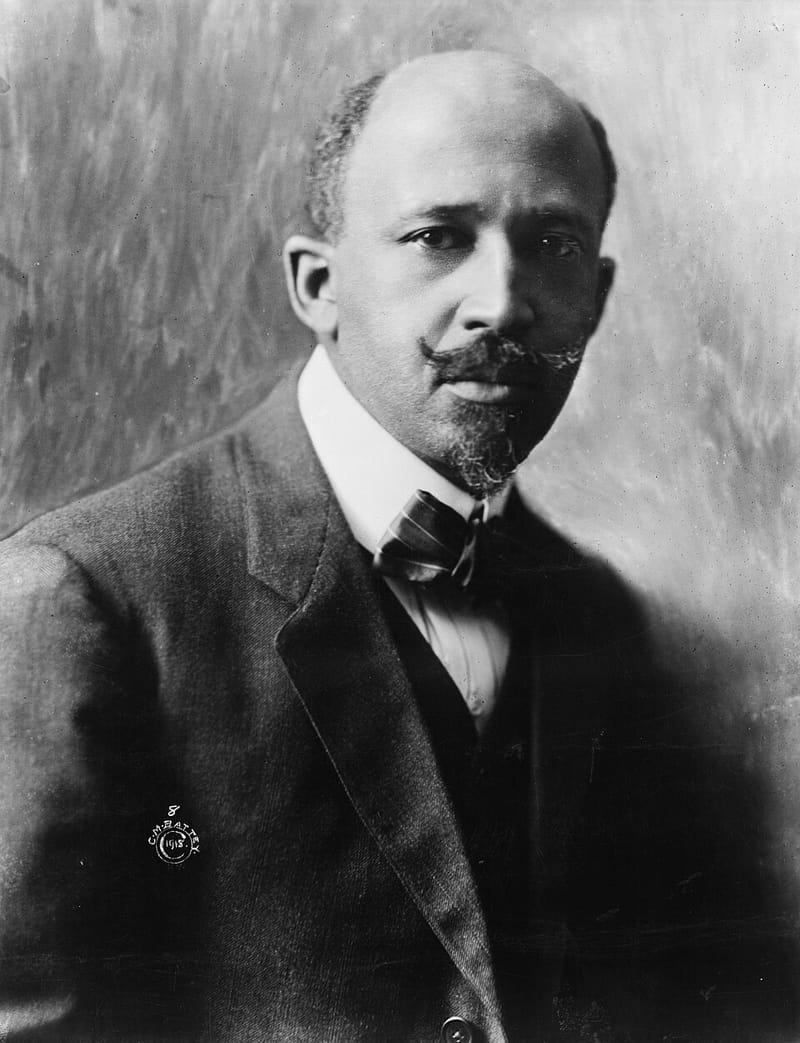
Washington was praised as a race leader and condemned as an accommodationist. Critics, above all Du Bois in The Souls of Black Folk (1903), argued that he had given up the fight for voting rights and civil equality just as segregation was being written into law — the Supreme Court upheld “separate but equal” in Plessy v. Ferguson a year after the Atlanta speech. Washington used his influence and money to support Black newspapers, many of them aimed at countering Du Bois. Yet historians note that his conciliatory public posture concealed quiet efforts to aid African Americans in legal and economic struggles for justice. Du Bois himself later said: “I never thought Washington was a bad man … I believed him to be sincere, though wrong.”
Legacy
Washington died at Tuskegee on November 14, 1915, at the age of fifty-nine. The institute he built endures as Tuskegee University, and his birthplace is a national monument. The debate between his strategy of economic self-help and Du Bois’s demand for full civil and political rights framed the struggle over Black strategy in the early twentieth century.
Study this entry
Check your understanding
Try answering in your own words, then open the answer.
1.What shaped Booker T. Washington early in life?Show answerHide
Washington was born in 1856 on the Burroughs farm in Franklin County, Virginia, the son of the farm’s enslaved cook, Jane; he never knew the exact date or place, writing later only that “I suspect I must have been born somewhere and at some time.”From “Early life and context” above.
2.What were Booker T. Washington’s major achievements?Show answerHide
In May 1881 Hampton’s founder, General Armstrong, received a telegram from the board of commissioners of the new Tuskegee State Normal School in Alabama: “Booker T. Washington will suit us … send him at once.”From “Major actions and achievements” above.
3.What criticism or controversy surrounds Booker T. Washington?Show answerHide
Washington was praised as a race leader and condemned as an accommodationist.From “Controversies, limits, and criticism” above.
4.How is Booker T. Washington remembered?Show answerHide
Washington died at Tuskegee on November 14, 1915, at the age of fifty-nine. The institute he built endures as Tuskegee University, and his birthplace is a national monument.From “Legacy” above.
Turn this entry into 10 flashcards (key facts, dates, and why it matters) and review them in Learn.
Related History
How this connects to the rest of the atlas.
Events
People

Sources
- 1.Booker T. Washington
National Park Service, Tuskegee Institute National Historic Site · Institutional · cited for life, Hampton, Tuskegee, Atlanta speech, death
- 2.Booker T. Washington National Monument — History & Culture
National Park Service · Institutional · cited for birth into slavery
- 3.The American Yawp, “The Progressive Era”
The American Yawp (eds. Joseph Locke and Ben Wright; Stanford University Press) · Scholarly · cited for Tuskegee, the Atlanta Compromise, rivalry with Du Bois
- 4.The American Yawp, “Reconstruction”
The American Yawp (eds. Joseph Locke and Ben Wright; Stanford University Press) · Scholarly · cited for freedpeople’s hunger for schooling
Image credits
- Booker T Washington retouched flattened-crop, Harris & Ewing, 1905-01-01. Via Wikimedia Commons · Public domain · Source
Written for American History Atlas from the sources above. See how entries are researched.
Atlas by Alexander. More on Telegram.