Court CaseWorld War II and the Early Cold War
Korematsu v. United States
The Supreme Court upholds the wartime exclusion of Japanese Americans
1944Washington, D.C.
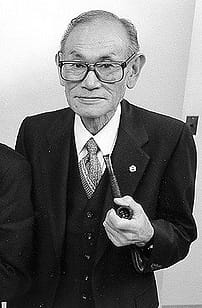
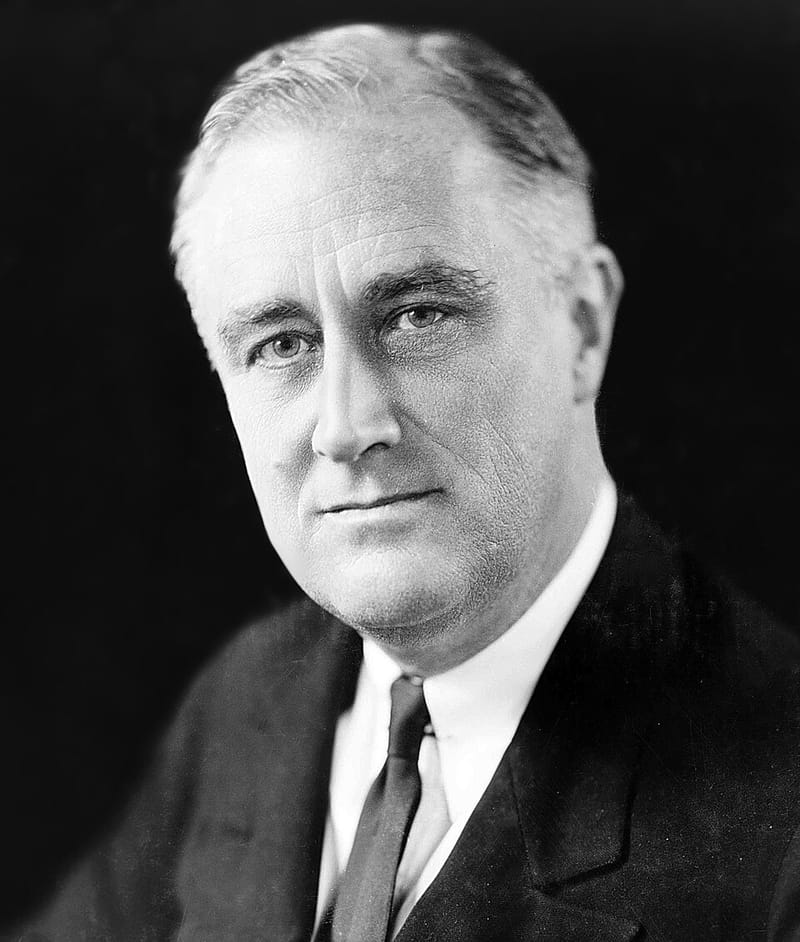
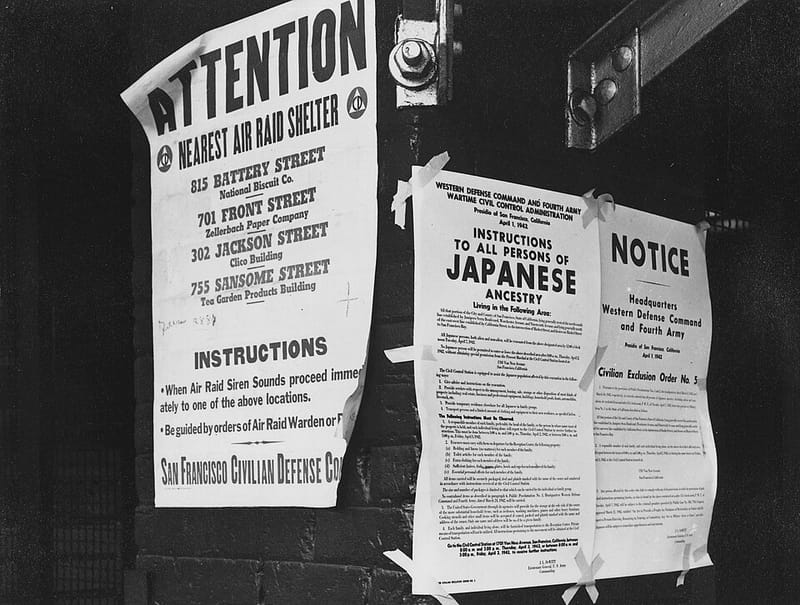
Fred Korematsu, a 23-year-old American citizen of Japanese ancestry, refused to leave his home in the San Francisco Bay Area when the Army ordered all Japanese Americans removed under Executive Order 9066. In Korematsu v. United States, the Supreme Court upheld his conviction 6–3, accepting the government’s claim of military necessity. Three justices dissented, one of them condemning the decision as racism. Decades later, evidence that the government had suppressed proof undermining its case led a federal court to overturn Korematsu’s conviction.
Key facts
- Citation
- 323 U.S. 214 (1944)
- Decided
- December 18, 1944
- Vote
- 6–3
- Majority opinion
- Justice Hugo Black
- Location
- Washington, D.C.
- Decided
- December 18, 1944
- Vote
- 6–3
- Majority
- Justice Hugo Black
- Dissents
- Justices Owen Roberts, Frank Murphy, and Robert Jackson
- Conviction vacated
- November 10, 1983, by federal judge Marilyn Hall Patel
Why it matters
Korematsu shows how courts can fail to protect constitutional rights in wartime, and Fred Korematsu’s long fight to clear his name became a symbol of resistance to injustice.
Historical context
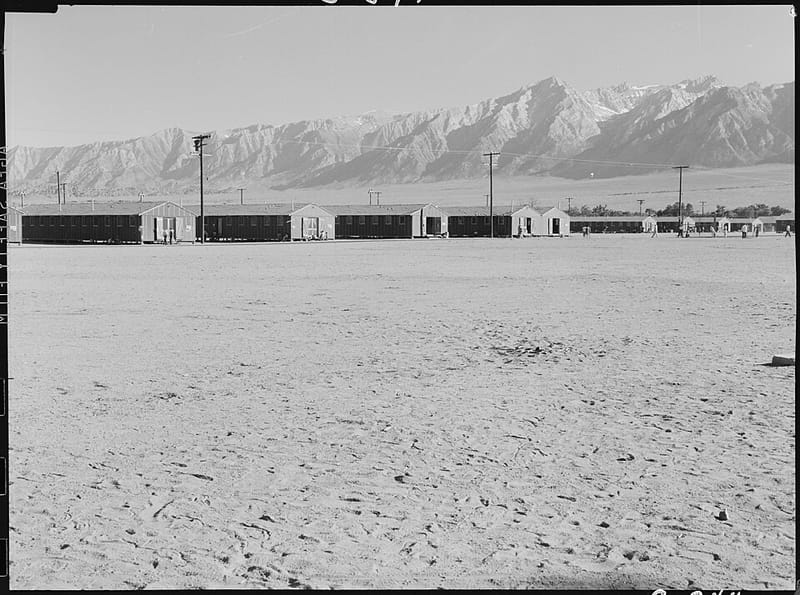
After Executive Order 9066, General John L. DeWitt ordered all people of Japanese ancestry out of designated West Coast areas. Korematsu’s parents abandoned their home and flower nursery to report, but he stayed. He changed his name, claimed to be of Spanish and Hawaiian descent, and even had plastic surgery on his eyes to alter his appearance. On May 30, 1942, he was arrested. With the help of the American Civil Liberties Union, he made his case a test of the order’s constitutionality. He was convicted in federal court in San Francisco, given probation, and sent to an assembly center in San Bruno; the appeals court affirmed.
The legal question
Did the president and Congress exceed their war powers by excluding Americans of Japanese descent from the West Coast and restricting their rights?
The ruling
The Court upheld the exclusion order and Korematsu’s conviction by a vote of 6–3.
The Court’s reasoning
Writing for the majority, Justice Hugo Black held that the order did not reflect racial prejudice but responded to the military imperative of protecting the West Coast from invasion, and that wartime decisions of the military, validated by Congress, deserved great deference. The Court relied heavily on its 1943 decision in Hirabayashi v. United States, which had upheld a curfew. Justice Felix Frankfurter concurred.
Three justices dissented. Justice Owen Roberts wrote that Korematsu was being punished for refusing to submit to imprisonment “based on ancestry, and solely because of his ancestry.” Justice Frank Murphy noted that people of German and Italian ancestry had been given individual investigations and hearings, and wrote that “racial discrimination in any form and in any degree has no justifiable part whatever in our democratic way of life.” Justice Robert Jackson warned that by upholding the order, the Court had “validated the principle of racial discrimination,” and he likened the principle of military necessity to “a loaded weapon.”
Consequences
In the early 1980s, newly discovered documents showed that government lawyers had suppressed or destroyed evidence contradicting the claim of military necessity. Korematsu and others filed petitions for a writ of coram nobis, and on November 10, 1983, Judge Marilyn Hall Patel overturned his conviction in the same San Francisco courthouse where he had been convicted.
Later interpretation
How later courts, scholars, and the public have judged the case — not part of the ruling itself.
The federal Commission on Wartime Relocation and Internment of Civilians concluded in its report Personal Justice Denied that Korematsu “lies overruled in the court of history.” The 1983 ruling cleared Korematsu’s own conviction in a lower court; it did not by itself reverse the Supreme Court’s 1944 decision.
Study this entry
Check your understanding
Try answering in your own words, then open the answer.
1.What question did the Court have to answer?Show answerHide
Did the president and Congress exceed their war powers by excluding Americans of Japanese descent from the West Coast and restricting their rights?From “The legal question” above.
2.What did the Court decide?Show answerHide
The Court upheld the exclusion order and Korematsu’s conviction by a vote of 6–3.From “The ruling” above.
3.How did the Court justify its decision?Show answerHide
Writing for the majority, Justice Hugo Black held that the order did not reflect racial prejudice but responded to the military imperative of protecting the West Coast from invasion, and that wartime decisions of the military, validated by Congress, deserved great deference.From “The Court’s reasoning” above.
4.What were the consequences?Show answerHide
In the early 1980s, newly discovered documents showed that government lawyers had suppressed or destroyed evidence contradicting the claim of military necessity.From “Consequences” above.
Turn this entry into 9 flashcards (key facts, dates, and why it matters) and review them in Learn.
Related History
How this connects to the rest of the atlas.

Sources
- 1.Korematsu v. United States
Oyez (Cornell LII, Justia, Chicago-Kent College of Law) · Scholarly · cited for facts, question, holding, vote
- 2.Facts and Case Summary — Korematsu v. U.S.
Administrative Office of the U.S. Courts · Institutional · cited for Korematsu’s story, decision date, 1983 coram nobis
- 3.Korematsu v. United States (Shiho Imai)
Densho Encyclopedia · Scholarly · cited for dissents, coram nobis, legacy
- 4.Executive Order 9066: Resulting in Japanese-American Incarceration (1942) — Milestone Documents
National Archives · Primary source · cited for order, removal, camps, numbers, redress
Image credits
Written for American History Atlas from the sources above. See how entries are researched.
Atlas by Alexander. More on Telegram.