PlaceBefore European Colonization
Chaco Canyon
Ceremonial center of the ancestral Pueblo world
c. 850–1150San Juan Basin, northwestern New Mexico
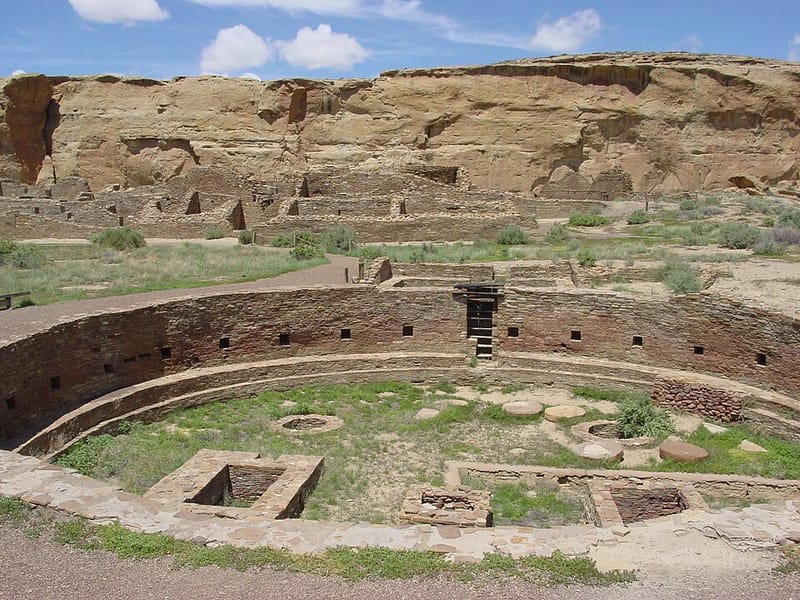
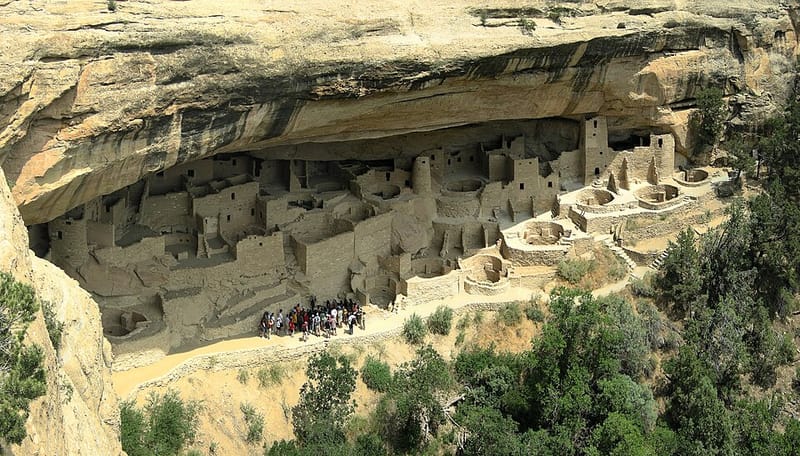
In a high, dry canyon in northwestern New Mexico, ancestral Pueblo people built a center unlike anything else in North America. Beginning in the mid-800s, they raised multistory stone “great houses” with hundreds of rooms, aligned buildings to the sun and moon, and linked Chaco by roads to more than 150 great houses across the region. By about 1050, Chaco was the ceremonial, administrative, and economic center of the San Juan Basin.
Key facts
- Date
- c. 850–1150
- Location
- San Juan Basin, northwestern New Mexico
- Dating note
- Chaco’s flowering began in the mid-800s and lasted more than 300 years.
- Flourished
- Mid-800s to the 1100s
- Great houses
- Pueblo Bonito, Una Vida, Peñasco Blanco, Chetro Ketl, Pueblo Alto, and others
- Reach
- Roads connected Chaco to more than 150 great houses throughout the region
- Descendants
- Pueblo peoples of the Southwest, including the Hopi; Chaco is also central to the origins of several Navajo clans
- Protected as
- Chaco Culture National Historical Park
Why it matters
Chaco is evidence of sophisticated planning, astronomy, and regional organization in North America centuries before Europeans arrived — and it remains a living sacred place for the Native peoples connected to it.
About the place
Chaco Canyon’s long winters, short growing seasons, and scant rainfall make it an unlikely place for a major cultural center. Yet its great houses were planned from the start and built over decades or centuries with distinctive masonry. They were often oriented to solar, lunar, and cardinal directions, with lines of sight between buildings, astronomical markers, water-control features, and earthen mounds around them. Many researchers think the great houses were not ordinary farming villages but public architecture, used periodically for ceremonies, commerce, and trade when people gathered in the canyon.
History
During the middle and late 800s, Pueblo Bonito, Una Vida, and Peñasco Blanco were built, followed by Hungo Pavi, Chetro Ketl, Pueblo Alto, and others. By 1050, Chaco’s influence extended across the San Juan Basin. Researchers still debate what held this system together — a trading network for turquoise, macaws, copper bells, and shells; a system for sharing food when harvests failed; or a religious “center place.” Pueblo descendants describe Chaco as a special gathering place where many peoples and clans converged to share ceremonies and knowledge.
In the 1100s and 1200s, construction slowed and Chaco’s role shifted to other centers, including Aztec and Mesa Verde. People migrated to new areas and reorganized their world. Their descendants are the Pueblo peoples of today, many of whom regard Chaco as a sacred stop along their clans’ migration paths.
Study this entry
Check your understanding
Try answering in your own words, then open the answer.
1.What is this place?Show answerHide
Chaco Canyon’s long winters, short growing seasons, and scant rainfall make it an unlikely place for a major cultural center. Yet its great houses were planned from the start and built over decades or centuries with distinctive masonry.From “About the place” above.
2.What happened here?Show answerHide
During the middle and late 800s, Pueblo Bonito, Una Vida, and Peñasco Blanco were built, followed by Hungo Pavi, Chetro Ketl, Pueblo Alto, and others. By 1050, Chaco’s influence extended across the San Juan Basin.From “History” above.
Turn this entry into 12 flashcards (key facts, dates, and why it matters) and review them in Learn.
Related History
How this connects to the rest of the atlas.
Events

Sources
- 1.Chaco Culture — History & Culture
National Park Service, Chaco Culture National Historical Park · Institutional · cited for dates, great houses, roads, theories, descendants
Image credits
- Chaco Canyon Chetro Ketl great kiva plaza NPS, National Park Service (United States), 2006-08-14. Via Wikimedia Commons · Public domain · Source
Written for American History Atlas from the sources above. See how entries are researched.
Atlas by Alexander. More on Telegram.