Period 2 · 1492–1607
European Exploration and Early Colonization
Columbus’s voyages began sustained contact between Europe and the Americas. Over the next century, Spain built an empire to the south, founded St. Augustine in Florida, and pushed into the Southwest, while France and England made their first, often failed, attempts at settlement — and epidemic disease devastated Native peoples.
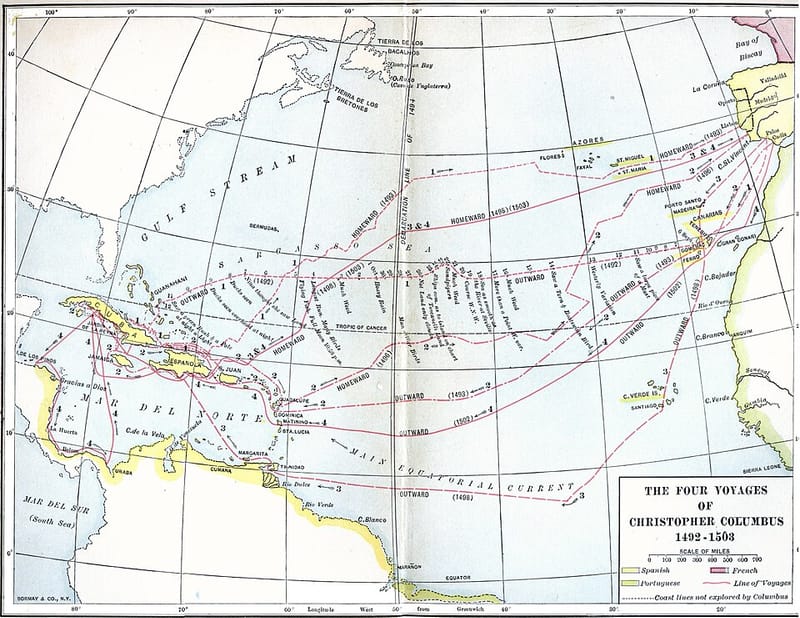
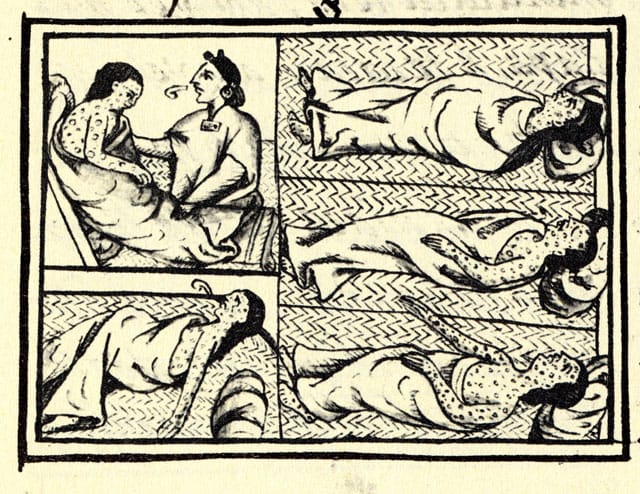
In 1492 Christopher Columbus, sailing for Spain, reached the Caribbean, beginning the Columbian Exchange of plants, animals, people, and diseases between the hemispheres. The Taíno, the first people Columbus encountered, resisted Spanish efforts to enslave them but were devastated by violence and disease.
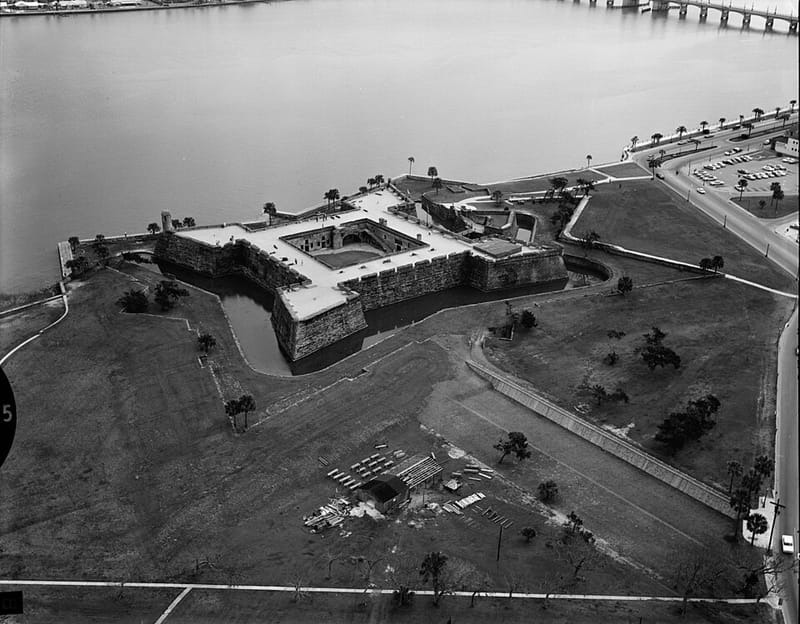
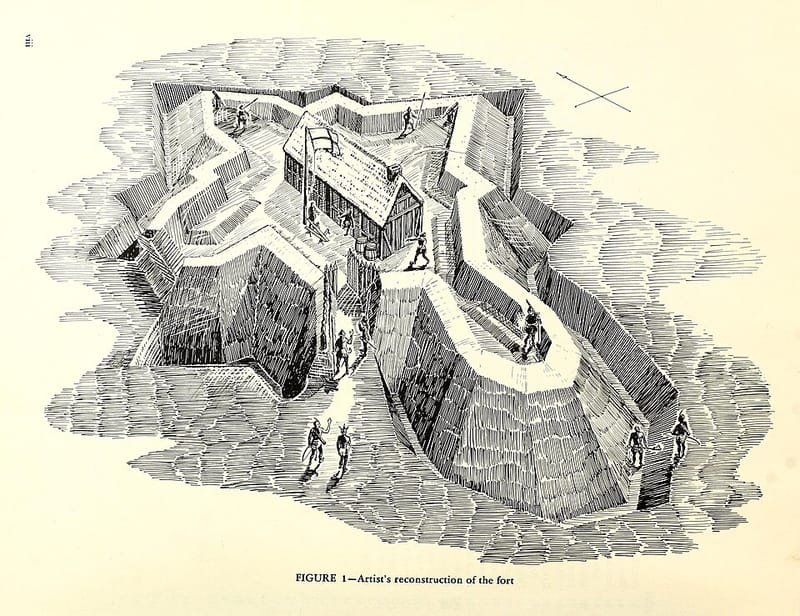
Spanish conquistadors toppled the Aztec and Inca empires and sent expeditions into what is now the southern United States. In 1565 Spain founded St. Augustine in Florida after destroying a French Protestant colony nearby, and by 1598 it was colonizing New Mexico. France explored the St. Lawrence and Great Lakes. England’s first attempt at a colony, at Roanoke in the 1580s, vanished.
Throughout this era, Native nations were not passive. They traded, negotiated, allied with or fought the newcomers, and shaped where and how Europeans could settle — even as epidemics spread ahead of colonization and reshaped Native societies.
Highlights
Events and wars
Movements, institutions, and ideas
Places
Sources for this overview
- Columbus Makes Landfall in the Caribbean — National Geographic Education
- The Massacre — National Park Service, Fort Matanzas National Monument
Atlas by Alexander. More on Telegram.