EventRevolution and Independence
The Stamp Act Crisis
The first great colonial protest against taxation by Parliament
March 1765 – March 1766British North American colonies; London
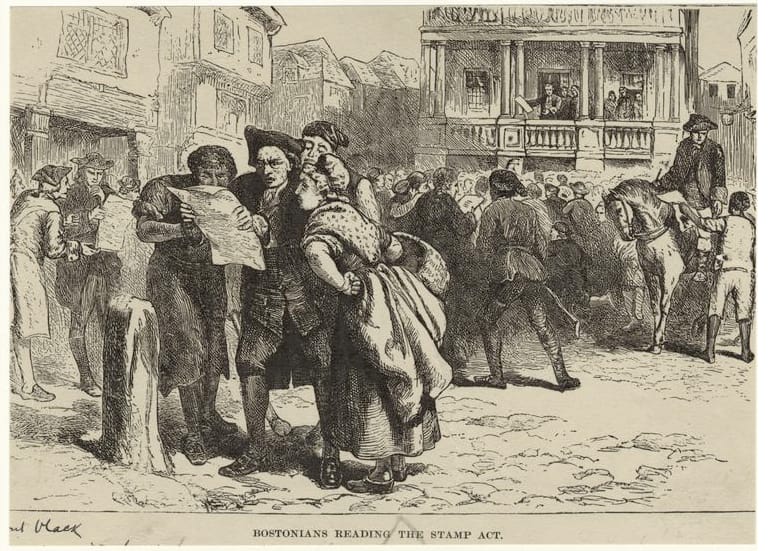
In 1765 Parliament required colonists to buy government-issued stamps for newspapers, legal documents, and other paper goods. The tax was small, but the principle was enormous: colonists insisted that only their own elected assemblies could tax them. Protest united the colonies for the first time — through resolutions, a congress of nine colonies, boycotts, and crowd actions — and Parliament repealed the act within a year.
Key facts
- Date
- March 1765 – March 1766
- Location
- British North American colonies; London
- Dating note
- Parliament passed the Stamp Act in March 1765; it took effect November 1, 1765, and was repealed in March 1766.
- Proposed by
- Prime Minister George Grenville
- Slogan of protest
- No taxation without representation
- Stamp Act Congress
- October 1765, delegates from nine colonies
- Repealed
- March 1766 — but Parliament asserted its right to legislate for the colonies “in all cases whatsoever” in the Declaratory Act
Why it matters
The Stamp Act crisis was the moment colonists first acted together against Parliament and first articulated the principle — no taxation without representation — that would carry them to independence.
Historical background
Britain ended the Seven Years’ War in 1763 victorious and heavily in debt, with a large army to maintain in North America. Grenville’s government began collecting duties that had long been laxly enforced, passed the Sugar Act (1764), and, at the request of British merchants owed money by colonists, the Currency Act (1764), which forbade the colonies to issue paper money. A postwar recession made all of this harder to bear.
Causes and contributing factors
The Stamp Act was the first direct tax Parliament had laid on the colonies’ internal affairs, as opposed to duties on trade. Colonists argued that as English subjects they could be taxed only by representatives they elected, and they had none in Parliament. British officials answered that colonists were “virtually” represented by Parliament as a whole — an argument most colonists rejected.
What happened
When news of the act arrived, Virginia’s House of Burgesses passed resolutions denying Parliament’s authority to tax the colonies. In Boston, crowds destroyed the house of the stamp distributor, and similar protests spread through the colonies; stamp agents resigned under pressure. In October 1765, delegates from nine colonies met in New York as the Stamp Act Congress and petitioned the king and Parliament, denying Parliament’s right to tax them. Merchants organized boycotts of British goods. Combined with the recession, the boycotts led British merchants to lobby for repeal on practical grounds.
Immediate consequences
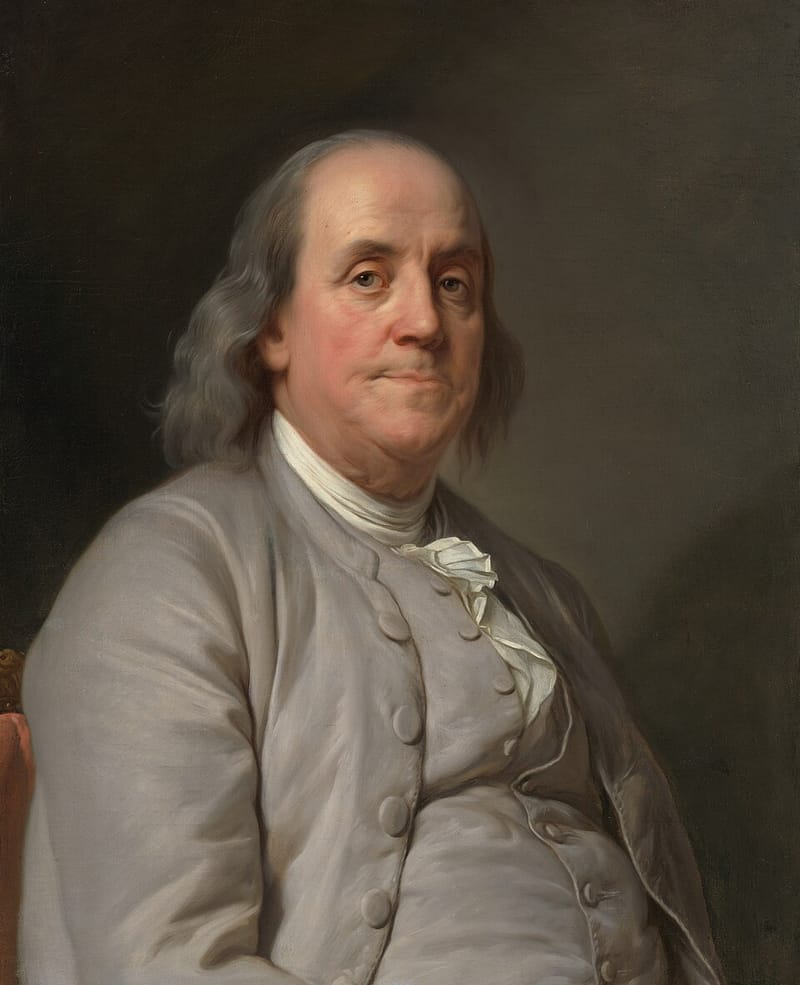
Parliament repealed the Stamp Act in March 1766, deciding that repeal was easier than enforcement. Benjamin Franklin, then in London as a colonial agent, assisted the repeal effort. But Parliament simultaneously passed the Declaratory Act, asserting full authority over the colonies, and in 1767 it tried again with the Townshend duties on imported goods.
Long-term significance
The crisis gave colonists a shared cause, a constitutional argument, and a repertoire of resistance — intercolonial meetings, non-importation agreements, and street protest — that they would use again over the Townshend duties, the tea crisis, and finally in the Continental Congress. It marked the beginning of the decade-long argument that ended in revolution.
Study this entry
Check your understanding
Try answering in your own words, then open the answer.
1.What led to the Stamp Act Crisis?Show answerHide
The Stamp Act was the first direct tax Parliament had laid on the colonies’ internal affairs, as opposed to duties on trade. Colonists argued that as English subjects they could be taxed only by representatives they elected, and they had none in Parliament.From “Causes and contributing factors” above.
2.What happened?Show answerHide
When news of the act arrived, Virginia’s House of Burgesses passed resolutions denying Parliament’s authority to tax the colonies. In Boston, crowds destroyed the house of the stamp distributor, and similar protests spread through the colonies; stamp agents resigned under pressure.From “What happened” above.
3.What were the immediate consequences?Show answerHide
Parliament repealed the Stamp Act in March 1766, deciding that repeal was easier than enforcement. Benjamin Franklin, then in London as a colonial agent, assisted the repeal effort.From “Immediate consequences” above.
4.Why does it still matter?Show answerHide
The crisis gave colonists a shared cause, a constitutional argument, and a repertoire of resistance — intercolonial meetings, non-importation agreements, and street protest — that they would use again over the Townshend duties, the tea crisis, and finally in the Continental Congress.From “Long-term significance” above.
Turn this entry into 10 flashcards (key facts, dates, and why it matters) and review them in Learn.
Related History
How this connects to the rest of the atlas.
Events
Wars
People

Sources
- 1.Parliamentary Taxation of Colonies, International Trade, and the American Revolution, 1763–1775
U.S. Department of State, Office of the Historian · Institutional · cited for Sugar, Currency, Stamp, Townshend, Tea, and Intolerable Acts; colonial protest
- 2.Benjamin Franklin’s Resumé
National Park Service, Independence National Historical Park · Institutional · cited for Franklin’s role in repeal
Image credits
- 1765 BostoniansReadingStampAct, New York Public Library., 18th-19th c.. Via Wikimedia Commons · Public domain · Source
Written for American History Atlas from the sources above. See how entries are researched.
Atlas by Alexander. More on Telegram.